
AlphaProof Code verifies Signal code, not every security claim
Google DeepMind used AI agents and Lean to verify specified Signal code properties. Here is what the proof covers, what it assumes and why the limits matter.
Accessibility Adjustments
Use these optional tools to adjust reading and display preferences. These tools cannot resolve every accessibility barrier. Please contact the website owner if you need assistance.


Google Gemini news covering AI models, tools, robotics, product updates, and research, with context on access, capabilities, and evaluation claims.
Google DeepMind used AI agents and Lean to verify specified Signal code properties. Here is what the proof covers, what it assumes and why the limits matter.

Google is rolling out Gemini Robotics 2.5 to partners. Here is what its factory results mean and how access differs from Robotics ER 2.

Google changes enterprise notebook addresses in November. Check entry links, identity routes and network rules.
Google now routes Gemini Embedding 2 Preview to the stable model. Check which migration preserves existing vectors and which still requires embedding data again.

Gemini Omni 1.2 Flash adds 15-second generation and lower video output prices. Check reference limits, regional restrictions and the December 3 transition.
Google adds voice remixing to Gemini 3.8 TTS. Here is how base voices, paid access, independent voice IDs, expiry and synthesis prices fit together.
Google expands Office and OpenDocument input on November 5. The key limits are how layouts, spreadsheet sheets and file references reach the model.

A practical guide to replacement models, request compatibility and token costs.
A practical guide to choosing the right Gemini command-line tool.
Google changed new paid Gemini API projects on October 26. Check project defaults, request overrides, SDK support and log retention before deployment.
A practical migration review for speech applications, separating API compatibility, playback checks and future operating costs.
Google made Computer Use generally available across Interactions and GenerateContent. Client-side execution, supported models and safety checks still matter.
Google announced avatar sharing on October 29. Here are the account requirements, recipient controls and the important limit on revocation.

Google adds a free textbook catalog to Gemini Notebook. Here is where to find it, how purchased ebooks differ, and what to check before studying.

Gemini now previews and edits files inside chats. PDF editing reaches mobile, while other announced formats remain web-only.
Google opens phased access to a platform for Search and Gemini integrations. Compare remote MCP with Android AppFunctions and check the review requirements.

Android XR glasses start at $1,099, but orders and delivery are different milestones. Here are the hardware and rollout limits.
Gemini 4 Carbon reaches paid API customers and rolls out to Ultra subscribers. See the November 30 pricing deadline and historical benchmark caveats.

One bedroom prompt exposes different strengths in nine AI video outputs, from timed entrances and dialogue to frightening faces and drifting props.

Google’s VERID research puts persistent laboratory state and simulation between AI agents and physical equipment, with human oversight still central.
Google announced an Antigravity allowance reset on October 16. Here is how to check separate model quotas and understand what the reset changes.
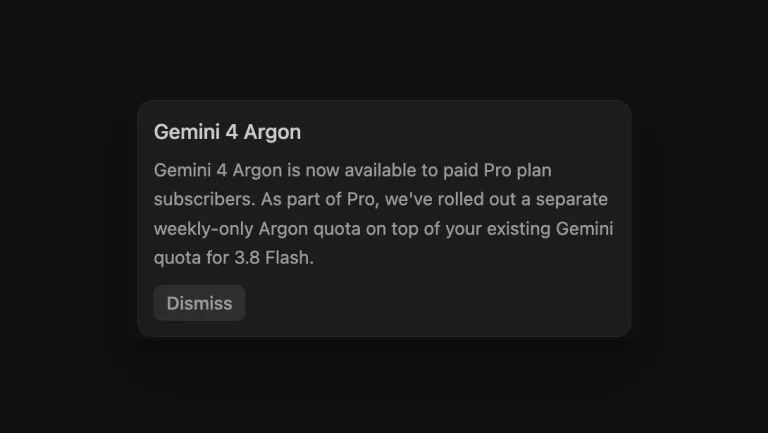
Paid Google AI Pro subscribers gain Argon in supported Antigravity apps with a separate weekly allowance. Trial eligibility and product differences still matter.

A reported Gempix 3 Pro reference hints at another Google image model. Its final identity and release timing remain unconfirmed.
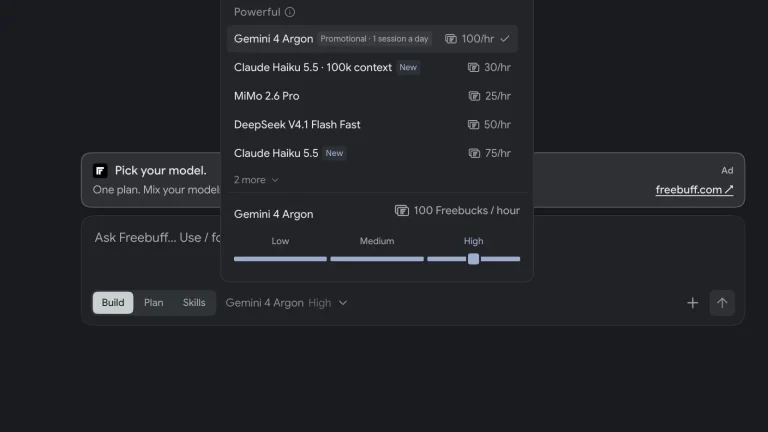
Freebuff now lists Gemini 4 Argon with one promotional session a day. Here is how the allowance works, who gets free access and how to test it.


