Gemini Robotics 2.5 rolls out to partners, not a public API

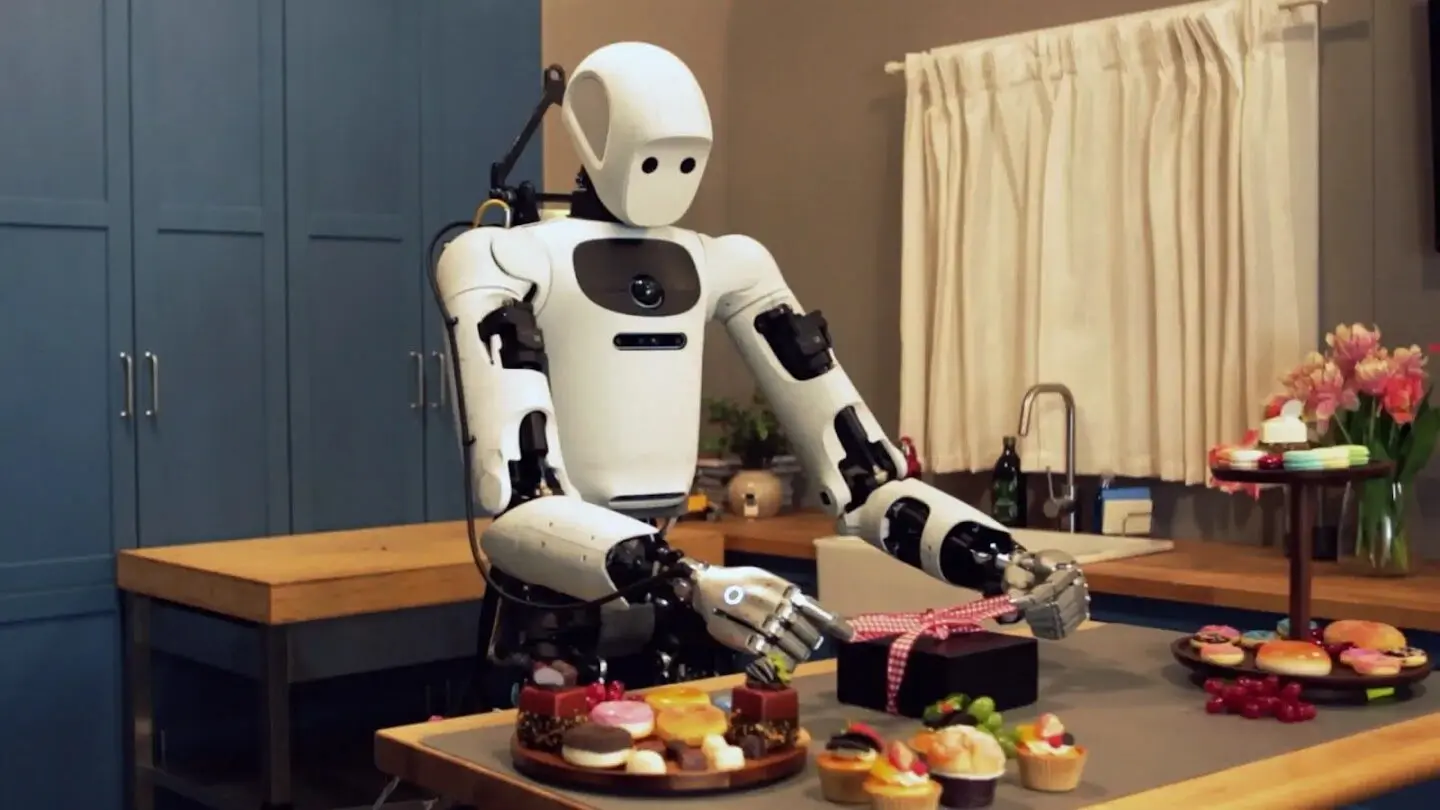
Google DeepMind announced Gemini Robotics 2.5 on November 10, 2026, and says the model is rolling out to robotics partners. This is a vision language action model for controlling robots, not a general chat model.
The access boundary matters. The official model page offers an early access waitlist, rather than an open endpoint. A partner rollout should not be mistaken for public API availability or downloadable weights.
What Google says improved
In its launch announcement, Google reports evaluation across more than 200 tasks. It claims task success gains of 30 to 100 percent, depending on task type, and execution that is 20 to 30 percent faster than its previous baselines. These are vendor results, not ByteForward measurements.
Google also describes an automotive kitting proof of concept using Apptronik Apollo 2 at Mercedes Benz facilities in Hungary and Germany, with 96 percent success. The example separates workflow monitoring by an embodied reasoning model from the action model controlling the robot. It does not establish universal factory reliability.
Three names, different jobs
| System | Role | Access distinction |
|---|---|---|
| Gemini Robotics 2.5 | Robot action and control | Partner rollout; early access waitlist |
| Gemini Robotics ER 2 | Embodied reasoning and orchestration | Separate developer offering |
| Apollo 2 | Apptronik robot hardware | Not a Gemini API or model download |
Google’s robotics overview links separately to ER 2. Our ER 2 access guide explains its developer endpoints and streaming distinction. An ER 2 integration does not by itself grant access to the new action model.
The 2.5 product page describes control spanning arms, hands and whole body movement, including stepping, bending and squatting. For an integrator, the useful question is which robot, sensor configuration and task the partner deployment supports. Broad capability language is not a compatibility list for an arbitrary machine.
The robot still needs its own safety system
Apptronik’s Apollo 2 product page describes bipedal and wheeled configurations, swappable batteries and fleet management. Its Artemis architecture coordinates perception, planning, control and safety. The hardware also has an impact zone that pauses movement and a configurable perimeter zone. Those systems sit alongside the model; a higher model score does not replace them.
Before planning a deployment, ask for the supported hardware configuration, task acceptance criteria, intervention rate, recovery behavior and pricing. None of the launch results tells you the cost of completing your own workflow. A successful pick is also not the same as a full shift without human intervention.
Watch the official examples
Google’s announcement includes task demonstrations and factory footage. Treat them as selected vendor examples, not an independent endurance test. The practical news is a new partner action model with reported improvements, while general developer access remains a separate question.
Featured image: official Gemini Robotics 2.5 announcement artwork, Google DeepMind. Used for editorial reporting; no endorsement is implied.