Shanghai reports ¥40.9 billion in AI projects as WAIC 2026 closes

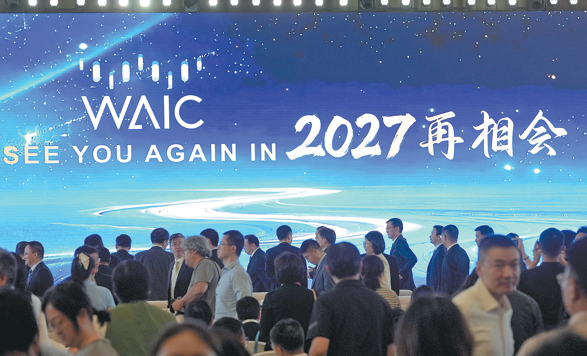
Shanghai closed its biggest AI week with a deal sheet, not just booth photos. On July 20 the 2026 World AI Conference and High-Level Meeting on Global AI Governance wrapped after four days, with municipal officials announcing 32 Shanghai AI project agreements totaling more than ¥40.9 billion (~$6.05 billion).
The floor proved demand. The closing ceremony proved where the city wants capital to land next.
Attendance and exhibitor tallies
Per Shanghai government closing coverage, the show drew over 400,000 on-site visitors and more than 3 billion online views worldwide, with officials from 102 countries and international organizations on the guest list. The exhibition spanned 100,000+ square meters with 1,117 companies showing 4,486 exhibits, including 351 global debuts.
Organizers put intended on-site purchases at about ¥20.36 billion, up 25% year on year, across 177 procurement delegations. Forums numbered near 160, with 1,568 experts and 11 Turing, Nobel, or Fields laureates in the mix. Those are organizer tallies — treat them as the city’s scoreboard, not an audited census.
What the ¥40.9B signings cover
Shanghai’s deal summary buckets the 32 projects across AI infrastructure, AI agents, embodied intelligence, and AI for science. Separately, Shanghai Unicom’s UniAI program pledges more than ¥25 billion into intelligent computing infrastructure and AI applications in industry, public services, urban governance, and the digital ecosystem.
The closing also inaugurated the Shanghai Institute for Physical AI and Robotics, launched the 2026 International Embodied Intelligence Competition, and rolled a 2026–2030 “one-stop” financial support platform for innovative startups. Intended purchases and municipal project signings are different instruments — one is buyer interest, the other is city-steered capital commitments.
Governance leftovers from the week
The High-Level Meeting’s headline residue is the World Artificial Intelligence Cooperation Organization, with 29 founding members and headquarters in Shanghai. Outcome documents named in closing coverage include an AI Cooperation and Development Action Plan and an International AI Ethical Governance Action Plan.
That is institutional scaffolding. Working groups, budgets, and standards still have to prove they are more than ceremony. Vice-mayor Chen Jie’s closing frame pushed from “conceptual governance” toward concrete action — the usual post-summit aspiration.
What foreign vendors should note
Analysis: WAIC 2026’s close is a municipal industrial policy document with a trade-show attached. ¥40.9B in Shanghai AI projects plus Unicom’s ¥25B+ compute buildout tell vendors where procurement and partnership gravity sits: infra, agents, embodied systems, and science workloads tied to city priorities.
Foreign teams should read the attendance and debut counts as market heat, and the project list as the filter. Distribution still runs through local partners, data rules, and compute that sits inside China’s stack. Watch which of the 32 projects publish operators and RFPs — and whether WAICO becomes a venue companies actually file into, or stays a founding-member photo from July.