Path Robotics raises $300M to expand AI beyond welding

Path Robotics announced a $300 million Series E on November 10, 2026, led by Georgian at a $2.45 billion valuation. The company plans to expand its industrial AI beyond welding while investing further in data, compute and model development.
The practical question is how much of a factory workflow Path can take on next. Its current foundation is a specialized welding system. The funding announcement describes a broader ambition, but does not provide a release schedule or a supported task list for that expansion.
What the money changes
Path says it wants to scale welding deployments and develop capabilities for work before and after the weld. Georgian partner Emily Walsh describes production data from deployed systems as a potential advantage. That is the investment thesis: more real factory use could improve the models behind the machines.
For a manufacturer, the test is narrower than the size of the funding round. Can the system handle the actual variation in its parts, keep inspection and rework manageable, and maintain useful output across a whole shift? Those are deployment questions that the financing itself cannot answer.
Obsidian already has a specific job
Path’s technical overview describes two components. Its Weld World Model learns from welding data. Obsidian is a reinforcement learning agent trained inside that model and deployed at the edge, where it uses sensor input to make decisions along a seam. Path says it collects data before, during and after welding to improve the world model.
This is a tightly defined industrial application. The description supports a system built around a particular sensor stack and physical task. It does not establish that the same model can operate any robot, perform arbitrary factory work or be downloaded for a separate application.
| Development | Original date | What it represents |
|---|---|---|
| Obsidian announcement | September 8, 2025 | The welding model, not a new November release |
| Rove launch | April 16, 2026 | Obsidian paired with a mobile quadruped |
| Series E financing | November 10, 2026 | Capital for scaling and broader development |
The dates come from Path’s original Obsidian announcement and Rove launch. Rove puts the welding system on a quadruped so that it can move to the workpiece. It is a useful example of changing the machine carrying an AI system while retaining a specialized task.
What to ask before planning a deployment
A useful evaluation would start with a representative batch of parts, including awkward fits and known defects, rather than the easiest demonstration piece. Agree on acceptable weld quality, intervention frequency and recovery procedures before comparing speed. Include setup, inspection and rework when calculating the cost per accepted part.
Access and hardware scope deserve the same scrutiny. Our Gemini Robotics 2.5 access guide covers another example where model capability, partner availability and supported hardware are separate questions. Neither company’s announcement establishes a performance comparison between the two systems.
See the company’s factory footage
We have not independently tested Path’s systems. The new development is funding for a wider industrial AI business. Which additional tasks reach customers, on which machines and with what measured reliability will determine how far that expansion goes.
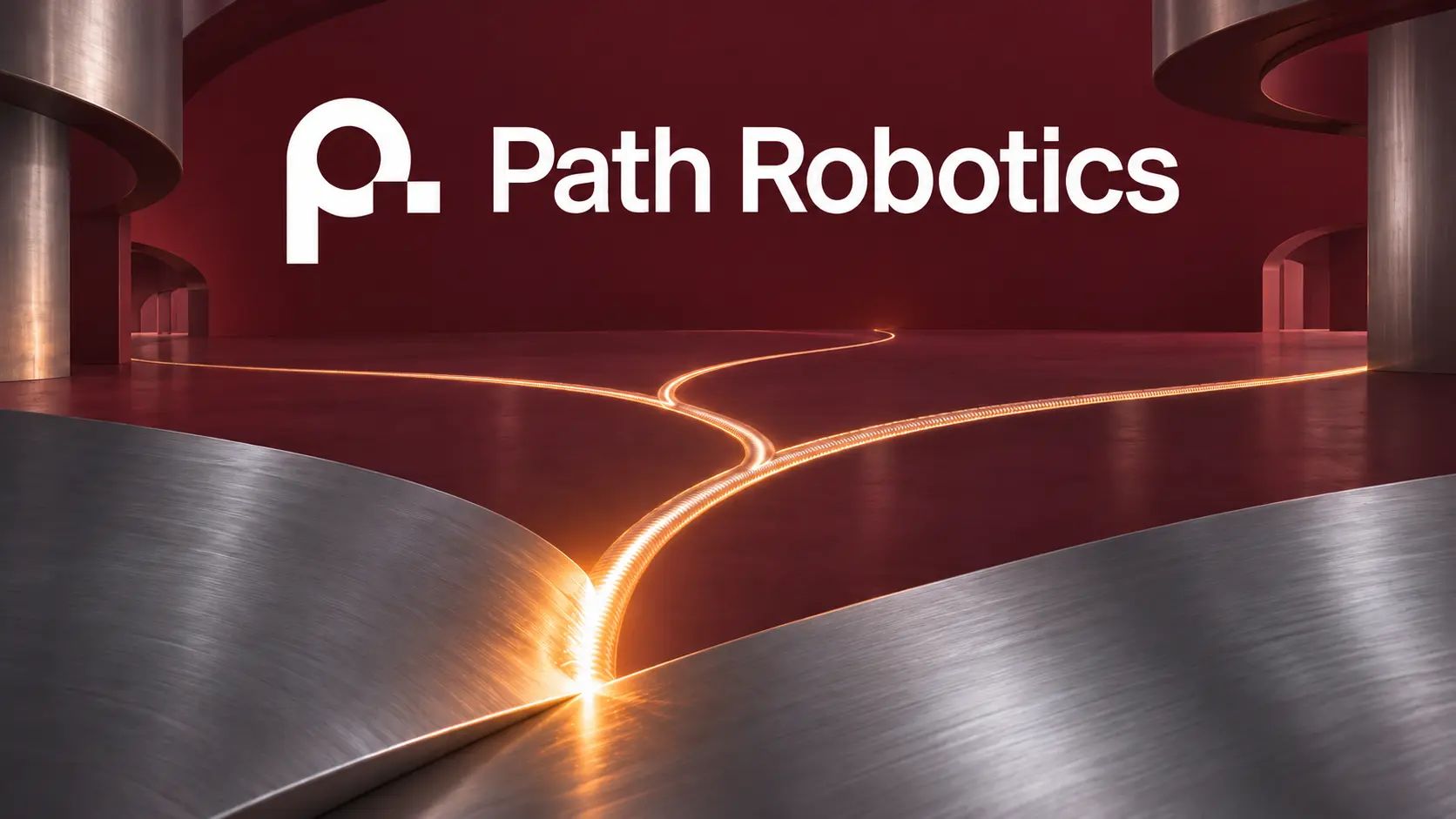
Featured image: AI generated editorial illustration using Path Robotics’ official newsroom wordmark. It depicts a conceptual expansion from welding, not an actual Path machine or facility. Logo and video: Path Robotics, used for editorial reporting. No endorsement is implied.