
Microsoft introduces Quine for biology research
Microsoft’s Quine combines biological models and lab feedback, with early compound ranking results and access limited to selected researchers

Microsoft Research introduced Quine on September 29, 2026, pairing a biological AI model with tools and experimental feedback to help scientists choose what to test next.
Microsoft says the model learns across biological data types, while a separate coordination layer connects reasoning models, scientific literature and lab work.
Early evidence from cancer research
In work with Broad Institute researchers, Quine ranked thousands of compounds for their potential to change pancreatic cancer cell states. Microsoft reports that highly ranked candidates produced large intended shifts in lab assays.
The reported weekend covered narrowing the search and choosing candidates for lab validation. The announcement does not establish clinical benefit.
A selective research program
The Quine Fellows program accepts applications from September 29 through November 2, 2026. Microsoft describes a 16 week fellowship with financial support in Cambridge, Massachusetts, scheduled from June 7 through September 24, 2027.
Selected Fellows will receive system access and computing resources, with experimental support possible for suitable projects. Applying does not guarantee selection. Quine remains experimental, requires expert review and laboratory validation, and is not intended for diagnosis, treatment or other medical use.
What still needs testing
Microsoft’s research history traces earlier work on protein design, regulatory DNA, cancer cell states, tissue images and microscopy. That background explains the range of the effort, but does not independently validate the combined system.
The useful next test is whether outside researchers can repeatedly choose better experiments with Quine. That means checking which predictions hold up, which fail and whether the system saves laboratory effort when the answer is initially unknown.
For another approach to AI in biological research, see our coverage of SynthID Bio protein watermarking.
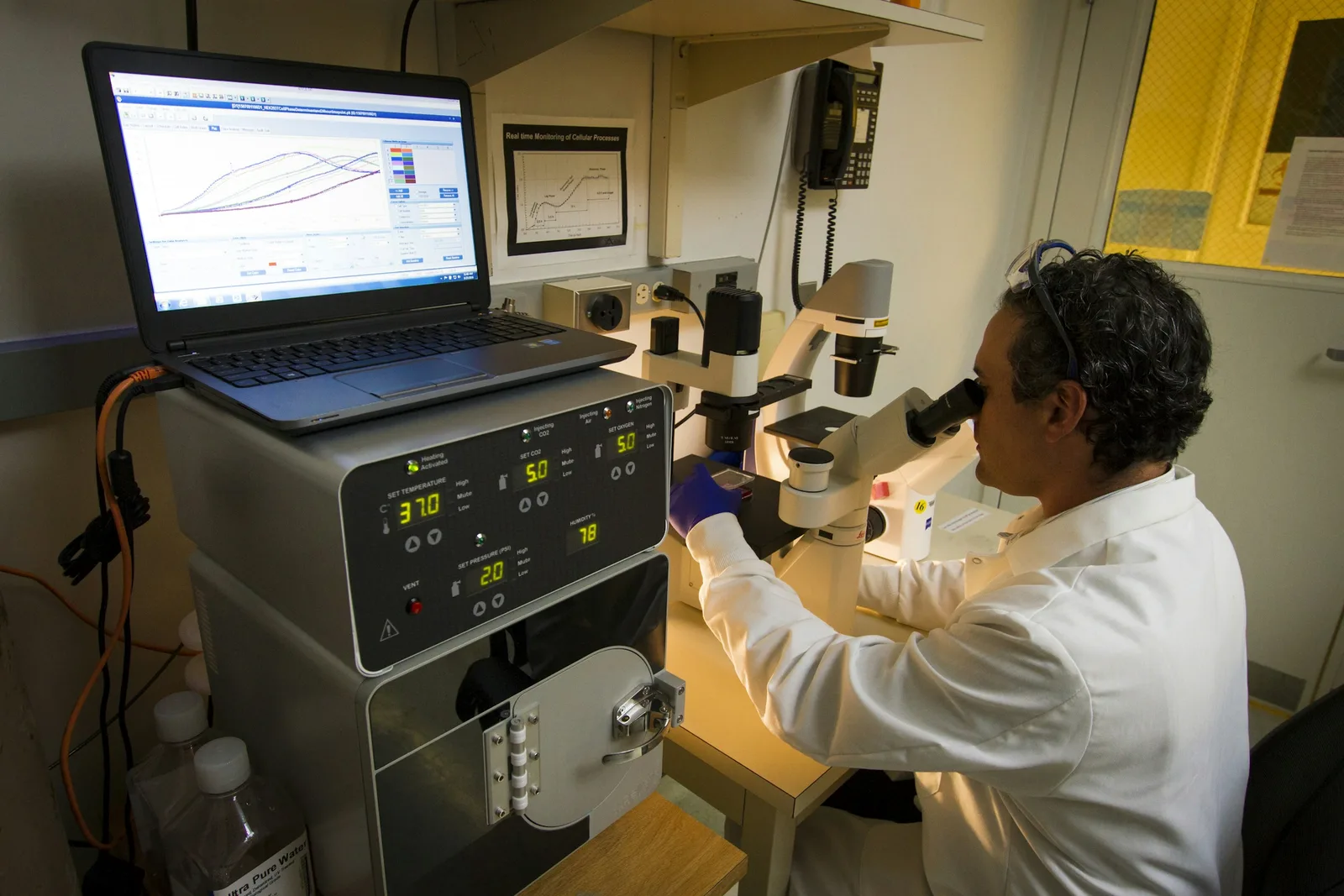
Archival photograph by the National Cancer Institute on Unsplash, used under the Unsplash License. It shows a technician at the Cancer Genomics Research Laboratory and illustrates laboratory work rather than the Quine project.