Anthropic shares the story behind Claude Code
Anthropic’s feature story traces Claude Code from an internal CLI to a shipping coding agent, told by builders and early users who shaped the loop.

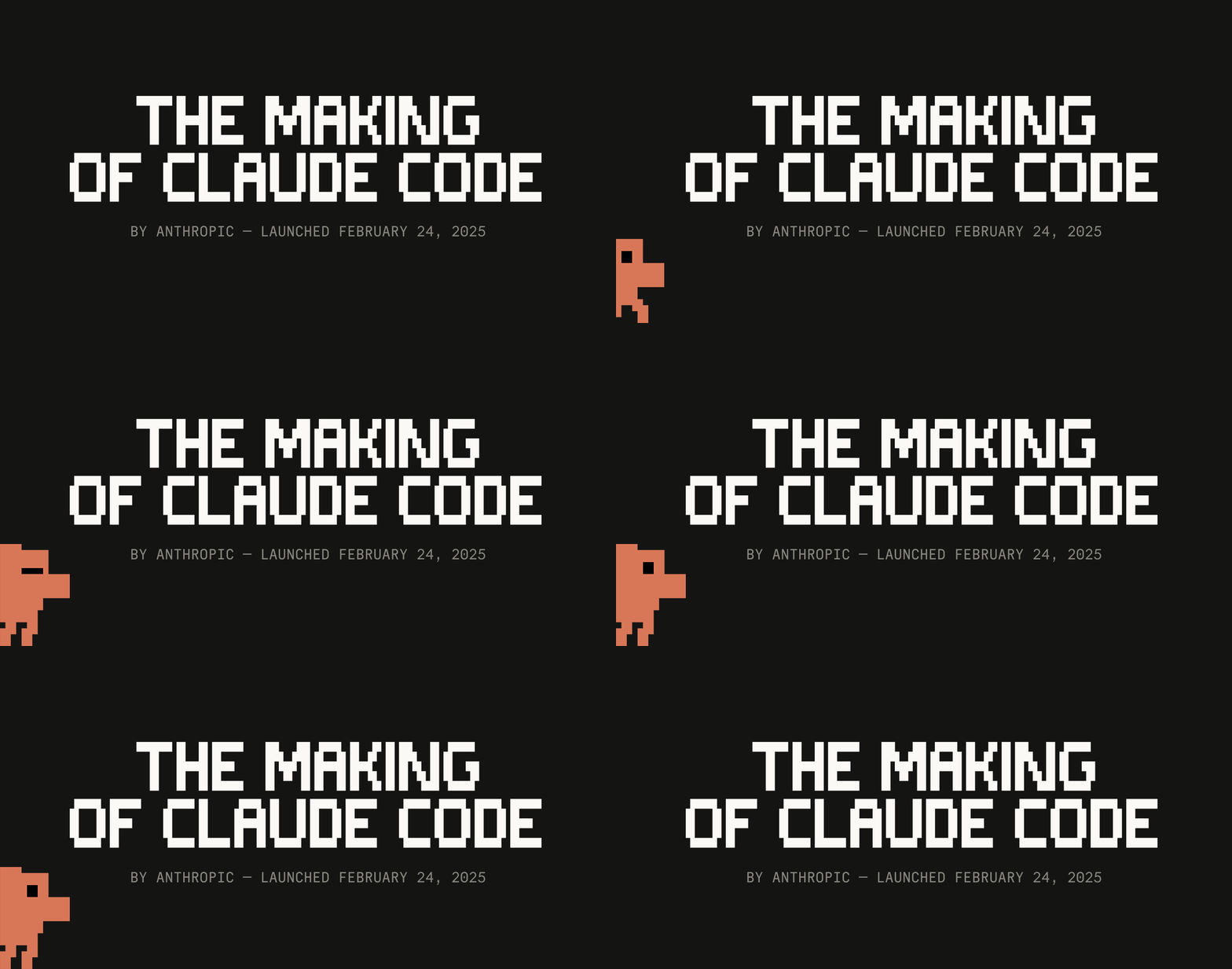
Anthropic just put an oral history on its coding agent. Not a changelog. Not another “here’s what shipped” blog. The Making of Claude Code, published July 6 via the Anthropic newsroom, lets researchers, engineers, and early users narrate how a forgotten internal CLI became the company’s flagship coding agent.
That choice is the culture story. Frontier labs used to let Discord invent the lore. Mid-2026, they want the authorship trail on the record.
What the Claude Code origin story claims
The feature casts Claude Code as craft with a named cast, not a black-box product that materialized from a launch deck. Secondary coverage of Anthropic’s oral history fills in the cast list: research engineer Dawn Drain grinding the model toward parity with her own coding skill; RL lead Shauna Kravec chasing autonomous software engineering when early results were “really terrible”; engineer Eli Tran-Johnson coining the internal tool clide; Boris Cherny later joining with a blunt rule — build for the models six months from now, not today’s.
The claim underneath the anecdotes is cultural. Coding agents have authors. Someone taught diffs. Someone wired Bash tool-calling. Someone danced in the kitchen the first time the agent inferred intent from a partial change. Anthropic wants that trail remembered because provenance sells trust when a tool can rewrite your repo.
From internal CLI to shipping agent
The arc Anthropic tells starts awkward. An early VS Code coding assistant briefly went live with about a hundred external users, then got shelved when the company pivoted to the API. Co-founder Ben Mann has described that first product as basically forgotten for a stretch of 2022.
What survived was the harness. Clide could fan out roughly a hundred Claude Haiku workers to answer questions across a codebase too large for one context window. Where autocomplete suggested the next line, the agentic loop could plan, call tools, run tests, and keep going. Cherny’s first Labs prototype — a two-day CLI that screenshotted Apple Music — barely registered on Slack. The conversion moment was practical: paste a real PR rejection into clide, get a usable multi-line fix, feel urgency.
A December 2024 sprint stuffed bug reporting, login, auto-updates, and metrics into two weeks. Claude Code launched as a research preview in February 2025. The company narrative leans hard on dogfood: builders using the agent to build the agent. Treat the percentage claims as vendor self-report. Treat the sequence as the useful part.
Why labs publish maker narratives now
Open weights, rival agents, and enterprise buyers compressed the storytelling cycle. If Anthropic does not define Claude Code’s history, someone else’s thread will. Maker narratives also answer a quieter question: who is responsible when an agent ships a bad patch? Showing humans behind the loop is a soft liability answer. Named engineers. Named design choices. A craft object, not a ghost.
There is marketing here. Of course there is. But dismissing every lab essay as empty PR misses how culture around agents gets set — which metaphors stick, which failure modes get airtime, which users get cast as co-authors.
What builders should take from the timeline
Read for the hinges, not the glow. When did Bash tool use land? When did the Labs mandate flip from experiment to product? What broke before auto-accept became default? Those details beat another round of “AI will change software forever.”
If you ship agent tools, the lesson is blunt. Document the craft while you still remember it. The labs are already writing the canon. And if you evaluate Claude Code, test Anthropic’s telling against the product in your terminal — not against the newsroom hero image.