Qodo 3.0 adds PR Triage for related code changes
Qodo introduces a shared review queue while connecting existing tools for coding standards and local reviews

Qodo introduced version 3.0 on October 1, adding PR Triage to organize related pull requests into work packages across repositories and Git providers. The feature launches in Research Preview, giving engineering leads a shared starting point for reviewing connected changes.
Qodo says each package brings together the affected parts of the codebase, expected review effort, waiting time and suggested review order. Reviewers can claim work, and the system can generate a brief carrying that context into a coding agent such as Claude Code or Codex.
A queue with configurable priorities
The PR Triage documentation says access is restricted to administrators by default, with options to include team owners or all members. A default policy sets the initial priorities. Teams can adjust review deadlines and ranking signals at workspace level, then override them for a Git organization or repository. The details pane exposes the signals behind a ranking and identifies unavailable information rather than treating missing checks as a clean result.
The preview has an important limit. Qodo says it carries no service level agreement, recommends validating its outputs and advises against relying on it for business critical workflows. The review deadlines tracked inside the queue are team settings, not a support guarantee.
Standards enter the coding session
The 3.0 release notes also describe selective importing of rules and skills. Teams choose which organizations or repositories supply their guidance. That extends the standards workflow around the existing Agentic Toolbox, which brings Qodo capabilities into coding agents.
The Toolbox’s Get Rules skill retrieves global and repository guidance before an agent starts writing. Qodo labels that skill Research Preview. It supplies context for the agent rather than changing code itself.
Current import documentation explains what that choice means. Qodo reads supported instruction files such as AGENTS.md and CLAUDE.md, extracts rules and assigns their scope. A file inside a folder applies to that folder and its descendants. A file at the repository root applies to that repository. Imported skills activate immediately. Imported rules also activate immediately for organizations that began using Qodo on or after September 30, while older organizations receive them for review first.
Local review still sends a diff
The Toolbox’s Reviewer documentation describes a separate step before opening a pull request. An agent sends its working changes to Qodo’s review engine, including new files and any supplied explanation of the task. Findings return to the coding session for the agent to assess. The review can cover selected files or directories and use a faster or deeper pass.
Local means the changes can remain uncommitted and unpushed. The base commit still needs to be available on the Git provider so the engine can clone it. Reviewer is labeled Beta, returns findings rather than editing code itself, and does not replace review of the final pull request.
The older pieces have earlier dates
The release history places Agentic Toolbox in the August 16 beta release and records general availability on September 7. Software Map arrived in the September 15 release. Those components provide context for the October update, but PR Triage is the new preview introduced with 3.0.
For a team evaluating the queue, the useful test is whether it groups related work correctly and makes priorities easier to inspect. ByteForward has not independently tested those results or the accuracy of Qodo’s review findings.
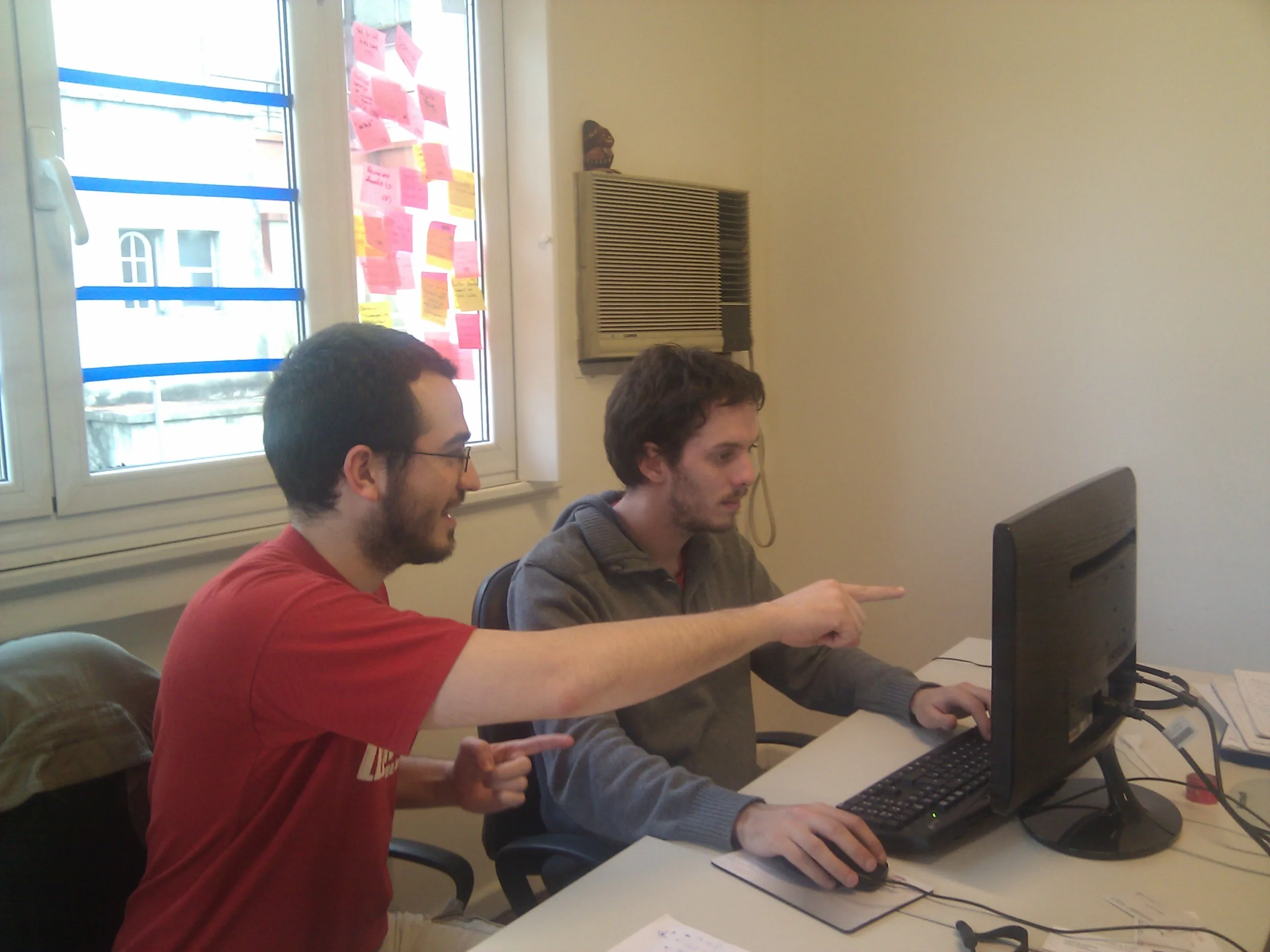
Illustrative archival photograph of pair programming by Calqui from September 2011. Licensed under Creative Commons Attribution ShareAlike 3.0. Converted to WebP for site delivery.