Opply raises $7.5 million for AI procurement

Opply announced a $7.5 million funding round on October 21, 2026, led by Chalfen Ventures. Index Ventures, Anthemis, Entrepreneurs First, In This Together and Ventures Together participated. The company builds AI agents for consumer packaged goods operations, with an initial focus on food and beverage brands.
Approval sits inside the workflow
The Brain platform description combines a brand’s orders, suppliers, payments and certificates with information from Opply’s network and the market. It describes recommendations followed by execution after approval. For major decisions, including a new supplier, a price change or an order on payment terms, Opply says Brain asks the customer before proceeding. Routine operational work is described as running automatically.
That distinction leaves a practical implementation question. A buyer needs to establish which decisions require approval, who can give it and what happens when an order changes after authorization. The public product description is not a complete permissions or exception handling specification.
From specifications to supplier followup
Opply’s supplier sourcing service starts with the product specification, target price, quantity and purchasing pattern. The company says it finds and qualifies options, then sets up the contract or individual order after the customer chooses. It also requests samples and specification sheets. The brand therefore still needs a clear definition of the ingredient or packaging it will accept.
The purchase order workflow accepts an ingredient contract, a request to a named supplier, an uploaded purchase order or a message in Opply chat. The service then places the order, follows up on confirmation and delivery dates, and records status updates. Opply asks customers to provide their supplier list, contacts and minimum order quantities. Those inputs are part of the deployment work.
The accompanying document workflow gathers specifications, certificates and certificates of analysis, links them to orders, tracks expiry and follows up with suppliers for renewals. Opply asks for existing documents and the supplier list. This describes document handling and followup. It does not independently establish that a material meets every requirement a buyer or regulator might apply.
For orders running through Opply, its supplier performance service records late deliveries, shortages and specification problems against the relevant supplier. It tracks delivery performance, lead times, spending and dependency, and can prepare alternative suppliers for customer approval. The useful operational record is the order history behind those scores. A dashboard cannot establish the quality of transactions that never enter its records.
Financing and system scope
Opply also offers extended payment terms, with suppliers paid on their terms and the customer paying Opply later. The advertised period is up to 90 days, subject to a credit check at onboarding and a limit based on the customer’s financial profile. Recent financial records are required. Buyers still need to confirm their offered limit, payment schedule and financing cost.
Its accounts payable dashboard links invoices, terms and due dates to orders placed through Opply. That qualification matters when assessing its coverage. A brand with purchases elsewhere should establish how those commitments will be reconciled with the Opply view before treating it as a complete picture of company payables.
For larger businesses, Opply’s audience page says Brain runs alongside an existing enterprise resource planning system. That page does not name connectors or specify how records synchronize. Teams evaluating the service should confirm how supplier, order and payment changes reach their existing systems, including which record takes precedence when values differ.
ByteForward’s coverage of Procuros examines a related dependency, consistent trading data exchanged between suppliers and retailers using different systems.
Three capabilities remain on the roadmap
As checked on October 21, Opply’s services index labels inventory management, production planning and retail order management as coming soon. The descriptions include setting reorder points, scheduling production against materials and available slots, and handling retailer orders. Buyers need to separate services available now from capabilities still listed as forthcoming, rather than treating the broad operating system description as a complete availability statement.
The current production partner search has a narrower scope. Opply says it compares candidates against a product brief, volumes and geography, including minimum quantities, production slots and certifications, then introduces the customer to its chosen partner. Requirements can include allergens and bespoke ingredients. Finding an appropriate producer and scheduling a complete production plan are separate tasks.
For a procurement team, a useful starting point is one defined purchasing flow with complete specifications, supplier contacts and documents. That makes it possible to check how an approved request becomes an order, how changes are recorded and where staff must intervene before expanding the scope.
These are vendor described workflows, reviewed against public pages on October 21. ByteForward has not tested Opply or verified its savings, delivery results or financial returns. The financing announcement establishes new funding, rather than independent evidence of operational performance.
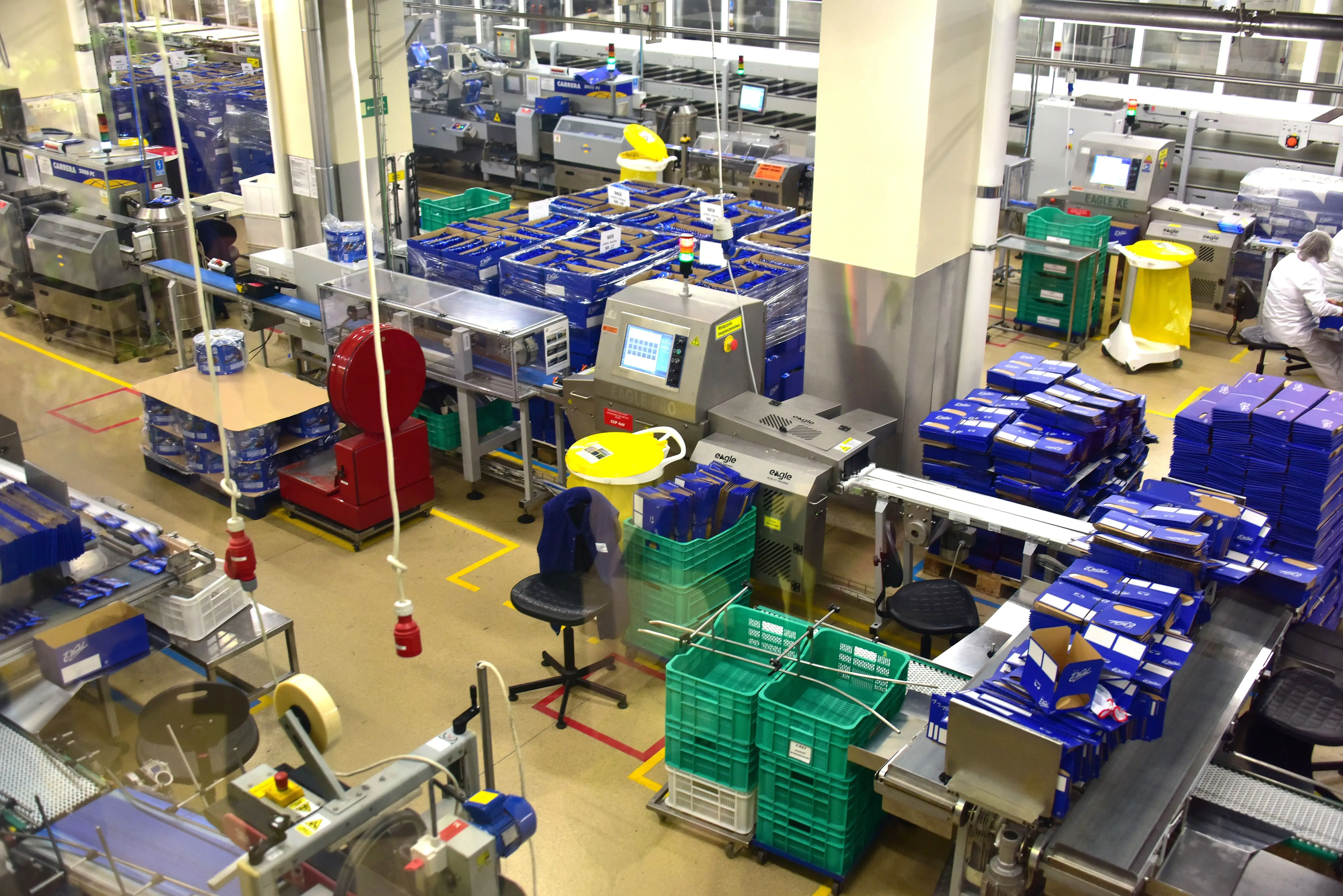
Illustrative archive photograph of the Venus chocolate production line at Lotte Wedel in Warsaw in 2018. Photo by Adrian Grycuk via Wikimedia Commons under Creative Commons Attribution ShareAlike 3.0 Poland.