Google connects external apps to Search AI Mode

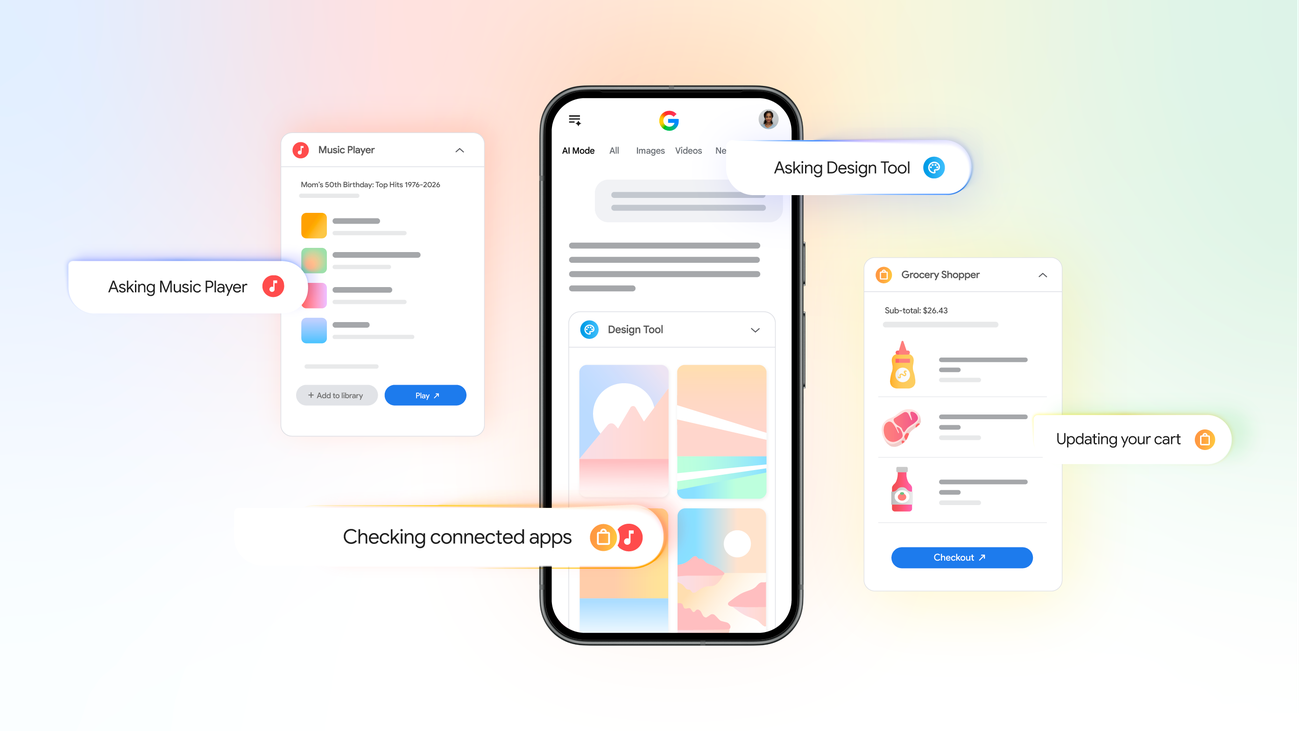
Search AI Mode is done being a read-only answer box. Google said U.S. users can now connect apps inside AI Mode and act on results without bouncing through a separate chat product.
The Gemini app already had connectors. This move puts the same class of action on the Search surface people actually open all day. Planning stays in Search. Checkout, design picks, and playlists can start there too.
Which apps connect at launch
Google’s launch examples are Instacart, Canva, and YouTube Music. Plan a barbecue grocery list, push ingredients into an Instacart cart, finish checkout in Instacart’s app or site. Ask Canva for flyer templates. Curate a party playlist in AI Mode and save it straight to YouTube Music.
That is a thin initial roster — shopping, design, music — not a full Workspace-and-travel suite. Google says it is working with more partners and will add apps soon. The Gemini app already supported a wider set earlier; Search is catching up on a shorter list first.
What you can do without leaving Search
The pitch is fewer context switches. AI Mode helps you plan; a connected app lets you execute the next step from the same thread. With Personal Intelligence plus connected apps, Google also promises more tailored responses — Search using what it knows about you and what the linked service can do.
This is Google turning AI Mode into a task router, not just a summary engine. Brands that lived on the blue-link click path should notice: the handoff can go to a partner cart or template picker instead of a classic results page. For users, the win is obvious if the action completes. For publishers and merchants outside the partner set, distribution just got a new middleman.
U.S. rollout limits
The feature is “starting to roll out this week in the U.S.” It is not a global flip. Availability will vary by account and surface while the push completes. Google points people to AI Mode in Search to try connected apps today, which is product-speak for gradual exposure, not a guarantee every U.S. query sees every connector.
Outside the U.S., wait. Inside the U.S., expect partner coverage to widen before geography does. Early access will feel uneven until the partner list and account eligibility catch up.
Privacy and permission gotchas
Google’s blog leads with “securely link.” The finer print lives in Gemini’s Connected Apps privacy materials: connecting a service can share chat content, device preferences, location, and data pulled from the app itself so the integration can complete the task. Third parties then handle that data under their own policies. Deleting data on Google’s side does not erase what a partner already received.
Users should treat each connect as a scoped grant, not a one-time convenience toggle. Review which actions the app can take, disconnect what you do not need, and assume grocery lists, design prompts, and playlist tastes may leave Google’s boundary once you opt in.
Analysis: Search just became a place where Gemini can spend your attention — and, with permission, touch your carts and libraries. That is the competitive move against ChatGPT and Claude connectors. It is also a new permission surface sitting on the world’s default search box. The product wins if the actions are useful. The trust test is whether Google makes revoke, audit, and partner-data deletion as obvious as the “connect” button.