Google unveils Gemini 4 Argon with a restricted first rollout
Gemini 4 Argon starts with selected cyber defenders. Google announces one million output tokens and introductory pricing ahead of a broader rollout.

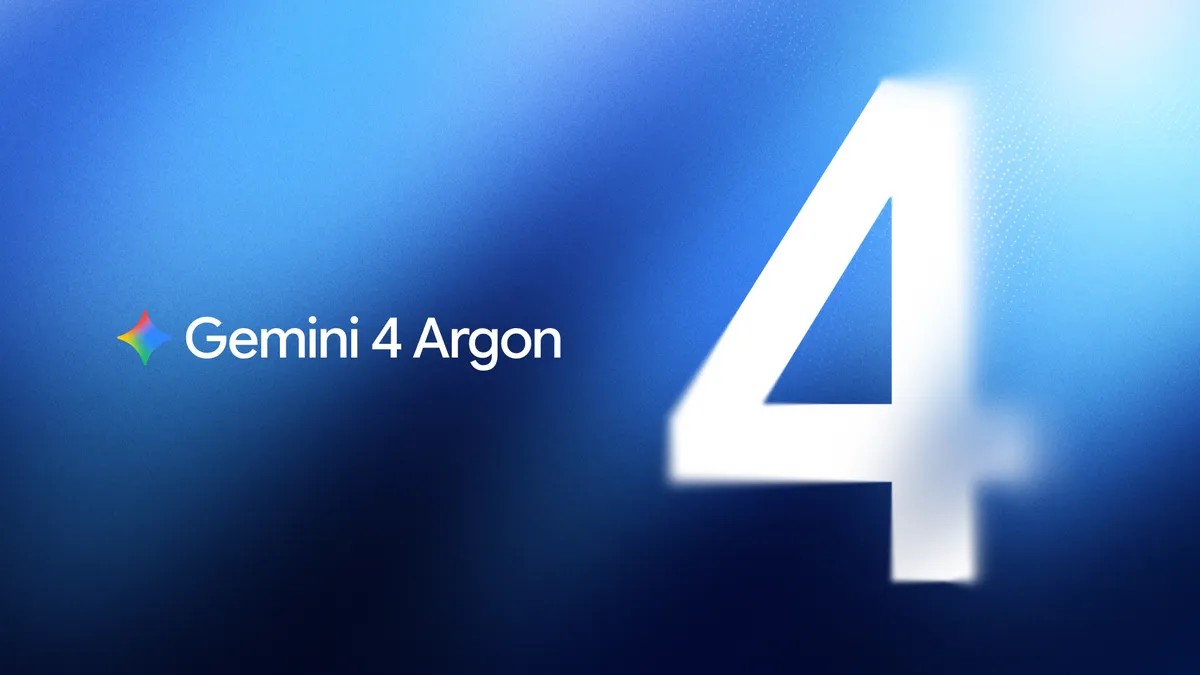
Google announced Gemini 4 Argon on September 30, with initial access going to selected cybersecurity defenders through its Fairwind Program. The model targets demanding coding, knowledge work and security tasks. Broader access for developers, businesses and consumers is still to come.
The launch announcement makes availability the immediate issue for most readers. A model page alone does not establish public access.
Who can use Argon first
The Fairwind Program gives approved organizations access to defensive capabilities under specific conditions. Google prioritizes governments, critical infrastructure operators and core technology platforms. The program says it works with more than 650 partners globally, but only a set of partners receives Argon access.
Participating organizations must control and track employee access. They cannot resell, share or redistribute access to the models. Google also restricts permitted work to defensive and research purposes, including authorized security testing.
Those conditions are material to the launch. A capable model for investigating software weaknesses needs an operating process around it. Organizations evaluating access should identify who may use it, which systems they are authorized to test and how a proposed fix will be reviewed before deployment.
One million output tokens changes the scale of a run
Google says Argon’s output limit rises to one million tokens from the previous 64,000. This is an output allowance, rather than a claim about how much source material can be supplied as input. Google connects the increase to extended reasoning and complex workflows.
A longer run gives an agent more room to continue working, but it also increases the importance of useful stopping conditions. Developers should ask what counts as completion, when a person should intervene and how much a task may spend. More generated text is valuable only when it advances the task.
Introductory pricing will not last indefinitely
Google lists introductory rates of $2 per million input tokens and $10 per million output tokens. Cached input receives a 95 percent discount. After the introductory period, the announced input and output rates rise to $4 and $20. The announcement does not state when that period ends.
For planning purposes, both price levels matter. A workflow that looks economical during an introductory offer should also be tested against the later rate. Teams should avoid treating the launch price as a permanent cost assumption.
On the published figures, those introductory rates match GPT 6.1 Sol’s standard input and output prices. Google’s stated later rates are twice as high.
The benchmark picture has strengths and tradeoffs
Google’s published comparison shows Argon ahead on several tests and behind on others. The figures below are the values reported by Google, rather than results from ByteForward testing.
| Evaluation | Gemini 4 Argon | GPT 6 Astra | Claude Opus 5.5 |
|---|---|---|---|
| DeepSWE v1.1 | 77.9% | 74.1% | 74.2% |
| FrontierSWE v2 | 55.0% | 65.5% | 62.3% |
| AutomationBench | 51.3% | 41.4% | 42.5% |
The methodology document says evaluations generally use the highest thinking settings. Sources differ by test. Google’s DeepSWE result was computed with its own run, while FrontierSWE comes from a public leaderboard. Competitor results generally come from provider reports unless otherwise specified.
That mix is a reason to read the methods alongside the scores. The table supports a narrower conclusion than declaring one model best at everything. Different software tasks, tools and evaluation settings can produce different rankings.
What matters at the next stage
Google plans to begin broader release with paid API customers and Google AI Ultra subscribers. Its announcement ties that expansion to testing and work on safeguards, without giving a firm public launch date.
The next useful information will be practical. Developers need final access details, documented limits and an opportunity to test representative work. Security teams need evidence that findings are reproducible and patches preserve expected behavior. Argon is a significant new model announcement, with restricted availability still shaping what users can do with it.
Featured image from Google’s Gemini 4 Argon announcement.

[…] Gemini 4 Argon launch report explains the initial rollout and Google’s own benchmark claims. These independent findings […]
[…] For more on Google’s recent releases, see our coverage of Gemini 4 Argon’s restricted rollout. […]
[…] ByteForward’s existing independent benchmark analysis covers that evidence in detail, while its launch report explains the restricted release and separate API […]