Functionize Studio uses adversarial agents to test software

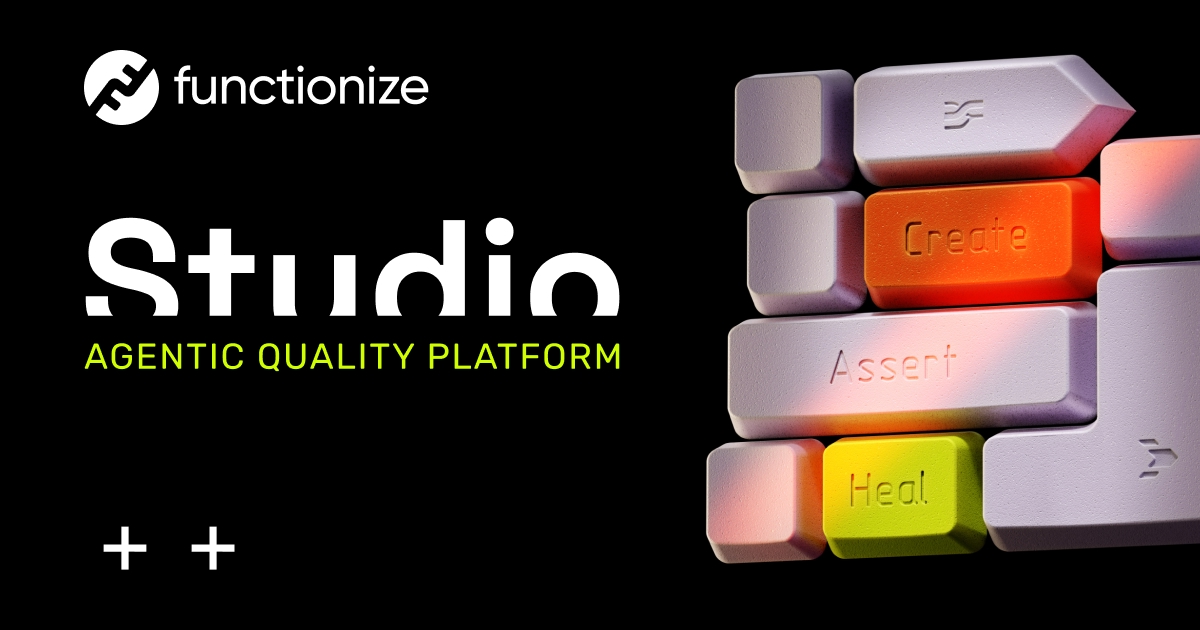
Coding agents made software cheaper to produce. Quality did not get the same speed-up. Functionize’s answer, announced July 16, is Studio: an agentic QA surface whose job is to attack the app until it proves the release works as intended.
CEO Tamas Cser frames it as a permanent dependency problem. Autonomous agents write more of the world’s code. Verification needs an agent with an opposing objective, equal capability, and human oversight. Studio is Functionize’s pitch for that opposing loop.
What adversarial agents do in Studio
Studio’s agents build tests against the live application, run them across browsers in parallel, and return a verdict on each release. The starting prompt is plain language: describe what needs checking. Studio is supposed to generate coverage from what the app does while running, not from reading the source.
Functionize says the models, data layer, and execution engine are its own, trained on petabytes of real enterprise application data. Execution is pitched as deterministic — same test, same result — so teams can separate real regressions from flake. Studio also adds a chat-first interface so teams can steer the agents and see how quality is being proven.
The adversarial framing matters. These agents are not there to rubber-stamp the coding agent that wrote the feature. They are there to break the happy path until the product holds.
Self-healing tests as UIs change
Agent-written software changes UIs constantly. Brittle selectors die. Functionize’s long-standing claim, restated for Studio, is that the suite repairs itself as the application changes. Heal the test when the button moves. Keep coverage alive without a human rewriting locators after every sprint.
That is the product’s core economic bet: quality that keeps pace with agent-speed development instead of becoming the bottleneck that forces teams to ship blind. Whether “repairs on its own” survives messy enterprise UIs is the part buyers will verify in pilots, not press releases.
Enterprise surfaces in scope
Studio is aimed at everything an enterprise runs — in-house apps plus the platforms the business depends on. Named in the launch: Salesforce, Workday, ServiceNow, and SAP. Honeywell is cited as an early design partner, with Functionize claiming millions of agents and well over 50,000 tests executing through Honeywell pipelines.
Plans span Individual (Free, Pro, Max), Team (Growth, Scale), and Enterprise, with pricing at functionize.com. Existing customer names in the about blurb include GE Healthcare, McAfee, Markel, Geico, and Alight — proof points for the broader platform, not independent Studio audits.
Claims to treat as vendor-asserted
Almost every sharp number here is company-asserted via PR Newswire. Petabyte-scale training data, deterministic execution, Fortune 500 footprint, Honeywell’s agent and test counts — none of that arrives with a third-party eval harness in the launch materials. Treat Studio as a serious product bet from a testing vendor that already sells into large enterprises, not as a verified new standard for agentic QA.
Analysis: the strategic read is cleaner than the metrics. If coding agents own the write path, someone has to own an independent read path with teeth. Functionize is selling that read path as Studio. Buyers should demand demos on their Salesforce and SAP surfaces, measure false-pass rates, and keep a human in the loop until the adversarial claim is earned in production — not just in the press release.