
FastOPD tests smaller robot policies with faster inference
A distillation study measures the tradeoff between robot policy speed and success

Researchers describe FastOPD in a September 30 project and an October 2 paper. It transfers behavior from larger robot policies into a 451 million parameter student.
The speed and success tradeoff
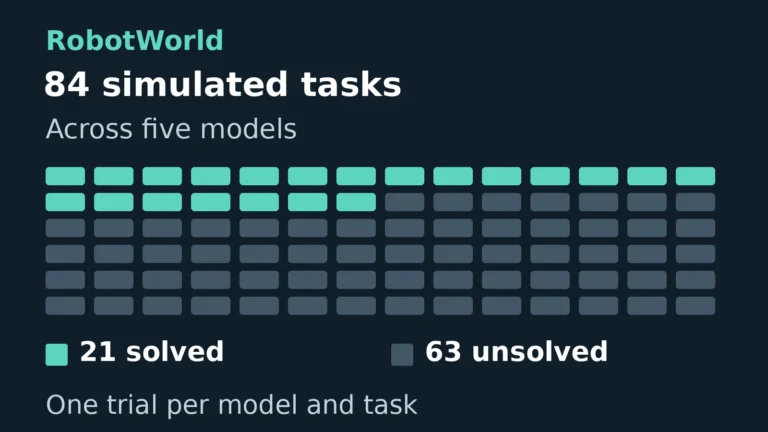
On simulated LIBERO tasks, the two step student reaches 81.8% success versus 97.5% for its ten step teacher. Measured inference takes 66 milliseconds versus 301 milliseconds on an RTX 3090. That timing excludes preprocessing and postprocessing.
Physical evidence is narrow
The physical test covers one ball placement task, with 50 trials per policy. Four step FastOPD reaches 50% success. These are authors’ preprint results. Simulation results use one training run. Code is still forthcoming.
Archival electronics photograph by Sahand Babali, published in October 2020, under the Unsplash License. This illustrative image does not show FastOPD or its tested hardware. Source supplied JPEG rendition with no local edits. No endorsement is implied.