DoorDash opens an AI ordering connector for workplace meals
DoorDash is opening a limited beta for corporate ordering through AI agents, alongside expanded access to its personal command line tool.

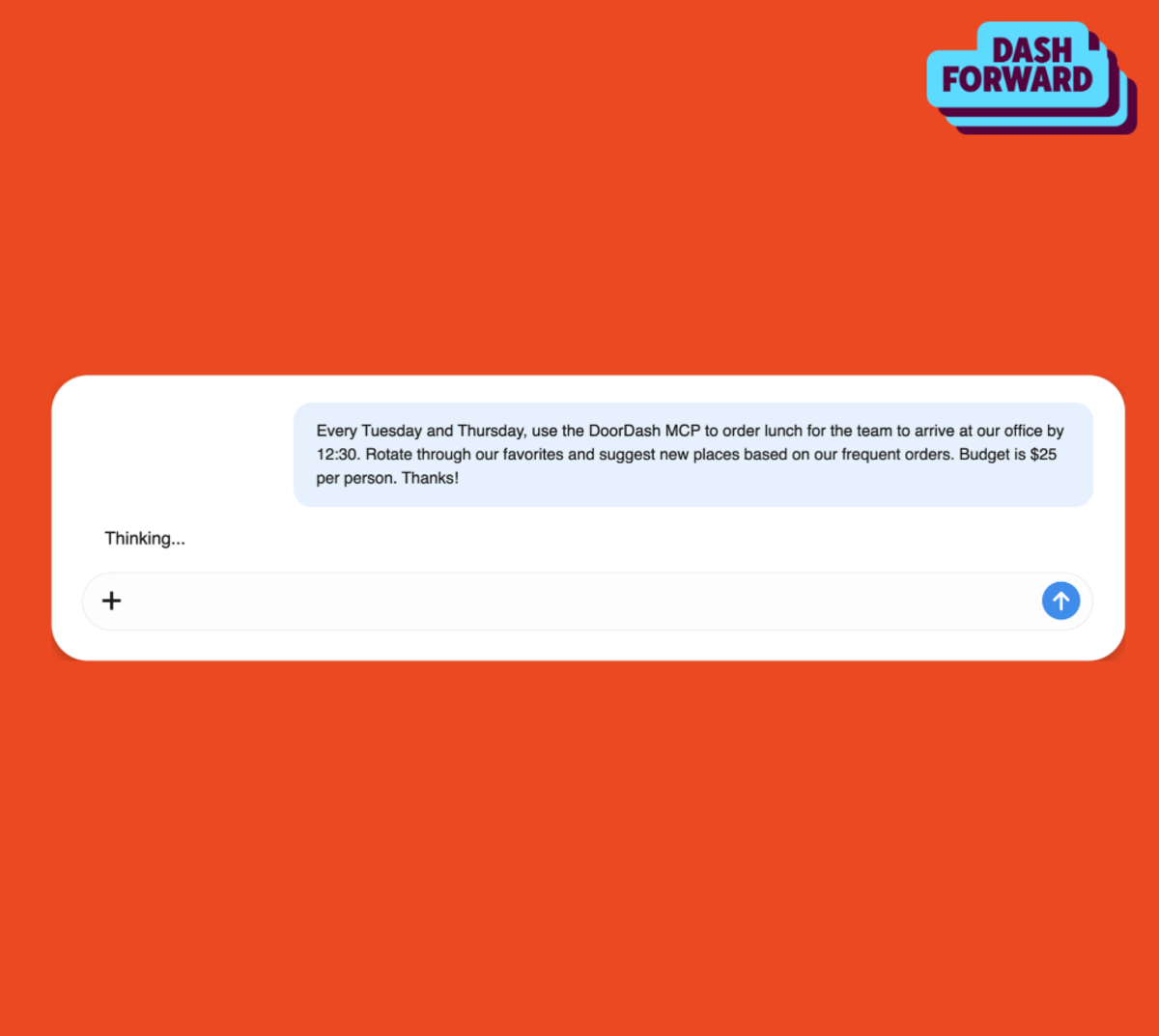
DoorDash introduced a corporate ordering connector on September 30, giving companies a way to connect internal AI agents to its shopping, checkout and delivery tracking systems. The service remains in limited beta, with a broader company waitlist now open.
The announcement names SpaceXAI, Vercel, Cognition, Tempo and Mercor among early partners. Suggested uses include collecting lunch orders through a workplace chat tool and restocking an office when its own inventory system identifies a shortage.
Company access still requires individual authorization
The connector uses the Model Context Protocol, commonly called MCP, to let compatible agents interact with DoorDash. Company access is the starting point. Employees sign in to their own DoorDash accounts and authorize an agent to act for them.
The setup guide makes the access limit explicit. Approved testers receive a configured OAuth client and setup instructions. The user authorization flow uses OAuth 2.1 with PKCE, a protection used during the exchange that connects an account to a client.
This means an organization can provide the workplace interface while employees retain separate account connections. The product overview also describes support for corporate meal budgets. It positions the hosted connector for internal company use.
Checkout is a real payment step
DoorDash’s technical guide separates preparing an order from submitting it. Developers can find restaurants, inspect menus, add items to a cart and preview the total without completing a purchase. The submission step charges the customer’s payment method and requires explicit confirmation.
That boundary should be visible in any workplace implementation. An agent can help collect preferences and prepare a cart, but employees need a clear way to review the delivery details, total cost and final purchase before money is spent.
A separate option for personal agents
DoorDash is also expanding beta access to its command line tool for individual developers. Its installation guide lists builds for Apple Silicon Macs and Linux computers using the amd64 architecture. Access to the release files still requires approval.
The two offerings serve related but different needs. A company can build a shared ordering experience around the hosted connector, while an individual can connect a personal agent to the command line tool. Both bring DoorDash transactions into software the customer already uses, with authorization and checkout controls remaining central to a dependable integration.
Official illustration from DoorDash.