
Anthropic study finds robot costs limit physical automation
New research compares demonstrated robot capability with deployment economics

Anthropic’s September 30 robotics study estimates that existing machines can perform tasks representing 34 percent of US working time in some settings. Yet its cost model finds robots competitive with human labor for only 0.3 percent of working time today.
Capability and cost are separate questions
The researchers used Claude to assess occupational tasks, search for demonstrated robots, estimate time shares and calculate deployment costs. Their exposure measure distinguishes specially engineered environments, structured workplaces and less predictable settings. Results are weighted by employment and estimated time spent on each task.
A robot completing one part of a job does not establish that an employer can automate the whole role. Consider a hypothetical machine that handles a repetitive motion reliably but needs a person to set up unusual items and resolve exceptions. The useful comparison is the complete workflow, including the work that remains around the machine.
Where the occupational data comes from
The O*NET database describes occupations through information including task statements, skills and working conditions. It provides a structured starting point for studying what people do at work. The robot capability judgments are an additional research layer, so they should not be mistaken for an official government forecast.
Labor costs also require care. The Bureau of Labor Statistics compensation methodology includes wages, salaries and employer benefit costs per hour worked. Benefits include paid leave, insurance and retirement. Comparing a machine’s purchase price only with a worker’s take home pay would leave important costs out of the analysis.
The projections depend on assumptions
Anthropic’s future scenarios hold tasks and wages fixed and apply uniform improvements. The authors acknowledge that technology may advance unevenly and that regulation and human preferences can limit adoption. Their historical associations between exposure and later employment changes do not establish a future job loss count.
For anyone assessing an automation claim, three questions are useful. Can the system handle the actual operating environment? Does the cost comparison include installation, upkeep and the remaining human work? Has the proposal been tested through ordinary failures and exceptions? A demonstration can answer part of the first question while leaving the others open.
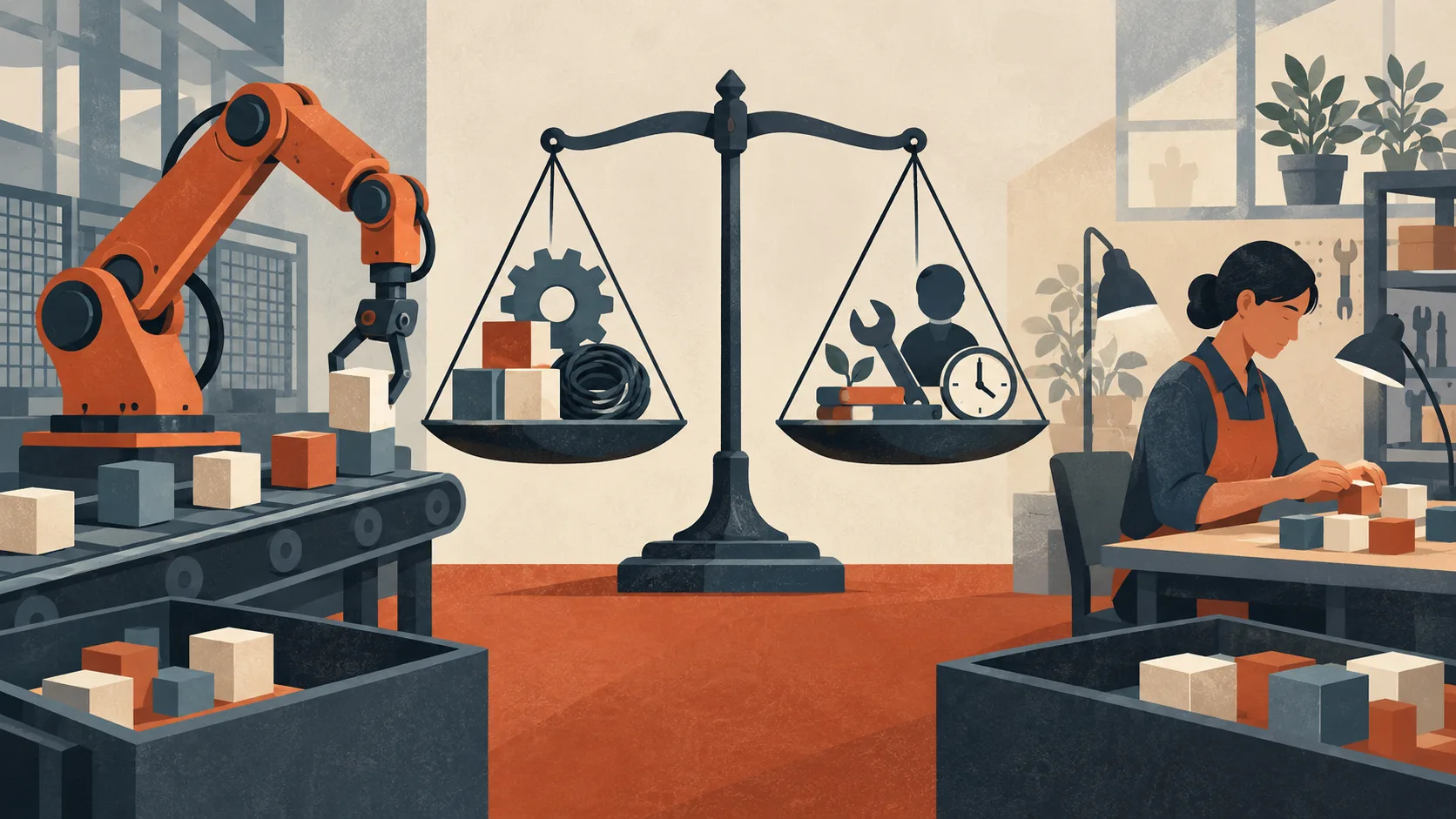
Featured image is an original AI generated editorial illustration.