Firebird opens an NVIDIA DSX AI factory in Armenia

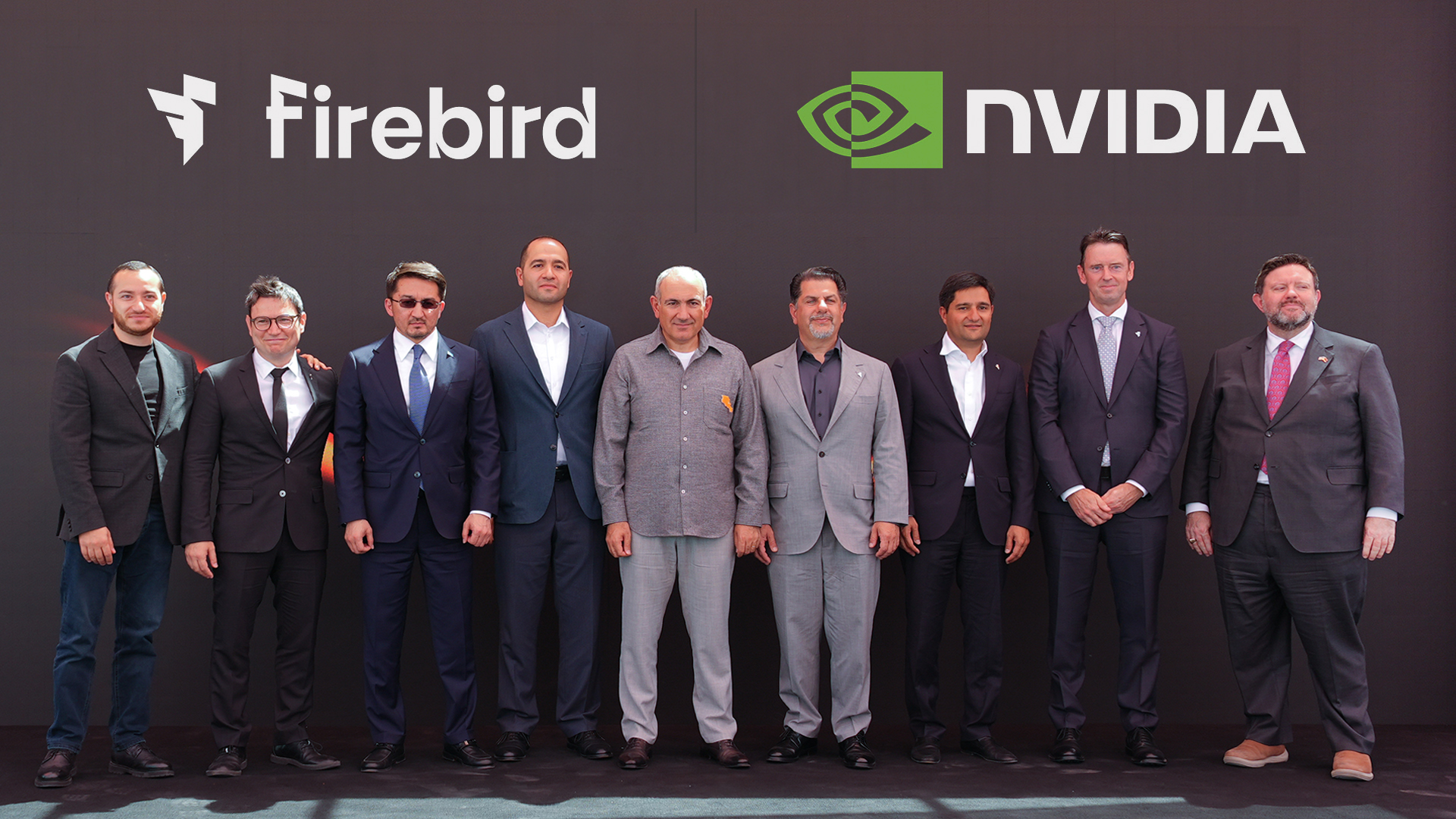
Armenia just got a named seat on the AI cloud map. On August 8, NVIDIA’s blog said Firebird opened what it calls the CIS region’s largest AI factory in Hrazdan, built on the NVIDIA DSX platform with Dell high-performance infrastructure. The ceremony drew Armenia’s prime minister, Kazakhstan’s deputy prime minister, and the U.S. chargé d’affaires — sovereignty theater attached to racks.
What opened in Hrazdan
The Hrazdan site is live enough for an inauguration and early customer talk. NVIDIA frames AI factories as the compute layer for training, fine-tuning, and deploying models at national scale. Firebird’s pitch is local: developers, startups, enterprises, universities, and public institutions get capacity for languages, industries, and national priorities without shipping every job to a U.S. or EU region.
Delivery speed is part of the claim. NVIDIA says the factory came up in just over six months. Schneider Electric supplied power gear — medium- and low-voltage switchgear, three-phase UPS, rack enclosures. Vertiv handled chilled-water cooling, TrimCooler heat rejection, and iCOM CWM chilled-water management. Early demand includes Perplexity, which NVIDIA says is working with Firebird for agent-platform and answer-engine workloads. Ribbon-cuttings are not utilization reports. Still, a named AI-native tenant this early is more than vapor.
DSX, Blackwell/Rubin, and Dell stack
The stack is NVIDIA’s full factory kit plus Dell iron. Firebird plans more than 70,000 NVIDIA Rubin and Blackwell GPUs and 300 megawatts of AI infrastructure capacity in Armenia by the end of 2027. Co-founder Alexander Yesayan put the wider ambition at roughly 2 gigawatts of capacity around the world over the next two years or so, focused on “frontier markets.”
DSX is the codesign story: accelerated computing, networking, power, and cooling as one system. NVIDIA claims the platform can run up to 40% more GPUs on the same footprint, improving tokens per dollar and value per megawatt. Servers are Dell PowerEdge. Networking rides NVIDIA’s Spectrum-X class fabric in the usual DSX pattern. Treat the 40% and 70,000-GPU figures as vendor roadmap, not an independent audit of today’s floor. What matters operationally is whether Hrazdan can keep power, cooling, and interconnect ahead of GPU install cadence.
NVIDIA’s investment intent
NVIDIA said it intends to invest in Firebird, following an earlier 2026 investment by CoreWeave. That is equity intent plus GPU supply, not a completed term-sheet dump. The capital is framed as fuel for Firebird’s global footprint and for building large clusters across frontier markets, including a roadmap that already names Kazakhstan beside Armenia.
The pattern matches other neo-cloud deals: the chip vendor wants utilization of Blackwell and Rubin; the cloud wants preferential access and a valuation stamp. CoreWeave’s prior check adds a peer operator on the cap table. Analysis: NVIDIA is underwriting a CIS beachhead while Firebird sells “compute at home” to governments that want AI capacity without full hyperscaler dependence.
Why emerging-market AI clouds matter
Export controls, latency, language models, and national industrial policy all push the same way: some countries will not leave every training run in Northern Virginia. Firebird’s Armenia site is a proof that DSX-class factories can be marketed as regional infrastructure, not just U.S. or Gulf mega-campuses.
The risks are familiar. Power and permitting can stall the 300 MW plan. Export licenses can throttle GPU delivery. Utilization can lag inauguration photos. If Firebird hits even a fraction of the 70,000-GPU and 2 GW roadmap, Armenia becomes a real interconnect node for CIS and adjacent demand. If not, Hrazdan is a showcase rack with diplomatic attendees. Watch GPU delivery schedules, Kazakhstan follow-on sites, and whether Perplexity-style tenants expand beyond pilot workloads into sustained training and inference spend.

[…] wider infrastructure push also includes Firebird’s AI factory in Armenia. A planned investment and an operating facility represent different stages of […]