Meta releases Muse Spark Open with gated weights

Meta released Muse Spark Open on October 15, giving developers a new route to run and adapt its large multimodal model. The official weights are published on Hugging Face behind an access gate. Choosing a deployment still requires careful attention to the checkpoint format, available memory and license conditions.
For teams evaluating local AI, the practical question is which configuration they can operate reliably. A downloadable checkpoint, a working inference recipe and a usable application are separate milestones. This release supplies material for the first two. The third still needs testing against the work a team actually wants to automate.
What Meta has released
The official model card describes a mixture of experts transformer with 816 billion total parameters and 42 billion active for each token. It accepts text, images, audio and video, produces text, and supports a context window of up to one million tokens. Meta positions it for coding and agent tasks.
The repository file listing identifies the model as gated. Visitors can inspect the file names, including checkpoint shards and configuration material, but must sign in and review access conditions before accessing the model files. ByteForward did not accept those conditions or download weights. The public listing establishes that files are published, rather than that anonymous downloading is available.
BF16 and NVFP4 need different plans
BF16 uses 16 bit floating point values. NVIDIA’s NVFP4 format uses four bit values with additional scaling information. That reduces the memory needed to represent supported tensors, but it does not make every component of a model four bits or establish that every runtime and accelerator handles the checkpoint in the same way.
Meta’s deployment overview puts the BF16 reference weights at about 1.6 TB and the NVFP4 checkpoint at about 530 GB. It says only the experts are quantized in that NVFP4 release. Its inference routes include SGLang, vLLM, Transformers, MLX and llama.cpp.
The model card gives larger memory requirements for running the official checkpoints, at least 700 GB of GPU memory for NVFP4 and 2 TB for BF16. These are Meta’s deployment figures. They are distinct from the checkpoint file sizes.
The Mac results describe different checkpoints
Apple’s October 15 MLX report evaluates Muse Spark Open in NVFP4 on Mac Studio systems with M5 Ultra. It uses multiple machines connected through RDMA over Thunderbolt. Apple says this configuration does not fit on one Mac. Its reported comparisons cover two machine pipeline execution and tensor parallel execution across two or four machines.
At a context of 8,192 tokens, Apple reports 15.74 output tokens per second for the two machine pipeline setup, 24.99 for two machine tensor parallelism and 36.73 for four machine tensor parallelism. Decode speed was measured over 128 generated tokens. Those numbers describe the stated inference test, rather than the completion time of a coding project.
Hugging Face’s launch integration article describes another option. It reports running an oQ3e MLX quantization on one M3 Ultra with 512 GB of memory. The model occupies about 344 GB. Its reported generation rate is about 21 tokens per second with a 1,024 token prompt and 128 generated tokens.
The different checkpoint precision, hardware and prompt lengths prevent a direct speed ranking between those results. The single machine example also means the cluster requirement should not be generalized to every available quantization.
Maximum context depends on the serving setup
Hugging Face also gives two managed endpoint recipes. Eight RTX Pro 6000 GPUs serve a context of 131,072 tokens, while eight H200 GPUs support 1,048,576. A model specification of one million tokens therefore does not mean every published deployment example is configured for that length.
Before choosing hardware, a team should identify the exact checkpoint, runtime version, target context and number of simultaneous requests. Measure memory use and response time together. A short interactive demonstration cannot settle whether the same installation will remain useful when several people submit larger jobs at once.
The license has a specific service threshold
The Muse Model License permits use, modification, fine tuning, distillation and redistribution subject to conditions. Copies and derivatives must retain the required notices, license and usage policy. Products using the model or derivatives must display “Built with Muse Spark Open” in their interface or accompanying documentation, website or settings.
Model as a service operators must notify Meta and secure a separate agreement before offering the model or derivatives if aggregate gross revenue of the licensee and affiliates exceeds US$20 million in any consecutive twelve months. That includes revenue earned elsewhere.
That provision expressly excludes internal use, research and commercial activity outside model as a service, including qualifying features within a company’s own product. Derivatives include models improved using its outputs. The usage policy still applies. Those conditions rule out a blanket description of the release as unrestricted open source.
Benchmarks still need their context
Meta’s evaluation methodology combines official benchmark results, internal runs and figures reported by other model providers. Some coding comparisons use different agent software around the models. Meta also cautions that its setups are not specifically optimized for competitors. A headline score cannot resolve how a chosen checkpoint will perform inside a different application.
Meta recommends additional safeguards for agents that can take real world actions. It also warns that downstream modifications can change measured safety properties. Teams adopting a different quantization or adapting the model should evaluate the resulting system rather than carrying over release claims unchanged.
ByteForward has not independently reproduced the quality or speed results. For a practical trial, start with a small set of representative tasks and record correctness, completion time, resource use and failures. Keep human review around consequential actions. This makes the decision about whether the deployment helps, rather than whether a demonstration looks impressive.
Our earlier Muse Wonder access guide covers the separate hosted model offering and its subscription distinctions.
For research context, our coverage of Meta’s Muse Spark mathematics papers examines the human guidance and verification behind those collaborations.
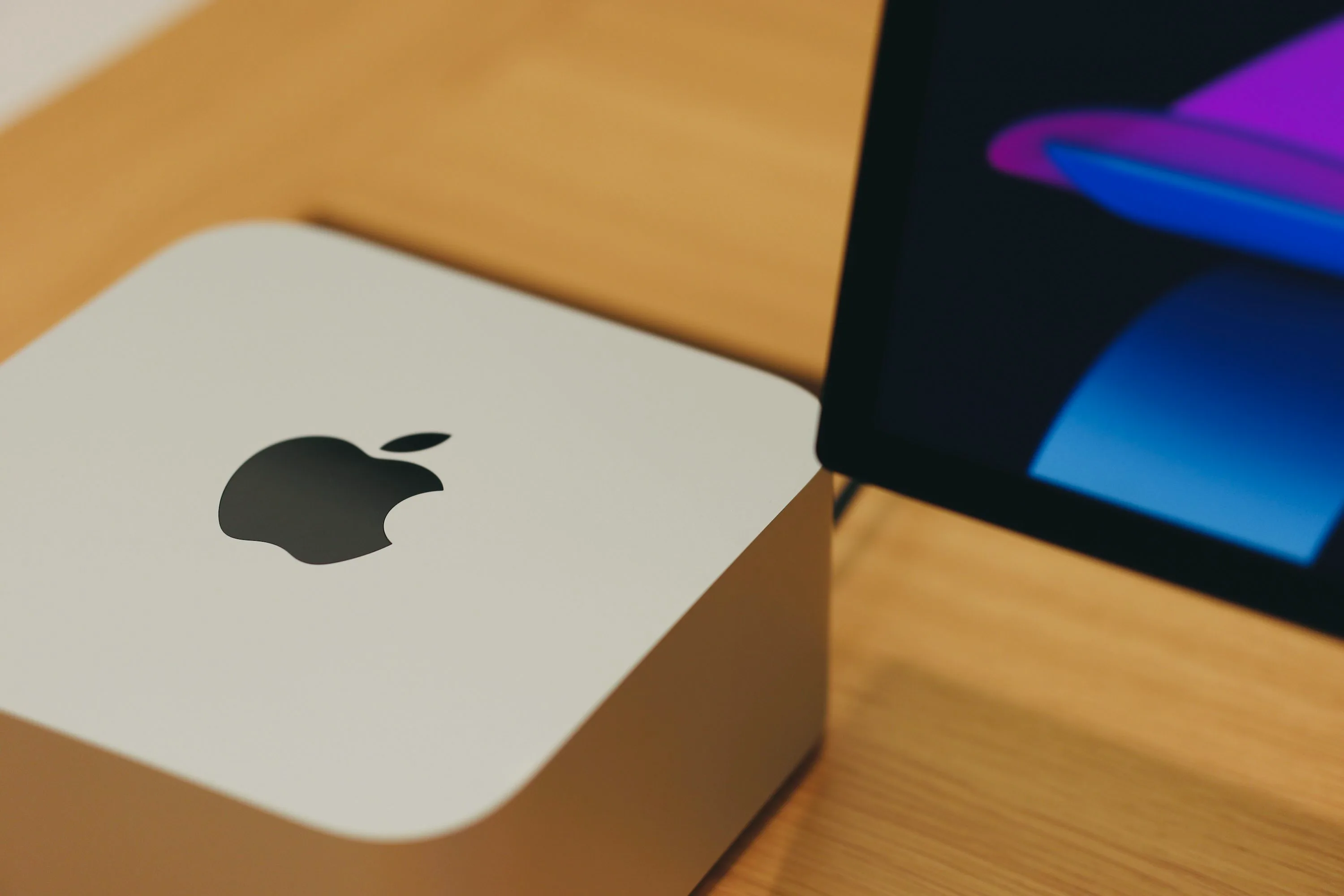
Archival Mac Studio photograph by Peng Originals on Unsplash, published in 2022 and used under the Unsplash License.