Meta publishes six math papers developed with Muse Spark
Meta shares human guided research with labeled AI contributions and acknowledged earlier results

Meta published six mathematics papers on October 2 from collaborations between researchers and Muse Spark. The company says five address previously open questions. The researchers used Muse Spark 1.1 and 1.2 in Thinking Mode through the regular Meta AI chat interface.
Human guidance and review remain central
Meta describes a process in which mathematicians guided the work and another group reviewed it. The papers distinguish passages drafted by people from material assisted by AI. That review process should not be read as a claim of independent journal peer review.
An ellipsoid result with a clear boundary
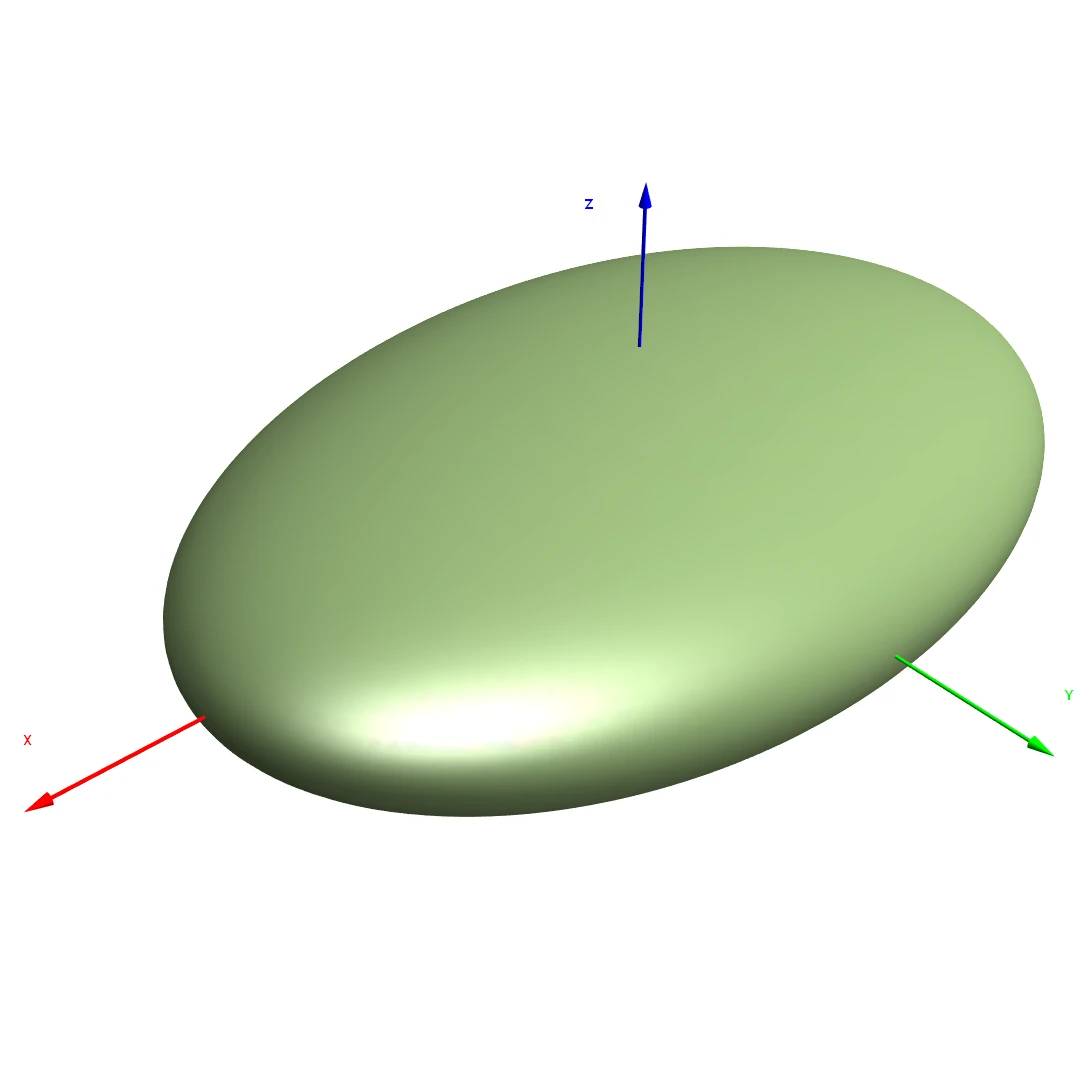
Aykut Arslan’s ellipsoid fitting paper studies when random Gaussian points can lie on an ellipsoid centered at the origin in many dimensions. It reports a threshold near one quarter of the dimension squared. Below that threshold, fitting becomes overwhelmingly likely as the dimension grows. Above it, fitting becomes overwhelmingly unlikely. The paper explicitly leaves the limiting boundary case unresolved.
The manuscript credits three independent works posted in August that reached related threshold results through different approaches. Its statement on AI use says researchers checked and corrected the mathematics and take responsibility for the final manuscript.
A counterexample readers can identify
Joseph Phillip Brennan and Milana Golich’s group theory paper reports a semiabelian group with 384 elements that is not monomial, contradicting a conjecture. It identifies the example as SmallGroup(384, 20127) in the GAP software library.
The authors describe prompting Muse Spark to generate the search algorithm and running it over groups with up to 900 elements. Their appendix includes code and computational output. They also acknowledge a different counterexample reported by the AI agent Nilradical on September 16.
What this release establishes
Our reading is that the useful contribution is a set of inspectable collaborations. Assessing them requires separate questions about the mathematical result, the model’s role and the human work needed to correct and complete it. A successful paper alone cannot establish how reliably the same model would solve an unfamiliar problem.
ByteForward has not independently verified these proofs. Readers evaluating the work should start with the manuscripts, compare the acknowledged earlier results and distinguish the authors’ claims from conclusions reached through wider mathematical scrutiny.
Illustrative ellipsoid diagram by Rectas on Wikimedia Commons, created in March 2020 and released under Creative Commons CC0. Rendered on white and converted to WebP. This is a general geometric illustration rather than a figure from Meta’s papers.

[…] statement, its verification status and the available proof artifacts. Our recent coverage of Meta’s six mathematics papers examines another research collection through its human guidance, review and acknowledgments of […]