Runway previews Praxis1 robot policy ahead of public weights
Runway starts partner testing of a video trained robot policy while public weights remain pending

Runway announced Praxis1 on September 30, 2026, bringing its video pretraining into a robot control policy. Noble Machines, Standard Bots and Ultra are testing it. Public weights are promised in the coming months.
The company argues that ordinary video can reduce reliance on expensive robot demonstrations. Its announcement offers selected partners early access, but no public download or weight license.
Runway’s demonstrations include a mobile robot retrieving a book and a policy moved between a studio and kitchen without retraining. These are company demonstrations.
What the evidence actually measures
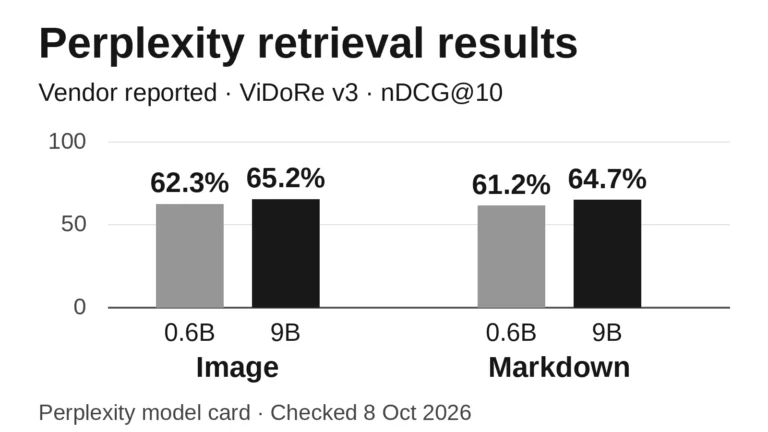
Runway’s placement comparison reports 16.1 cm error with web video pretraining and 16.0 cm with teleoperated robot video, after finetuning. Error bars represent one standard error of the mean across 93 evaluation pairs. The page does not specify the task set. The chart cannot establish performance across all hardware.
A separate February 27 study reported a 0.95 correlation in policy evaluation. Runway simulated eight existing robot policies and compared their scores with physical trials. All used a Franka Panda arm on tabletop manipulation tasks from RoboArena. This was an evaluation of a simulator, not a test of Praxis1.
Human graders assessed 1,450 simulated rollouts, producing more than 16,000 ratings. The reported correlation describes agreement in relative policy performance. Runway explicitly says that study tested policy ranking rather than prediction of absolute success rates. It leaves broader robot types and more accurate success estimates for further work.
Hardware integration remains a separate responsibility
Standard Bots’ RO1 safety documentation makes the deployment boundary concrete. It says the application and risk assessment determine how safety features are implemented, while the integrator must calculate the system’s final performance level. It also calls for a full safety assessment before production and notes that payload and attached tools affect safe operation.
Our reading is that teams should treat the preview as a reason to prepare a comparison on their own equipment. Define a useful completed task, count interventions and record failures before comparing systems. A placement score alone cannot tell a buyer how much supervision a complete workflow will need.
The release terms will also matter. Teams evaluating downloadable models should check permitted commercial uses, redistribution rights, compute requirements and maintenance obligations before committing an integration budget. Those questions belong alongside capability testing, especially when a project depends on modifying and deploying the model locally.
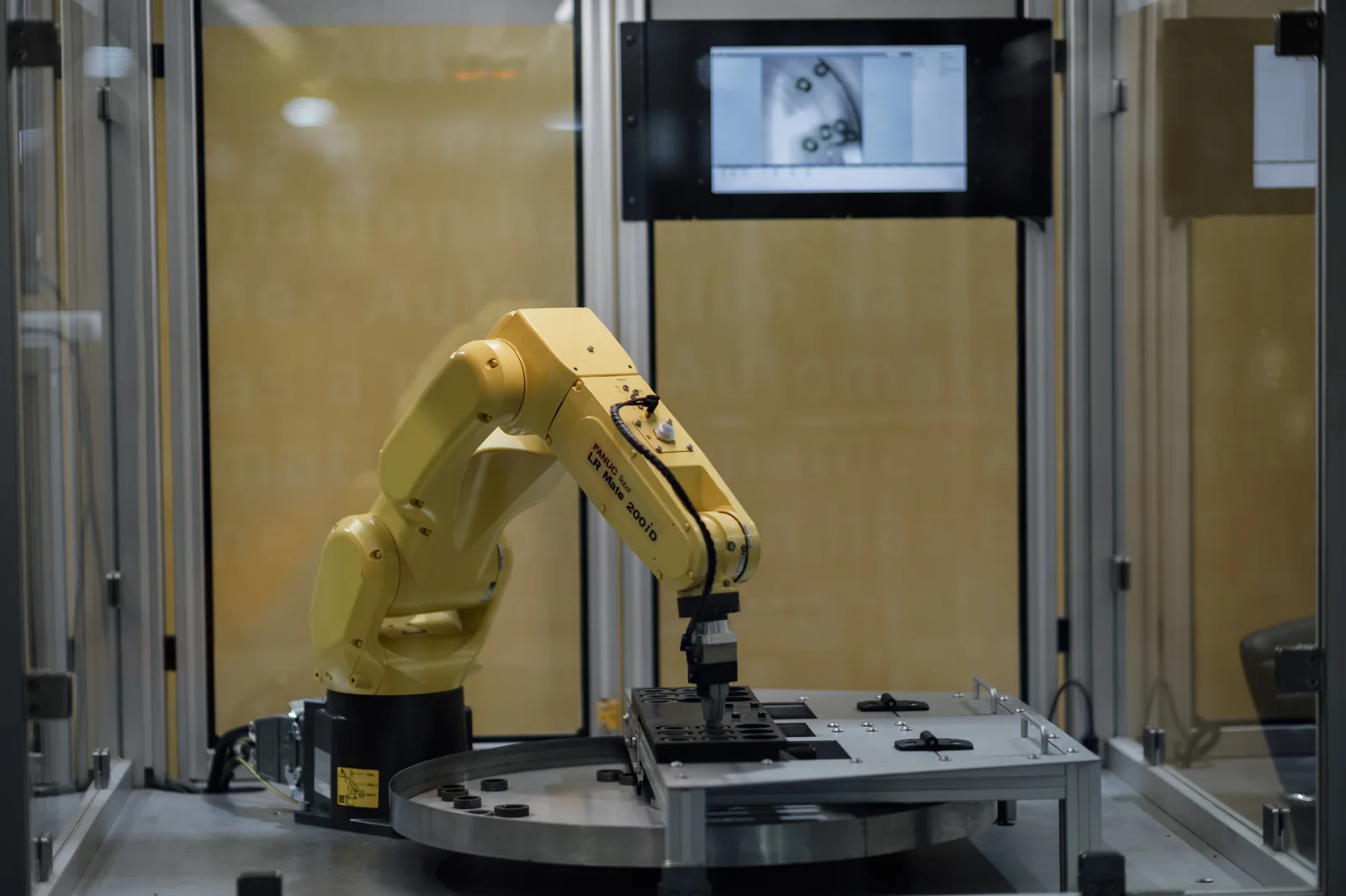
Illustrative photograph Robot arm works on a small component in a lab setting by Nenad Stojković, also known as Shixart1985, under Creative Commons Attribution 2.0. Photographed in May 2026. Resized and converted to WebP. This is unrelated hardware, not a Praxis1 demonstration.