Jeff Dean leaves Google to start Discovery Loop

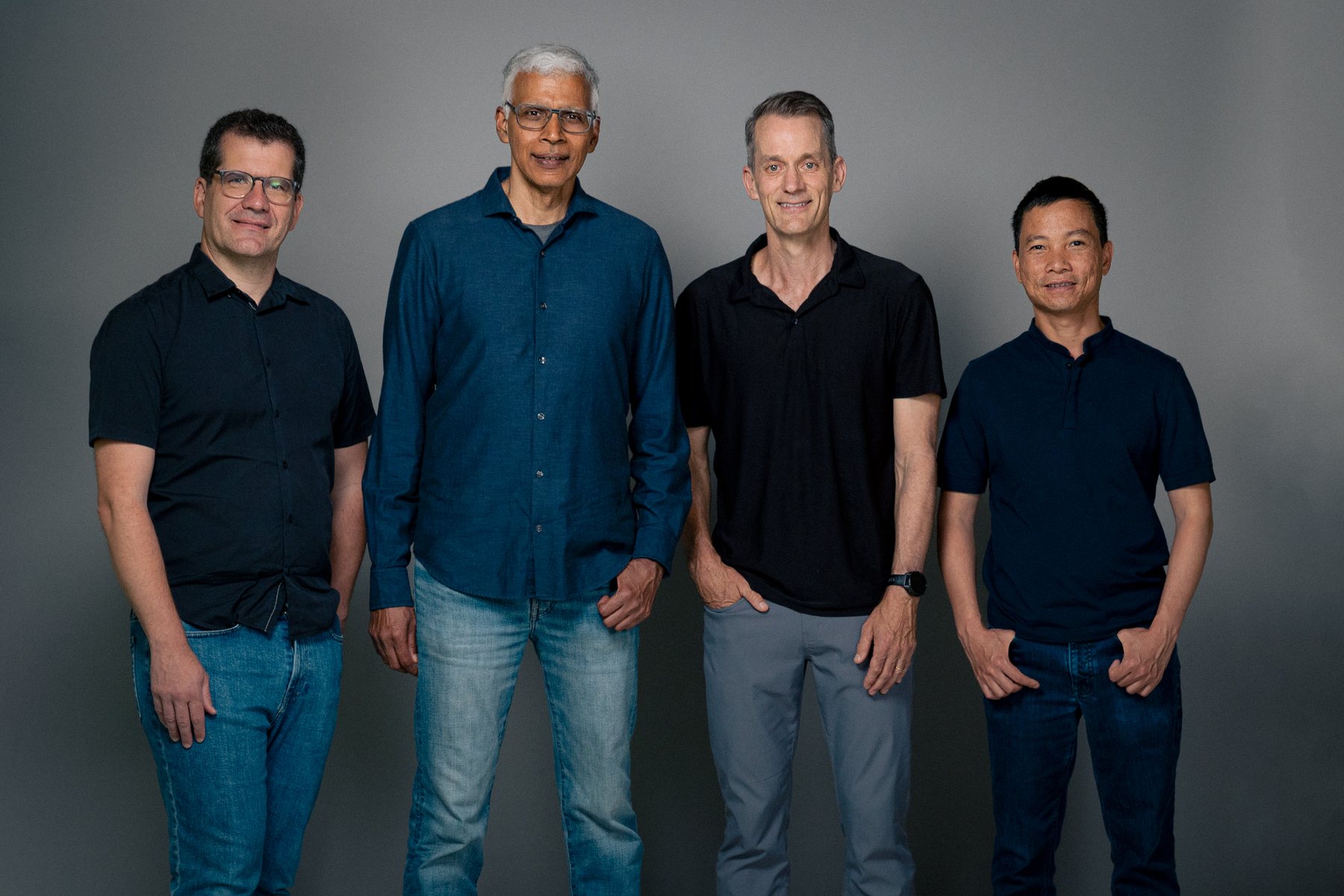
Jeff Dean is done being Google’s infrastructure myth and Brain elder statesman. After 27 years — employee number 30 — he is leaving to co-found Discovery Loop, a Palo Alto public-benefit company that wants to automate scientific and engineering discovery with frontier models and large-scale compute. Sundar Pichai confirmed the departure in the same note that reshuffled DeepMind. Alphabet stays in as founding investor and Cloud partner.
This is a talent exit with a product thesis, not a soft retirement tour.
Who left Google with Dean
Dean is not going alone. Co-founders are Sanjay Ghemawat, Google Senior Fellow and Dean’s longtime systems collaborator on MapReduce, Google File System, Bigtable, and Spanner; Oriol Vinyals, former VP of research and deep learning lead at Google DeepMind and a technical lead on Gemini; and Quoc Le, Google Fellow and a founding member of Google Brain.
Dean wrote that the four have worked together for 14 to 30 years. Discovery Loop stacks the résumé hard: Search and Ads infrastructure, TensorFlow, Pathways, TPUs, AlphaChip, AlphaStar, AlphaCode, AlphaFold, Gemini, mixture-of-experts architectures, word2vec, sequence-to-sequence models, chain-of-thought reasoning, neural architecture search, and more. The company claims three of the most-cited AI researchers and two of the most-cited distributed-systems researchers among the founders. Full-stack depth — chips through models through products — is the pitch.
What Discovery Loop says it will automate
The mission is simple and ambitious. Discovery Loop wants AI that automatically solves important problems in machine learning, science, and engineering by compressing the classic loop: propose an experiment, run it, examine results, iterate. Historically that loop is sequential and human-bound. The company says frontier models plus HPC-scale infrastructure can propose, run, and learn from evaluations in parallel — thousands of experiments at once — and raise both quantity and quality of output.
HPCwire notes overlap with government AI-for-science efforts. Near term, per investor write-ups, the company is its own first customer: automate ML research, then push toward hardware, drug discovery, materials, and clean energy. Dean has described domains where the whole loop can be computerized.
Public-benefit corp framing
Discovery Loop is a public benefit corporation, not a pure shareholder-primacy rocket. It says the goal is AI that acts as a “deeply positive, empowering force for humanity.” Seed financing is co-led by Radical Ventures and Khosla Ventures; the round was not closed at announcement and valuation was undisclosed. Alphabet participates as founding investor and Cloud partner, with collaboration on a research framework for ML systems and related infrastructure.
Public-benefit status does not make it non-commercial. It signals how founders want the charter read when science meets product pressure — and softens the optics of Google funding its own legends’ exit.
What Google loses in the exit
Pichai called Dean and Ghemawat drivers of transitions from early search infrastructure to the neural networks that shaped modern AI, wished them well, and kept the investor-and-partner hook. The operational loss is sharper. Dean was chief-scientist gravity. Ghemawat was systems bedrock. Vinyals sat on Gemini’s deep-learning spine. Le was Brain DNA. Losing that quartet punches research continuity, institutional memory, and recruiting narrative at once — even if Google retains weights, TPUs, and the DeepMind bench under Kavukcuoglu.
Alphabet’s bet is that sponsoring Discovery Loop keeps collaboration warmer than a hostile spin-out. Dean’s bet is that automating discovery is worth leaving the company with thirteen billion-user products. Google keeps the stack. Discovery Loop takes four people who built the hardest parts of it and aims them at science loops Google never made its core business.