Proteins designed with Claude bind scorpion toxins

Anthropic reported on October 20 that 17 of 211 proteins designed with Claude met its criteria for binding to scorpion toxins. The research announcement describes an early laboratory result. Whether those proteins can neutralize the toxins remains untested.
What the 17 successful designs mean
An internal research model worked in Claude Science for 64 hours, guided by an initial prompt and four follow ups. Adaptyv Bio and Twist Bioscience then tested selected designs. The 64 hours describes the computational campaign, not laboratory validation or drug development.
Criteria included binding in every measured replicate at 1 micromolar or tighter, with no signal above background against an unrelated control protein. Fifteen qualified across both labs. Two qualified against a toxin assessed only at Adaptyv. Each qualifying design bound a single toxin.
Where the evidence stops
The technical report, also dated October 20, states that no design was tested for cellular neutralization or animal efficacy. Testing used recombinant toxins rather than toxins purified from venom. None of the designs intended to bind multiple toxins met the criteria against more than one.
Binding alone does not establish neutralization or a treatment.
The authors also describe affinity estimates as preliminary. Safety properties, stability and production cost were not established. Two binders also showed binding to other targets in another test. These gaps leave substantial questions about whether any candidate could eventually become a practical medicine.
The missing comparison
The campaign had no matched expert team or fixed software pipeline using the same tools and resources. The authors therefore cannot isolate Claude’s contribution or establish time or cost savings over conventional work. That prevents treating the study as a controlled productivity benchmark.
The broader AI research question
In its August protein design study, Anthropic described Claude coordinating specialist models that researchers already use. Physical production and testing still required outside laboratories. This separates two capabilities often grouped together under AI drug discovery, managing a computational project and establishing what its output does in biology.
That earlier campaign produced binders against 14 of 15 targets, while performance varied across targets and configurations. These earlier results provide context, not a controlled comparison with the new study.
What stronger evidence can look like
A separate Nature study published in January 2025 shows why later validation matters. Researchers used computationally designed proteins against snake toxins, then demonstrated cellular neutralization and protection in mouse experiments for selected neurotoxins. Those results concern different molecules and cannot establish efficacy for Claude’s candidates.
The same paper also reported that a candidate with promising cell results did not significantly reduce tissue damage in a mouse model. That is a concrete example of why success at one experimental stage does not guarantee success at the next.
The useful result is a set of experimentally measured binders. Further evidence needs to establish biological function and clarify how much the agent adds.
For another part of this research landscape, see ByteForward’s coverage of SynthID Bio and protein provenance. Tracking how a biological design was generated is a separate question from establishing what it can safely do.
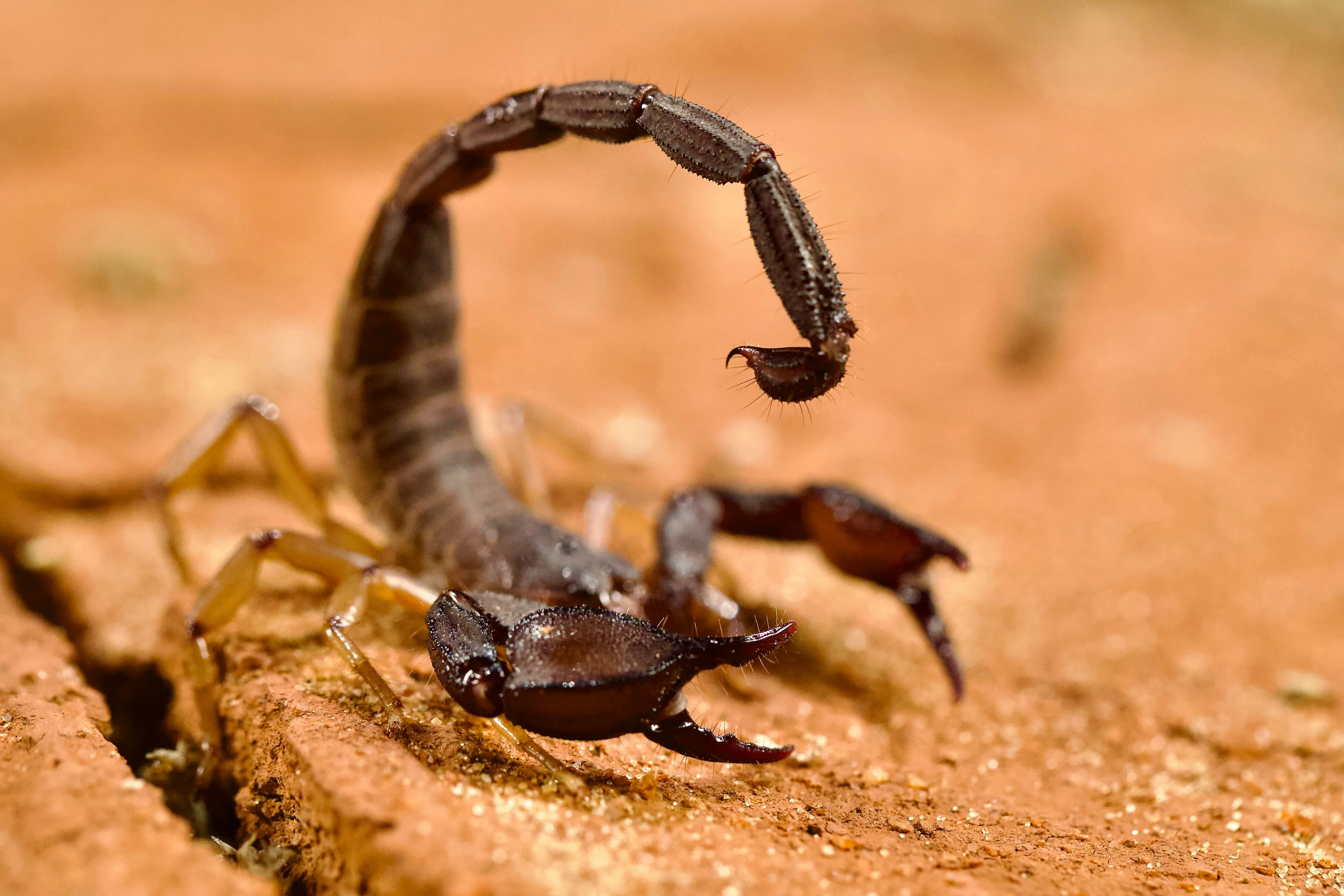
Illustrative scorpion photograph. The pictured species has not been matched to the study species. Photo by Andrey Tikhonovskiy on Unsplash. Used under the Unsplash License.