
Anthropic commits $150 million to expand Claude access for federal science

Anthropic announced a $150 million commitment on October 8 for the federal Genesis Mission over three years. Planned Claude access spans more than 15 agencies, including NASA, the National Institutes of Health and the National Science Foundation.
Support includes Claude, Claude Code and API credits for several hundred projects, technical help, training, and collaboration on fusion energy and quantum computing.
What the commitment covers
Anthropic has not disclosed how it values the package or how much is cash. The announcement describes planned research support, not demonstrated scientific outcomes.
The Department of Energy describes Genesis as an initiative connecting national laboratories, industry and academia. Its planned scientific platform brings together computing systems, experimental facilities, AI tools and research datasets. That context matters because access to an assistant is only one component of the larger research infrastructure.
An extension of earlier laboratory work
This builds on existing relationships. In a July 2025 announcement, Anthropic said Lawrence Livermore National Laboratory was expanding Claude for Enterprise access to about 10,000 scientists, researchers and staff. That earlier deployment is background, rather than another new announcement this week.
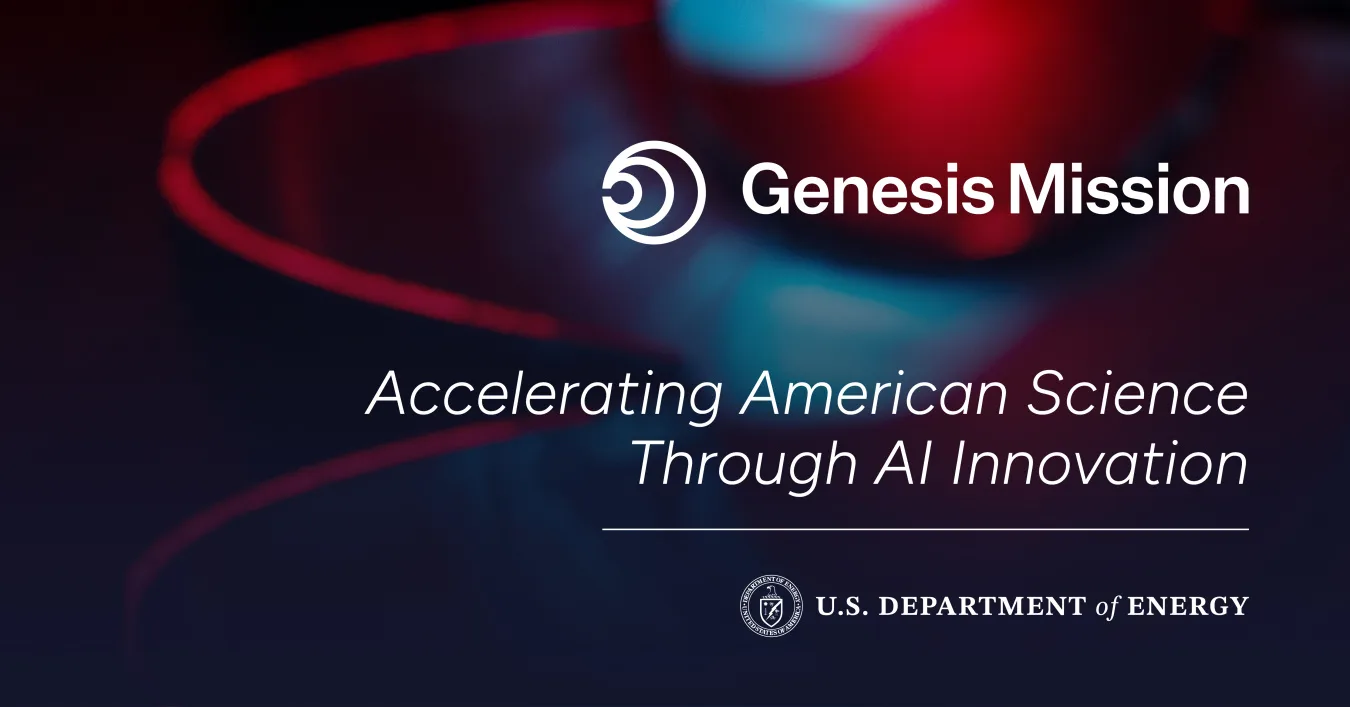
Genesis Mission graphic courtesy of the U.S. Department of Energy. It appeared in the department’s December 2025 coverage of the initiative.
For related reading, see our coverage of Microsoft’s Quine biology research system.