OpenAI launches GPT 6.1 Sol at a fifth of Astra pricing
GPT 6.1 Sol arrives in Codex, ChatGPT Work and the API. Here are the actual prices, availability limits and evaluation details that matter.

OpenAI introduced GPT 6.1 Sol at DevDay on September 29, positioning it as a less expensive option for coding agents, computer use and professional work. Standard input and output tokens cost a fifth of GPT 6 Astra’s rates. OpenAI says its evaluations show the new model approaching Astra on several demanding tasks.
The model announcement lists access through the API, ChatGPT Work and Codex for eligible paid plans. It specifically says the model is not yet available in Chat. That distinction matters for anyone expecting the launch to appear in every ChatGPT conversation immediately.
What developers actually pay
The API documentation separates ordinary input, reused context, cache writes and output. The cheapest advertised rate applies when input qualifies for caching.
| Token category | Standard price per million | What the charge covers |
|---|---|---|
| Input | $2 | Uncached prompt tokens |
| Cached input | $0.10 | Qualifying reused context |
| Cache writes | $2.50 | Writing context to the cache |
| Output | $10 | Generated tokens |
There are important exceptions. Prompts exceeding 272,000 input tokens double input and cache rates and increase output pricing by 50 percent for the full request. Fast mode costs twice the standard rate. Regional processing carries a 10 percent premium where available.
Those conditions make a simple token price comparison incomplete. A team repeatedly sending the same project context should estimate cache reuse. A team processing unusually large documents should calculate the full request at the applicable rate. The useful budget is the cost of completing a job, including unsuccessful attempts and human review.
A larger context window comes with practical limits
OpenAI lists a context window of 1,050,000 tokens and a maximum output of 128,000 tokens. Its documentation directs developers to the Responses API for tool calling. Chat Completions is supported without tool calling.
Large capacity can make it easier to supply a substantial codebase or document collection. It also creates a straightforward evaluation question. Does adding that material improve the result enough to justify its cost? Teams can answer by comparing a carefully selected context against a much larger input, using the same tasks and acceptance criteria.
How to read the performance claims
OpenAI reports that GPT 6.1 Sol matches Astra on DeepSWE 1.1 at roughly a fifth of the cost. On the offline OSWorld 2.0 evaluation, Sol comes within 2.1 percentage points of Astra at maximum reasoning effort. These are vendor reported measurements under specified settings.
The system card addendum says research and API evaluations can differ from production ChatGPT because of tools, prompts and reasoning settings. It also notes that comparison values for earlier models may reflect later versions of those models.
A useful trial would therefore keep a fixed set of representative tasks. Record whether each result is correct, how often a person intervenes, how long completion takes and what the entire run costs. A lower rate becomes valuable when the quality of the finished work holds up.
The launch fits a broader change in Codex
The DevDay recap also introduced reusable cloud development environments and expanded code review tools. Those changes give the model launch a practical setting. More work can continue in a configured environment instead of depending on a developer keeping a local session open.
Ultrafast availability needs separate attention. OpenAI’s announcement says Astra Ultrafast is available, while the GPT 6.1 Sol version is coming soon. Its headline speed claim should not be read as the default speed of the newly released Sol model.
This builds on the broader access story covered in our report on the ChatGPT desktop app for Linux. For developers choosing a model now, the immediate opportunity is to compare GPT 6.1 Sol with their current setup on real work. Its price is clear. Its value for a particular workflow still needs to be measured.
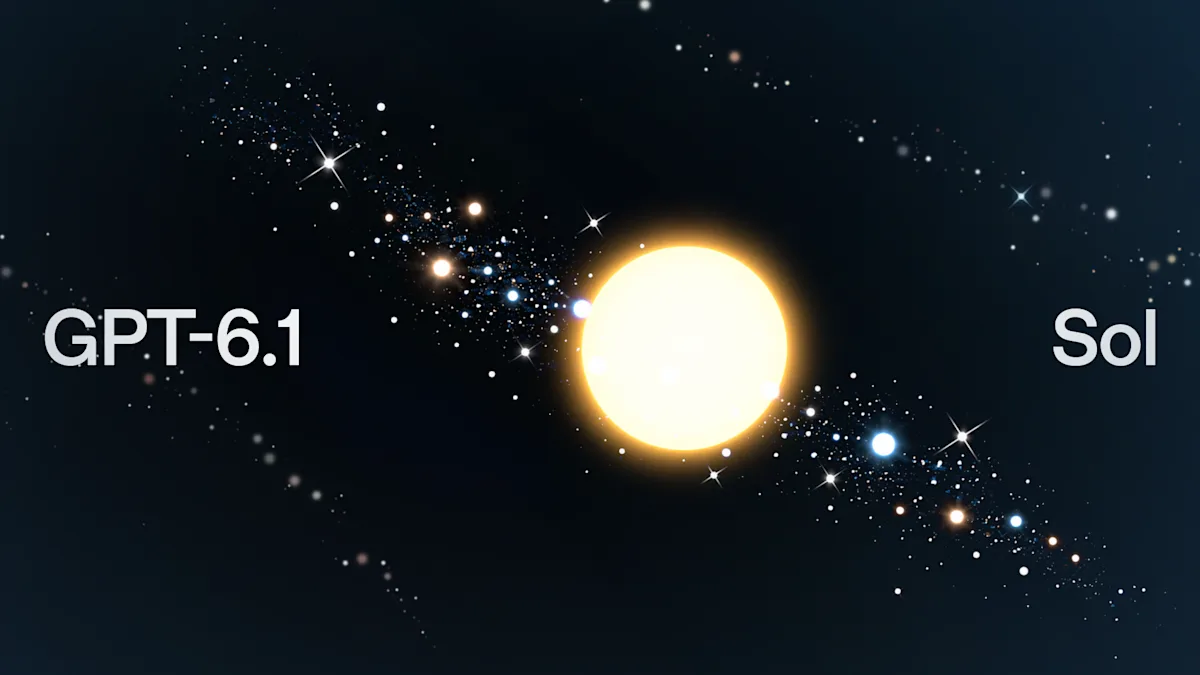
Featured image from OpenAI’s GPT 6.1 Sol announcement.


[…] the published figures, those introductory rates match GPT 6.1 Sol’s standard input and output prices. Google’s stated later rates are twice as […]
[…] comparing these approaches can see our breakdown of GPT 6.1 Sol’s API prices. The useful comparison is the cost of finished work under each arrangement, including retries and […]
[…] report on GPT 6.1 Sol pricing covers a different purchasing decision, direct API usage. Here, the central tradeoff is allocation. […]
[…] OpenAI describes Pro 500 as offering 25 times the ChatGPT Plus usage allowance. Its announcement places Astra Ultrafast in ChatGPT Work and Codex on Pro 500 and eligible Enterprise plans, with separate API availability. GPT 6.1 Sol Ultrafast remains forthcoming, a distinction also covered in our report on the Sol model launch. […]
[…] our GPT 6.1 Sol launch coverage for its published pricing and access […]
[…] report on coding agent model economics emphasizes the cost of a finished job rather than a single response. An ongoing assistant deserves […]
[…] GPT 6.1 Sol launch report covers pricing and availability. Our ARC analysis shows how the surrounding software can change a […]