29 countries sign a pact for WAICO in Shanghai — a new AI governance body takes shape

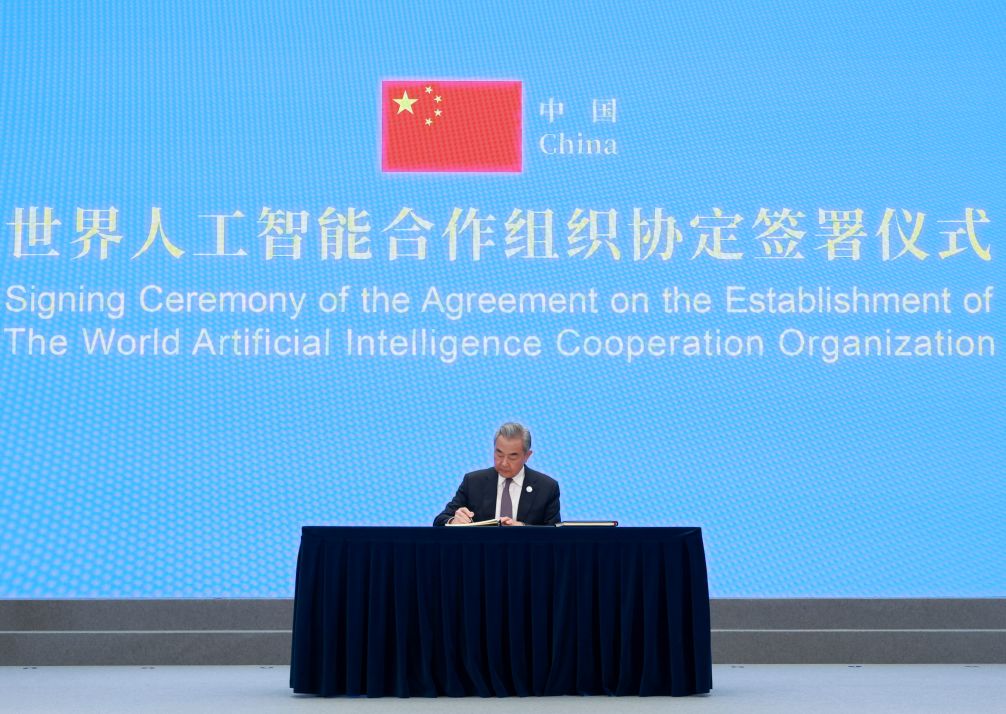
Shanghai just got a new AI institution with a founding roster and a UN photo op. On July 16, twenty-nine countries signed an agreement establishing the World Artificial Intelligence Cooperation Organization (WAICO), an independent intergovernmental body headquartered in the city. The ceremony is real. Whether the authority is real is the only question that matters.
Chinese Foreign Minister Wang Yi signed for Beijing. United Nations Secretary-General António Guterres was among the guests. That mix — host capital, founding signatures, UN presence — is how governance projects try to look inevitable.
Who signed and who is headquartered where
Per Xinhua’s report, the 29 signatories become WAICO’s founding members. Named in the dispatch: Kazakhstan, Laos, Pakistan, Russia, and Indonesia, among others. The agreement places the organization’s headquarters in Shanghai and frames WAICO as independent and intergovernmental, not a Chinese ministry rebranded for export.
That headquarters choice is the stake. Shanghai already hosts China’s major AI showcase circuit. Putting a new global AI body there locks venue, staffing gravity, and agenda-setting power into one city before the bylaws harden. Founders who want a multipolar forum just accepted a single physical home.
Who is not named in the Xinhua account matters almost as much. The public list of founding countries skews toward partners already comfortable in Beijing-led multilateral formats. Western capitals that dominate G7 AI talk shops do not appear in the founding roll call Xinhua highlighted. That does not kill the project.
What WAICO claims it will do
The agreement language, as carried by Xinhua, is classic multilateral soft power. WAICO will uphold the purposes of the UN Charter, pursue “extensive consultation and joint contribution for shared benefit,” and take a “people-centered” approach.
Translate that out of communiqué speak. The founders want a standing body that can convene, coordinate standards talk, and claim a UN-adjacent legitimacy lane without waiting for the Security Council or a new treaty conference. Safety, fairness, and benefit language is the envelope. The product will be whatever working groups, model documents, and capacity programs the secretariat can staff.
Nothing in the founding coverage published Thursday assigns WAICO binding enforcement power, dispute settlement, or export-control teeth. Ceremony first. Mandates later — if at all.
How it sits beside existing forums
The AI governance shelf is already crowded: OECD AI principles, UNESCO recommendations, G7 Hiroshima Process outputs, GPAI, UN AI advisory work, and a thicket of bilateral safety dialogues. WAICO does not erase those. It adds a China-hosted intergovernmental channel with its own membership and HQ.
For countries that felt sidelined in U.S.- and Europe-centered AI clubs, a Shanghai-based organization is a seat they can actually take. For labs and vendors that already juggle overlapping compliance regimes, it is another forum whose guidance may or may not become market reality.
Guterres’s presence at the signing links WAICO to the UN brand without making it a UN agency. That is intentional ambiguity. It borrows legitimacy while keeping the organization outside UN budget fights and veto politics — until someone tries to make its outputs stick.
What to watch for actual authority
Signatures are cheap. Authority is a budget line, a legal instrument, and membership where frontier labs actually ship.
Watch three concrete tests. First: does WAICO publish a charter with decision rules, funding shares, and whether recommendations are voluntary or binding on members. Second: does the founding club expand past the initial 29 into economies that host major model training and cloud capacity.
Until those answers land, treat WAICO as a real diplomatic fact and an unproven regulatory one. Shanghai has the plaque. The field still decides whether anyone has to listen.