Standard Bots expands AI tools for factory robot operators

Standard Bots announced Agent, Locate and Inspect on October 15, 2026, saying its AI platform is available now. The three skills address routine creation, part finding and visual inspection.
The company’s AI product page also refers to an earlier introduction at Automate 2026. Today’s release is a three skill announcement and availability claim, rather than evidence that Standard Bots AI first appeared today.
For a manufacturer, the useful question is how much work remains between describing an operation and running it reliably. The announcement points toward easier setup and adaptation. Its practical value will depend on the parts, equipment and checks required by a particular production cell.
Three skills address different jobs
Agent asks operators about their setup and turns their instructions into a robot routine. Standard Bots says it trained the assistant on its manuals and best practices.
Locate lets an operator select a part in a camera view or describe it in text. The company says the robot can find it when its position changes, reducing dependence on a fixed arrival location.
Inspect uses custom vision models trained on a manufacturer’s parts. The release says the capability was developed with Roboflow and allows those models to be loaded into robot routines to flag defects.
The AI page describes checking parts against an example of an acceptable one, with questionable items set aside for another look.
Consider a hypothetical station handling several versions of a component. The operator would need to define the work, identify the current component and decide whether it meets the acceptance criteria. A useful evaluation would examine those steps separately before judging the complete workflow. Success at locating a part alone does not answer whether the finished operation meets the factory’s requirements.
The existing editor remains important
The software page describes a visual editor for movements, logic and input and output conditions. The agent can write, edit and debug routines, while operators retain manual movement and precise positioning controls. Standard Bots also says its APIs can work alongside visual editing.
That combination gives a prospective buyer a concrete demonstration to request. Ask the supplier to generate a routine, explain its steps, change one condition and show how an operator checks the result. Then ask how the system handles an incomplete instruction, an unavailable part or a failed step. Those are evaluation questions, not behaviors ByteForward has verified.
There is also a clear availability boundary. The software page still labels creating and distributing custom AI skills without code as forthcoming. The announced skills should not be read as a released marketplace for arbitrary operator built capabilities.
Test the changeover as well as the task
A pilot should define what counts as a completed job before comparing setup effort. For a shop that changes parts frequently, a relevant trial would include the transition from one approved job to another, alongside the time spent running each job.
- For routine creation, record the time from a written task description to an accepted program. Include corrections, operator review and any help required from the supplier.
- For part finding, vary the conditions that actually occur at the station. Record missed parts, mistaken selections and the effort needed to recover, alongside successful operations.
- For inspection, use parts with known quality outcomes and record both defects that pass and acceptable parts that are rejected. Include human review and the handling of uncertain results.
These measurements answer different operational questions. An inspection process that rejects too much acceptable work may create a review queue. One that misses defects may allow faulty material to move onward. A buyer should specify the consequences of each error and the acceptable limits before agreeing that a demonstration has succeeded.
ByteForward’s coverage of coding agents performing physical robotics tasks discusses another measurement problem, the difference between a score and a completed job. That separate benchmark does not test or validate the Standard Bots platform.
Availability leaves purchasing questions
The issuer says customers can bring their own models and that its own foundation models are still in development.
The AI page lists starting prices for robot hardware. Those figures do not establish software fees or the cost of a complete installation. ByteForward has not verified a software price, a full compatibility matrix or a delivery schedule for the announced capabilities.
Before budgeting, a buyer should request an itemized proposal covering the arm, tooling, cameras, installation, training, software access and ongoing support. Ask which capabilities are included in the quoted configuration and which require additional equipment or services. Define responsibility for maintaining inspection models and for approving later changes to a working routine.
ByteForward has not tested these skills or independently measured their reliability or financial return. A simpler programming interface also leaves a separate question about safe operation around people and equipment. Any production decision should include a qualified assessment of the intended installation and its safeguards.
The strongest next evidence would be a documented trial on representative work, with the starting conditions, failures, interventions and final output disclosed. That would let a manufacturer judge whether easier programming translates into useful production capacity.
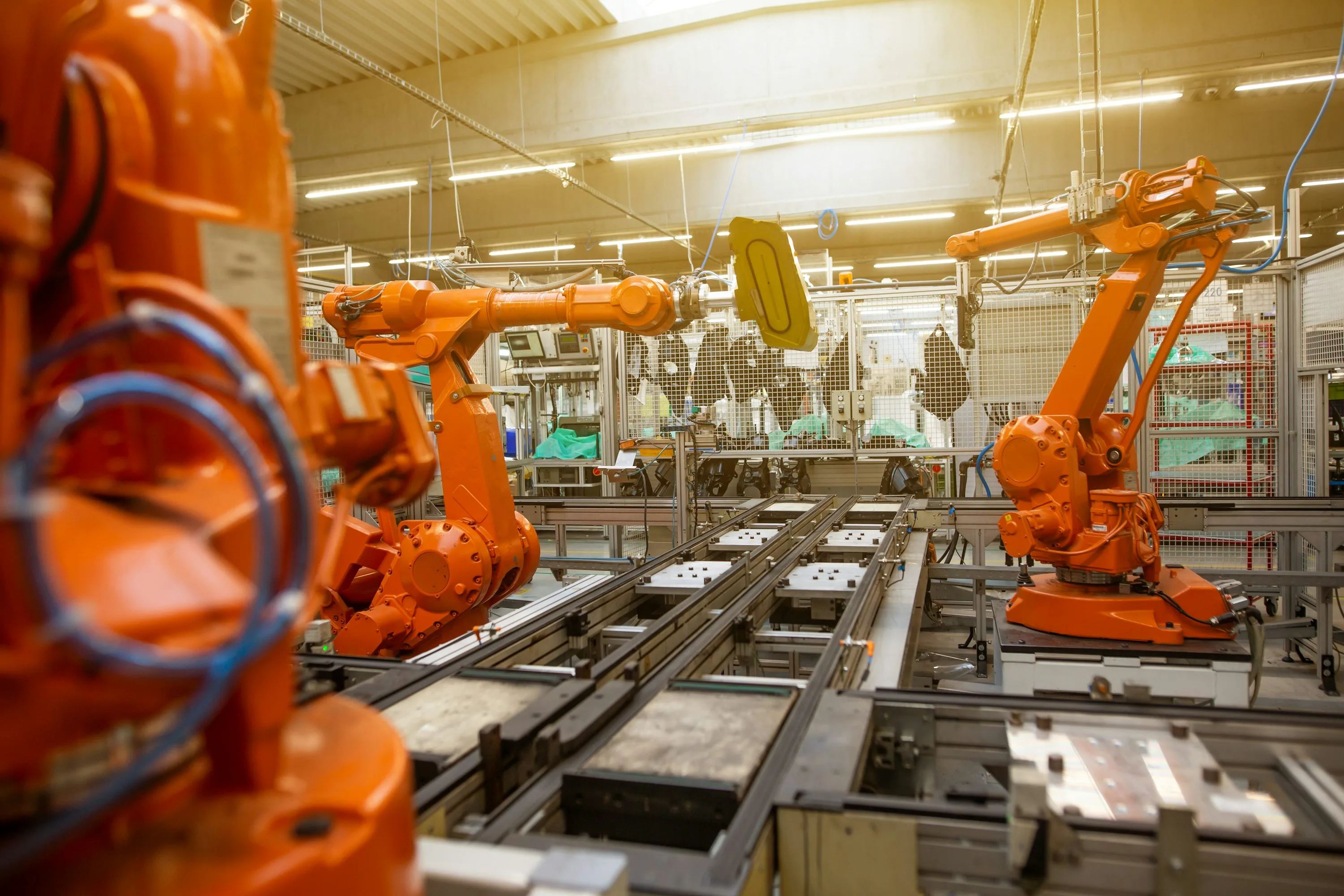
Illustrative factory robot photograph, published in 2022. The image does not show Standard Bots equipment. Photo by Simon Kadula on Unsplash under the Unsplash License.