Harness brings Cosmos into software delivery with Augment asset deal

Harness announced on October 8 that it had acquired selected Augment Code assets, bringing Cosmos, the Auggie CLI, the Code Context Engine and related technology into its software delivery business. The team responsible for those products is joining Harness. The announcement describes an asset purchase, rather than a purchase of the whole company. Harness Cosmos is available now.
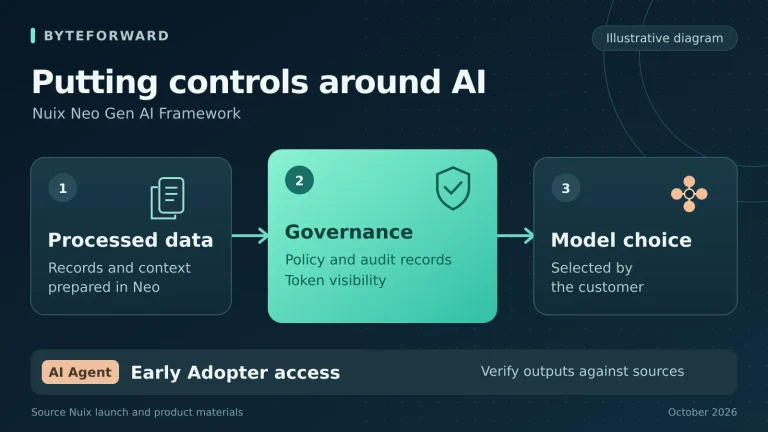
The important next step is connecting engineering work to evidence from delivery and production. Harness describes a future in which an agent preparing a change can use relevant tests, security requirements and previous incidents, while downstream agents use code context when checking it. Its official release presents the connection to existing Harness policies, permissions and approvals as an integration vision. Availability of Cosmos should therefore be distinguished from completion of that wider integration.
What the working loop actually does
The Harness product page describes work starting from repository events, alerts or webhooks. Teams can adapt specialist agents called Experts, with roles for implementation, review and verification. The Advisor helps configure the agents, environment and automation, with approval of the plan before activation. Shared memory, version history and budget controls are also part of the advertised platform. These are the components a team would otherwise have to connect and maintain around individual agent runs.
The ticket workflow documentation makes the human checkpoints more concrete. Ticket Manager checks the intended outcome, scope and repositories. If the task needs a specification, implementation waits for explicit approval. PR Author then makes the change, runs checks and opens a draft pull request linked to the ticket. An engineer still inspects the result and marks the draft ready for review. Passing continuous integration checks alone does not move it past that checkpoint.
In the review workflow different Experts inspect the change independently. Repairs to feedback, failing checks or conflicts depend on the selected settings. A Verifier can exercise the running application when its environment and test access are configured. An agent may approve an eligible change under the review policy, but the documented workflow leaves the actual merge to a human. That distinction matters when estimating how much work can proceed unattended.
Choose the execution boundary before turning it on
The environment documentation offers cloud workspaces and daemons running on infrastructure the customer operates. Cloud sessions start from a prepared image containing repositories and tools, with configured network egress. A daemon instead works on its host machine and can reach that machine’s disk and network. State can persist between daemon sessions. For a pilot, an isolated environment with only the required repository and test services is a more controlled starting point than a developer laptop full of unrelated access. Hosting location alone does not establish what data leaves the system.
The tool permission documentation provides a separate operational warning. Its rules apply to Auggie CLI and Cosmos cloud agents, but are not enforced by the Augment editor extension. Within a policy, the first matching rule controls the action. Tools without a matching rule follow the runtime’s implicit behavior. Teams should explicitly define allowed and denied operations, then test those boundaries. A short list of permitted tools should not be assumed to deny everything else. Documented controls need configuration and verification before they can support unattended work.
How it fits an existing coding setup
Harness says customers can keep their preferred coding tools, adopt Cosmos or combine both approaches. The acquisition announcement does not require an immediate editor replacement.
Auggie itself already supports both interactive work and automation, according to its CLI documentation. An engineer can use it beside an existing editor, while its print mode runs an instruction and exits. Some enterprise agreements may disable that mode. For a team with reliable scripts and established review ownership, the evaluation question is whether moving coordination into a managed agent platform removes enough maintenance and manual intervention to justify the switch. The acquisition does not establish that existing automation needs replacing.
Teams mainly struggling with code discovery have a narrower option. The Context Engine MCP documentation describes connecting retrieval to compatible agents without adopting the full Cosmos workflow. Local mode follows changes in the working directory. Remote mode indexes selected GitHub repositories on their default branches and refreshes when commits reach those branches. That difference should shape a trial. Ask a question about an unmerged local change and check whether the chosen context source can actually see it. Better retrieval and better task coordination solve related but distinct problems.
Budget for the work the agents consume
Augment’s published usage pricing on October 8 separates model usage, a 40 percent service fee on that usage and Cosmos compute. Cloud compute is listed at 19 US cents an hour, rounded up in five minute increments. Its Business plan lists a 100 US dollar monthly charge with the same amount of included usage and up to 50 seats. The page says usage continues automatically after the included balance is consumed. These are the published Augment terms, not evidence of a new bundled Harness contract.
For evaluation, compare total spending per accepted change and the engineer time needed to review it. Include unsuccessful attempts and repair cycles. A larger volume of generated pull requests is not enough to establish a saving if the review queue also grows. Confirm the applicable contract and spending limits before expanding the workload.
A useful first trial
Start with one repository and a small queue of well specified maintenance tickets. Write down acceptance criteria, the tests expected to run and who decides that a draft is ready. Include a ticket with an unresolved requirement so the team can see whether the workflow pauses for clarification. The goal is to test the handoffs as well as the code it produces.
Then include a failed check and a substantive review comment. Verify which repairs happen automatically, which require approval and whether the final evidence relates to the revised code. Record missing runtime coverage instead of treating a green check as comprehensive verification. Keep a human responsible for the merge during the trial and compare review effort with the existing process.
The strongest reason to consider Cosmos is a recurring coordination problem across coding, testing and review. Teams already handling those steps efficiently need evidence of improvement before changing platforms. The acquisition creates an opportunity to connect that workflow more closely to production feedback. Whether the combined system delivers that benefit remains a question for the promised integration and customer testing.