
LangChain adds pinned skills and scheduling to Deep Agents
The October 7 updates add skill pinning and a managed scheduling beta, with version requirements and US cloud limits.

LangChain released Deep Agents SDK 0.7.23 on October 7 with skill pinning and announced Managed Deep Agents v0.9 as a public beta. Together, the updates give developers more control over the instructions an agent receives and when it starts work. SDK release and managed beta announcement.
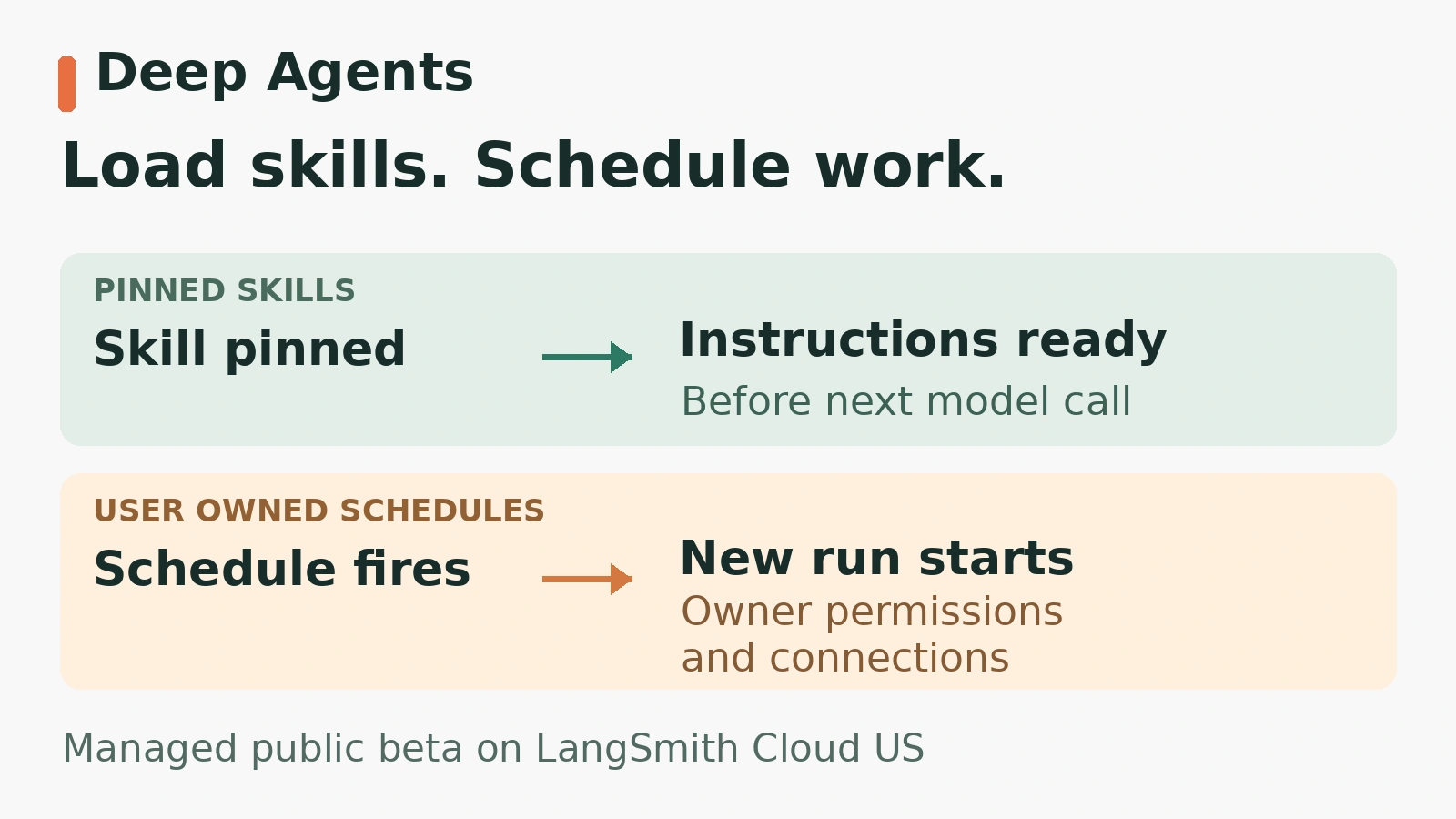
Pinning lets an application load a named skill before the next model call, without waiting for the agent to choose it. The application must identify the requested skill names itself. Pinning requires SDK version 0.7.23 or later. Skills documentation.
Other features in the October 7 skills announcement arrived earlier. The official changelog dates tool binding to version 0.7.22 on October 5 and skill reloading to version 0.7.16 on September 21. Those changes provide context for the new pinning release. Release history.
The managed beta adds schedules created during a conversation. Developers must expose scheduling through tools. User owned schedules run as the authenticated user, while agent owned schedules use the agent service identity. Recurring schedules default to new threads, and work scheduled for a single time defaults to the current thread. Channel schedules return results to their originating channel. Schedule documentation.
One managed deployment can also choose its model, skills, tools and sandbox for each run. The documentation warns that run context is application data. Developers still need to check tool authorization against the verified caller. Selecting what the model sees does not establish a security guarantee. Agent configuration documentation.
Availability remains limited. The managed offering is a public beta on LangSmith Cloud in the US region. Its docs require version 0.9.0 or later for runtime schedules. LangChain announced that version, but this review did not confirm a final package release or test deployment behavior. Availability and requirements.