House proposal would set AI chatbot defaults for minors
The bipartisan proposal covers AI disclosure, parent controls and a school exception

Representative George Whitesides and three House colleagues have proposed new defaults for AI chatbots used by minors. His office’s October 1 announcement introduces the Protecting Kids from Human Like Chatbots Act, a bipartisan proposal covering chatbot developers and companies providing them to consumers.
The 34 page bill text would require a default that identifies the system as AI and avoids simulating personal relationships. The office says the bill was introduced on October 1, although its linked text still has blank bill number and committee fields. It is a proposal, with the main duties taking effect a year after enactment if it becomes law.
What the default would change
Covered developers would have to design chatbots to start in the restricted setting unless there is a reasonable determination that the user is an adult. Providers would have to maintain that default for users they know or have reason to know are under 18.
The setting would require identification as AI at the beginning of a session, periodically during extended interactions and when asked. It would prohibit the system from presenting itself as human, claiming feelings or consciousness, or simulating a personal relationship with the user. It would also restrict guilt, urgency and relationship based purchase requests used to sustain engagement.
The requirements would persist across sessions and requests to change the bot’s behavior. The bill does not mandate a particular age checking technology or new personal data collection. Companies would still have to consider relevant age information they already possess, generate or have a right to access or use.
Parents and schools have different controls
A parent or legal guardian would ordinarily control changes through account settings. Simply accepting someone’s statement that they are a parent would not satisfy the proposed confirmation standard. Chatbots and their interfaces could not encourage minors to disable the setting or misrepresent their age.
There is an important school exception. An authorized educator could adjust the default for a genuine educational purpose on accounts provisioned by the institution. That exception would not cover a student’s independently created personal account.
The text preserves natural grammar, politeness, humor and warmth. It also permits safety resources and certain clearly fictional or historical portrayals for educational or creative purposes, subject to disclosure and relationship safeguards. Bots limited to narrow tasks, such as scheduling, and tools available exclusively for internal workplace use would be excluded from its chatbot definition.
Testing would shape enforcement
The National Institute of Standards and Technology would publish interim voluntary guidance within six months of enactment and final guidance within 18 months. The Federal Trade Commission would enforce the requirements, and states could bring civil actions.
The draft includes a civil penalty shield for periods of material conformity with the guidance. An isolated output would not establish nonconformance by itself when a company had tested according to that guidance and promptly corrected the cause. Patterns of problematic outputs could rebut a presumption of conformity.
The distinction matters for implementation. The proposal specifies how covered systems would present themselves and how adults could manage that setting. It does not establish that any existing product has violated those proposed requirements or that the design would produce a particular health outcome.
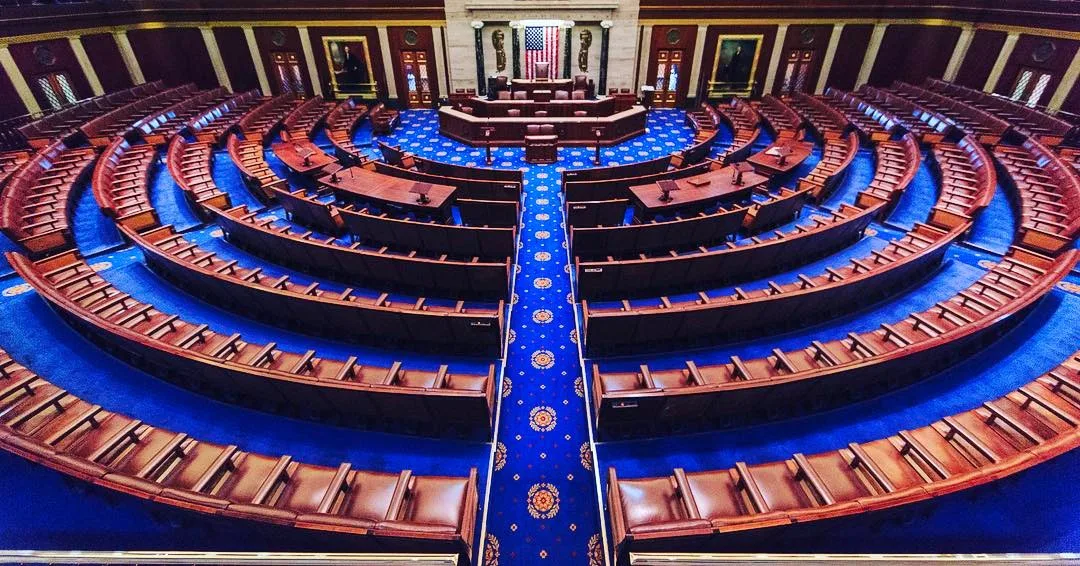
Archival House chamber photograph from February 2017. Credit United States House of Representatives or Office of the Speaker. Public domain image via Wikimedia Commons.