Hugging Face adds a Trainium model compatibility explorer


Hugging Face introduced a model compatibility explorer for AWS Trainium on October 23. It connects individual test results to the software versions and scripts used. The practical benefit is a reproducible starting point, not a promise that a model is ready for production.
The public dataset history begins on October 22, with the first results added nine seconds later. Updates continued on October 23. These are repository timestamps, not proof of the exact moment the files became public.
What a PASS actually establishes
The dataset card describes a narrow check. A run loads a model on Trainium2 and generates 32 tokens greedily. Models must fit within four devices, or 16 NeuronCores.
PASS means loading and generation completed, with the output check passing or unable to run. A single core run is compared with CPU tokens, allowing near ties. Otherwise, a small model judges English fluency. Neither route establishes throughput or reliable longer generations.
Quantized checkpoints and models requiring trust_remote_code are excluded. A missing model and an EXCLUDED row are not failed tests. The dataset is labeled Apache 2.0.
Reproduce the exact tested configuration
The explorer supplies installation details and a standalone run.py for each tested model. Use the recorded stack on a Trainium2 instance. The script starts its own distributed ranks when sharding is needed. Compiled graphs are also available in a public cache tied to the compiler version.
Start by matching the checkpoint and software versions rather than searching only for a familiar model family. Keep the script with the result you use for a decision. If your intended workload differs from that small check, treat the difference as something to test rather than something the label covers.
The backend predates this explorer
Hugging Face’s October 19 TorchNeuron introduction announced a public beta starting October 20. The new native PyTorch backend exposes Neuron as a device and supports eager execution, compilation and distributed APIs. That differs from the older XLA based package behind Optimum Neuron.
The earlier announcement discusses training and image generation libraries too. Those broader capabilities should not be confused with the compatibility explorer’s much narrower model checks. An example that trains successfully and a short inference test answer different questions.
Native execution still has constraints
The AWS backend repository labels the current software Beta. It requires a Trn2 or Trn3 instance and Python 3.12, 3.13 or 3.14. Its compiled path needs static shapes. A new input shape triggers another compilation, so padding or grouping inputs can matter.
The documented limits also include copies for noncontiguous tensors, limited FlexAttention support and no TorchAO integration in this release. Double precision values run as single precision. These constraints concern the backend, not failures established for every model in the explorer.
The PyTorch API compatibility guide makes another useful distinction. Some operations are supported on Neuron, some run on the CPU before copying results back, and others are unsupported. A functioning model therefore does not establish that every operation remains on the accelerator.
Use the result to plan a workload test
Our MiniMax M3.1 Flash deployment coverage illustrates how serving limits depend on hardware and configuration. It is a separate GPU deployment example, not evidence that MiniMax runs on Trainium.
For a deployment decision, measure the intended prompt lengths, output lengths and concurrency. Record compilation separately from repeated execution, then check answer quality and memory use under the same conditions. Compare costs only after defining an accepted result. These are proposed evaluation steps, not tests ByteForward performed.
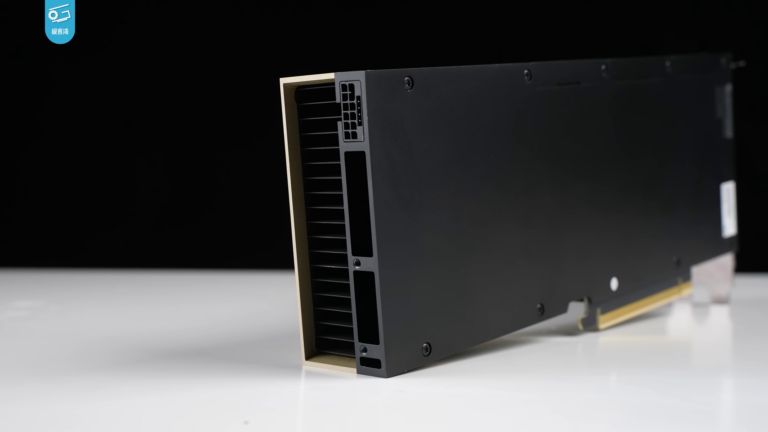
Archival AWS Trainium2 chip image supplied with Amazon’s December 2024 release via Business Wire. It does not depict the compatibility tests. Credit Amazon Web Services via Business Wire.