LlamaIndex’s OCRia-nano-1 rebuilds PDF tables on a CPU

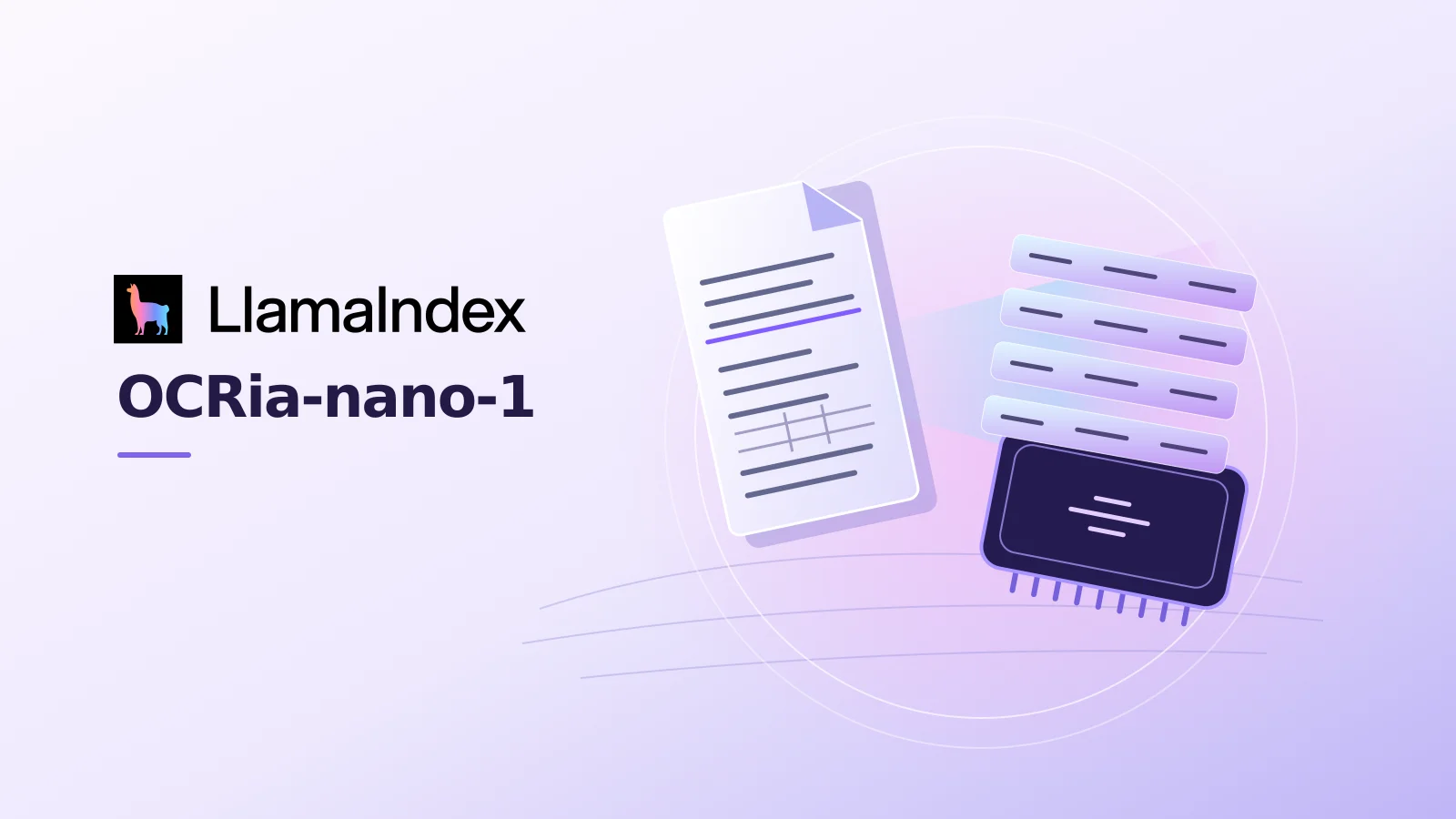
LlamaIndex released OCRia-nano-1 on November 23, 2026. The 8.1 million-parameter pipeline reads text, reconstructs tables and detects page layout on a CPU through LiteParse. The weights are publicly downloadable, but they do not share the parser’s permissive license.
What the CPU parser does
LiteParse starts with the text and page coordinates already present in a PDF. It uses optical character recognition where needed, then a separate layout model reconstructs rows, columns and spanning cells. That makes Nano worth a first pass on scanned invoices or reports that you need as Markdown, especially when most pages do not warrant a larger vision model.
A chart stays an image. LlamaIndex recommends the larger OCRia-1 for chart extraction, handwriting, degraded scans, scanned equations and more demanding tables. If charts are central to your workflow, LightOnOCR 3’s chart and layout coverage is another starting point, not a result from the same test.
What LlamaIndex measured
In the technical report, LlamaIndex measured 426 milliseconds per page on one CPU core and 27.8 pages per second with 16 workers on a 16-vCPU machine. The throughput test used 300 sampled ParseBench pages. Actual speed will depend on the files, hardware and worker count.
| Local parser | ParseBench-2 score |
|---|---|
| LiteParse with OCRia-nano-1 | 59.2 |
| Indra | 55.1 |
| Marker | 52.5 |
| LiteParse with Tesseract | 48.7 |
Run OCRia-nano-1 locally in LiteParse
The LiteParse release notes identify v2.21.0 as the first integration. For the Python CLI, install LiteParse and pull the model package to enable Nano. The model card says the pull verifies downloads against pinned hashes, including the runtime. Once those files are installed, document parsing can run locally. ByteForward verified the published instructions and file listing, not local speed or output.
pip install liteparse
lit models pull ocria-nano
lit parse doc.pdf --format markdownThe parser is Apache 2.0. The weights are not.
LiteParse’s code is Apache 2.0. The separate model license generally restricts production use when prior-year gross revenue or total equity or debt funding exceeds $2 million, with exceptions for personal use and qualifying research. It also restricts use in competing document-parsing services regardless of size, apart from qualifying research. Read the exact terms before building the weights into a commercial workflow.