Google’s $17B Wyoming data center plan combines gas power and carbon capture

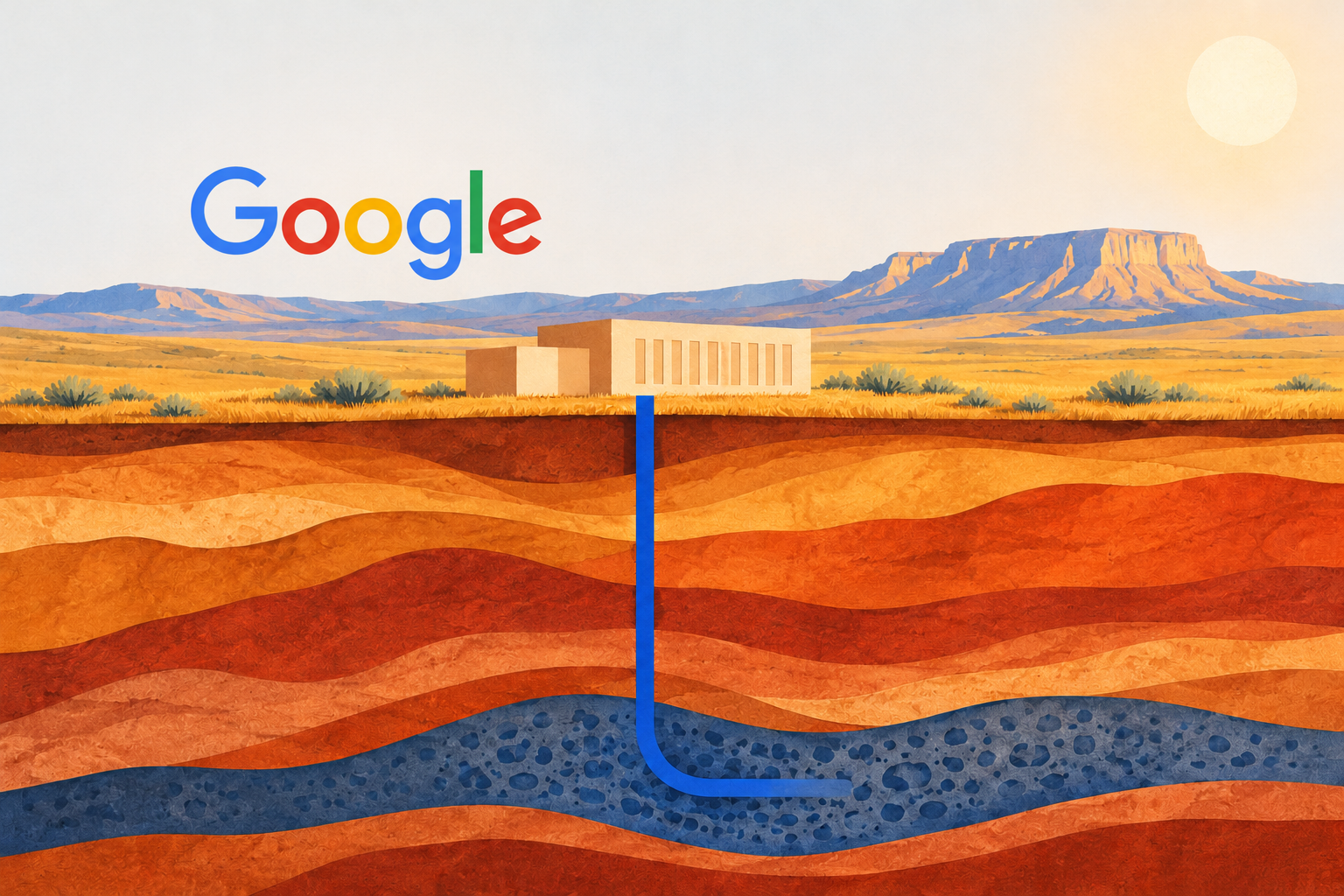
Google announced a $17 billion investment in its first Wyoming data center on November 5, 2026. The Laramie County project combines computing infrastructure, natural-gas power and planned carbon capture. It remains an investment commitment, not an operating low-emissions facility.
For AI infrastructure readers, the distinction is between capital committed, electrical power available and computing capacity delivered. The announcements do not specify AI hardware or workloads, so the investment is not a model-capacity forecast.
The power agreement came first
AEP had already announced the electricity arrangement on October 14, 2026. It plans to invest about $4 billion in a 702-megawatt Bloom Energy fuel-cell facility near Cheyenne, supplying Google through a 20-year power purchase agreement.
AEP says construction is planned to begin in 2026, with full operation expected by the end of 2028. It controls approximately 92% of the project company, with funds advised by Basalt Infrastructure Partners holding nearly 8%. Those dates describe the power facility, not a confirmed opening date for Google’s data center. AEP’s announcement establishes that scope.
The two investment figures should not simply be added together. They describe commitments by different companies, and the announcements do not provide an accounting reconciliation establishing a combined project total.
Carbon capture remains a delivery question
Google says natural-gas fuel cells will send captured carbon to Tallgrass’s Eastern Wyoming Sequestration Hub. It describes capturing a large majority of the fuel-cell project’s carbon emissions, without a percentage.
Separate gas generators will also supply power. Google is conducting a study of capture equipment for Tallgrass’s combined-cycle turbines. A study does not establish operating capture. The data center will use air cooling, according to Google’s project description.
What communities can check next
Google’s broader data-center policy promises payment for electricity and direct grid-connection costs, full real property taxes on new campuses, and more project-level information about water, noise, lighting and traffic. These are company commitments, rather than independently verified outcomes for this project. Google’s community policy lists the promises.
The community commitments belong to a broader infrastructure trend, also seen in Amazon’s Built Together pledge. The useful comparison is what residents can later measure, rather than headline investment totals.
Useful follow-up evidence would include the commissioning schedule, disclosed utility arrangements, resource-use measurements and operating capture results. That would let residents and infrastructure buyers compare the eventual facility with the promises made before it opens.