Eleven Realtime bundles voice models with migration limits

ElevenLabs launched Eleven Realtime on October 20, offering Mini and Max versions for voice agents. Mini targets lower cost conversations, while Max is aimed at complex instructions and tasks that require several steps. The release packages the voice stack into a single choice for developers.
The company’s compatibility documentation explains what sits behind that choice. It uses a cascade of separate models optimized to work together. It explicitly rules out a fused model and does not identify the underlying components. Developers are buying a coordinated system rather than selecting each component themselves.
What existing integrations need
The direct Realtime API supports OpenAI’s Realtime event protocol over WebSocket only. Browser applications must still capture and play 24 kHz PCM16 audio themselves. The SDK handles audio automatically only with its WebRTC transport. The guide documents backend issuance of short lived client secrets. Server side SDK connection documentation was not yet published.
That makes transport and audio handling part of the migration. Test microphone capture, playback, interruptions and tool responses before replacing an existing connection. ByteForward has not run these models or tested the migration.
Access and settings have limits
The Realtime model guide says availability is rolling out by workspace. An account without access will not show the voice mode control, and the API rejects the setting. The identifiers are eleven_realtime_v1_mini and eleven_realtime_v1_max.
In ElevenAgents, Realtime mode manages the underlying language model, speech generation and speech recognition settings. Custom language models and workflow overrides of managed settings are unsupported. Transfers work between Realtime agents, including Mini and Max, but not between Realtime and Custom modes.
Mini is unavailable for Zero Retention Mode and HIPAA configurations. Max supports those configurations in the US and EU, but is unavailable in the India and Singapore data residency environments. Max also requires a token limit of at least 1,024, or no limit.
Measure task results separately
The Artificial Analysis Speech Agent Arena, checked on October 21, lists task success at 87.1% for Max and 60.3% for Mini. Its reported 95% confidence intervals are 82.6% to 90.6% and 54.3% to 66.0%, respectively. These results provide a reason to evaluate the two versions separately.
The evaluator’s methodology defines success as making the correct final task completing tool calls in eligible conversations. Participant deviations and unverifiable cases are excluded. The Arena includes 15 tool using scenarios and 20 scenarios without tools, so its success rate should not be read as the share of every real customer call a model will resolve.
Budget for more than call minutes
For hosted ElevenAgents deployments, the pricing page lists additional call minutes at US$0.08, with model usage charged separately. External telephony providers can add their own charges. Those figures do not establish a complete price for the standalone Realtime API.
A useful trial should track completed tasks, wrong actions, human handoffs and total billed usage. Compare those results on the same conversations and tools. Our Grok Voice 3.0 report covers another recent voice API transition and its pricing considerations.
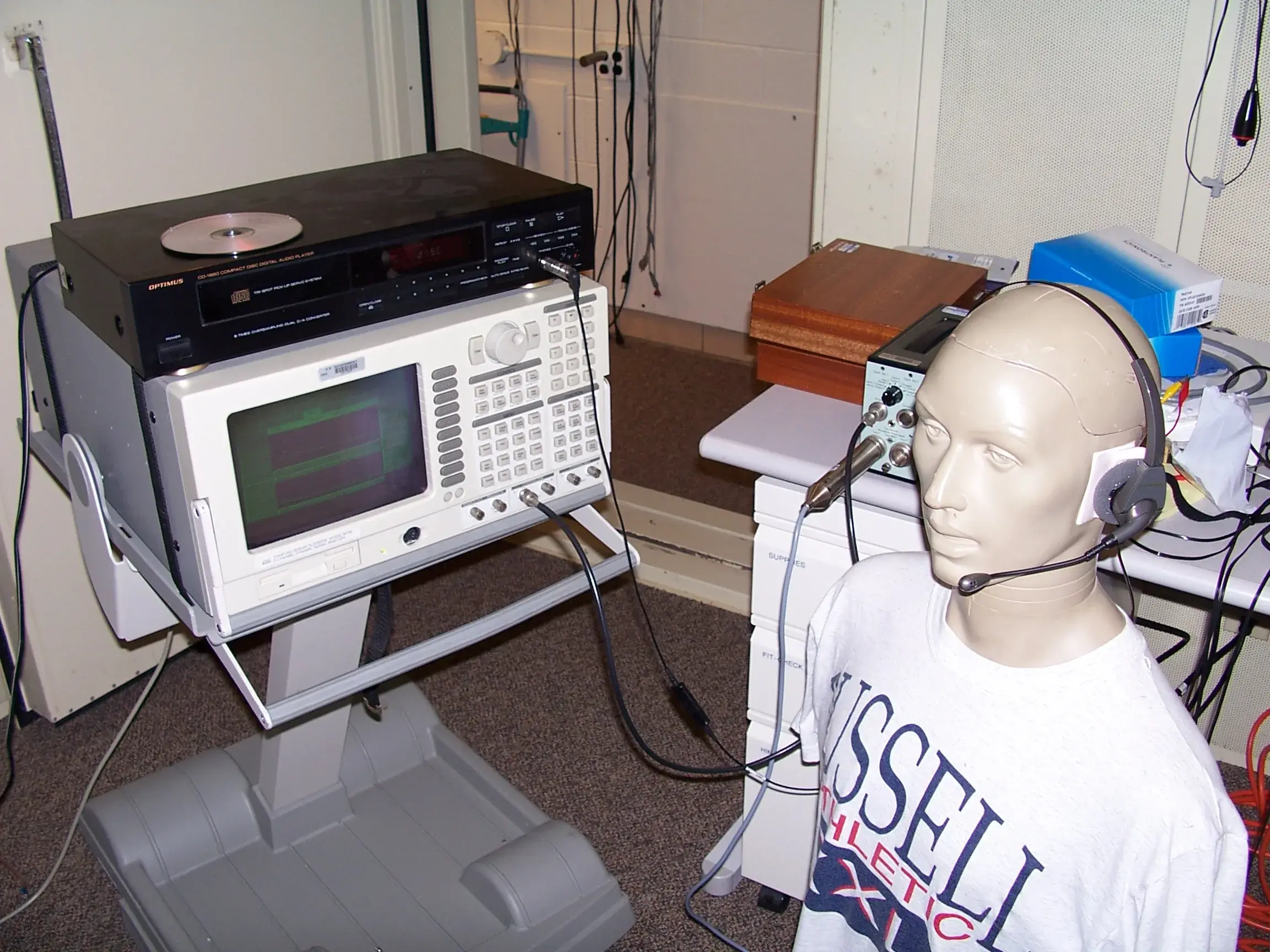
The illustrative archival photograph was taken by Chuck Kardous at NIOSH in June 2007 and appears on Wikimedia Commons. The image shows headset testing with a KEMAR fixture. It is a US federal government work in the public domain and does not depict ElevenLabs testing.