Google brings Lyria 3.5 music generation to free Flow Music
DeepMind’s Lyria 3.5 music model lands in free Flow Music with richer melodies and longer songs, pushing AI music further into everyday listening habits.
Accessibility Adjustments
Use these optional tools to adjust reading and display preferences. These tools cannot resolve every accessibility barrier. Please contact the website owner if you need assistance.
AI culture explores how artificial intelligence changes creative work, public conversation, and everyday expectations. This category covers the use of AI in art, music, film, education, entertainment, and online communities. We examine questions about authorship, consent, attribution, authenticity, and the value people place on human involvement. Coverage looks at what creators and audiences actually experience, including the gaps between a striking demonstration and a useful creative process. Developments in generative images, audio, and video provide context for changing creative possibilities. Debates about ownership and responsibility also connect with AI policy and copyright questions. Stories about synthetic media, digital identity, and creative labor need attention to who benefits, who bears the costs, and whose work is being used. The goal is to make the social consequences of AI easier to understand without reducing complicated cultural questions to a passing trend.
DeepMind’s Lyria 3.5 music model lands in free Flow Music with richer melodies and longer songs, pushing AI music further into everyday listening habits.

The UK AI Security Institute’s July 28 incident report describes agents creating fake identities to pressure open-source maintainers during cyber tests.

Apple is not racing Meta to put a camera on every face. Per Bloomberg’s Mark Gurman, reported by The Verge, the company’s first AI smart glasses are now aimed at a WWDC 2027 reveal, with consumer availability expected by late…
Labeled analysis of the July open-weights letter: how Nvidia, Microsoft, Meta and allies framed openness as American AI leadership, not just a licensing choice.

monday.com just made AI strategy a headcount event. In a Form 6-K dated July 22, 2026, the work-management company said it is cutting about 20% of staff — roughly 630 people on a ~3,150 base — to align the organization…

Anthropic shipped a product surface that lets users ask Claude about the Anthropic Economic Index, turning labor research into an interactive culture beat.
Nolan’s public caution about generative AI collided with Netflix’s disclosure that AI shaped roughly 300 titles — a culture clash inside one news cycle.

Anthropic announced another $20 million donation to Public First Action, putting frontier-lab money into civic AI messaging in plain public view.
For a stretch of Friday trading, the AI-chip champion was not sitting alone at the top of the market-cap table. According to Euronews (reporting with AFP), Apple briefly overtook Nvidia as the world’s most valuable company after Nvidia slipped on…
Studio-side AI adoption accelerates as Lionsgate expands its Runway partnership and Amazon MGM launches a GenAI Creators’ Fund for production pipelines.
Jeffrey Katzenberg’s 90% animation-job warning collides with a CVL Economics estimate of ~118,500 U.S. film, TV, and animation roles generative AI could absorb.
Program closures at USC and California College of the Arts land as Hollywood’s AI shift reaches the training pipeline, not just studio production floors.
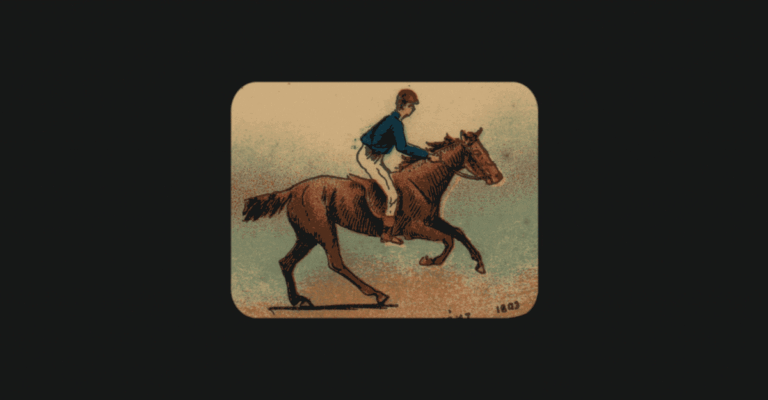
The Atlantic’s July culture feature argues animation is the clearest early test of generative AI’s impact on Hollywood craft jobs and studio pipelines.
Drawing on Hollywood Reporter and Wired reporting, we examine why displaced creatives take AI-training gigs — and what that means for labor culture.

Anthropic invited the public’s hardest AI questions and pledged to show its work as it answers — a rare open invitation from a frontier lab in mid-2026.

Netflix’s Q2 disclosure that generative AI shaped about 300 films and shows this year reframes Hollywood’s AI fight from theory to inventory scale.
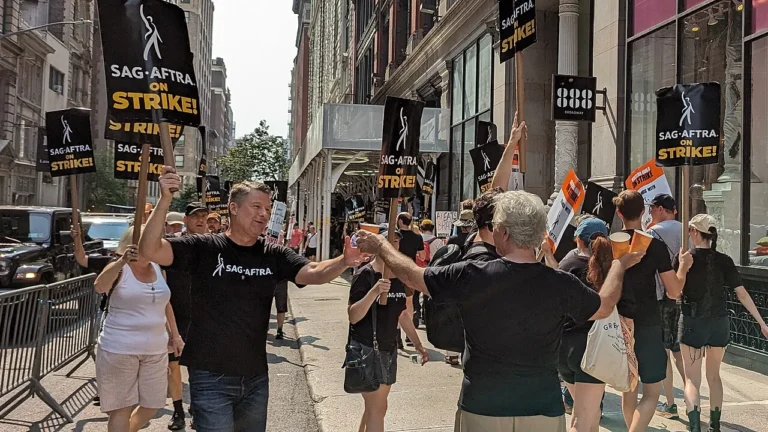
The actors union’s 2025 statement about Tilly Norwood and later reporting raise questions about synthetic casting, consent, and compensation.
Anthropic’s feature story traces Claude Code from an internal CLI to a shipping coding agent, told by builders and early users who shaped the loop.


