California signs law requiring human review of AI firing decisions
California signed SB 947 on September 30. Its human review, worker notice and data access requirements become operative on July 1, 2027.

California Governor Gavin Newsom signed SB 947 on September 30, establishing limits on the use of automated systems to fire or discipline workers. The No Robo Bosses Act requires human corroboration when an employer primarily relies on an automated decision system for those decisions. Its workplace provisions become operative on July 1, 2027.
The official legislative history records the governor’s approval and the law’s filing as Chapter 859 of the Statutes of 2026 on September 30. That signing date and the July 2027 operative date are separate milestones. The new requirements do not begin on the day of signing.
What a human reviewer must check
Under Section 1522 of the legislation, an employer cannot rely solely on an automated decision system when making a disciplinary or termination decision. If the employer primarily relies on an automated output, it must direct a person to corroborate the decision using the data behind that output or other relevant evidence.
The text gives examples of supporting information, including managerial evaluations, personnel files, employee work, peer reviews and witness interviews. Relevant online customer reviews can also form part of that evidence. The requirement is tied to corroborating the employment decision, rather than simply having a person receive an automated recommendation.
If the employer cannot corroborate the output, or the reviewer concludes that it is inaccurate, incomplete or misleading, the employer cannot use that output to make the disciplinary or termination decision.
The legislation also prohibits using these systems to violate employment and civil rights laws, infer an employee’s protected status, or predict and take adverse action against a worker for exercising legal rights.
Workers receive notice and a route to their own data
An employer that primarily relied on an automated system must give the affected worker a written notice when it communicates the disciplinary or termination decision. The notice must be a separate communication in plain language, use the language of routine employee communications and arrive through an accessible written format.
That notice must explain that the employer primarily relied on an automated system and that a person reviewed the decision and corroborated the output. It must provide a human contact for further information and explain the worker’s right to request a description of the personal data used. It must also state that retaliation for exercising these rights is prohibited.
Workers can request a meaningful and objective description of their own data used by the system. When providing that description, the employer must anonymize personal information belonging to customers, other employees and other people.
The definition extends beyond generative AI
The law covers automated decision systems based on machine learning, statistical modeling, data analytics or AI when their simplified outputs assist or replace human discretion and materially affect people. Examples in the definition include scores, classifications and recommendations.
Ordinary spam filters, firewalls, antivirus software, identity and access management tools, calculators and databases are excluded from that definition. The employer definition covers private employers and government bodies, as well as labor contractors and farm labor contractors. It includes the University of California upon agreement by its regents.
Exceptions and enforcement are part of the text
The law excludes parties covered by a collective bargaining agreement only when the agreement clearly and explicitly waives these provisions, covers pay, working conditions and other employment terms, and protects against algorithmic management.
A separate exception applies where the use of an automated system is required by, or reasonably necessary to comply with, a federal law, regulation or binding federal contract concerning aircraft development or national security, military, space or defense products and services. That exception is limited to the operations covered by the relevant federal requirement.
The legislation authorizes enforcement by the Labor Commissioner and public prosecutors and sets a civil penalty of $500 per violation. It prohibits retaliation against workers who exercise their rights, file a complaint or cooperate with an investigation. Local rules providing equal or greater protection remain in place.
Its treatment of overlapping notice requirements also has limits. California privacy regulations concerning automated decisionmaking still apply to businesses subject to the California Consumer Privacy Act. The text separately preserves requirements concerning quotas and other automated standards applied to working conditions.
Section 1526.7 sets July 1, 2027 as the operative date for this new part of the Labor Code. The chaptered status record and the legislation’s specific obligations provide the key distinction for readers following workplace AI rules. The rule sets a boundary around disciplinary decisions. It does not prohibit workplace AI generally.
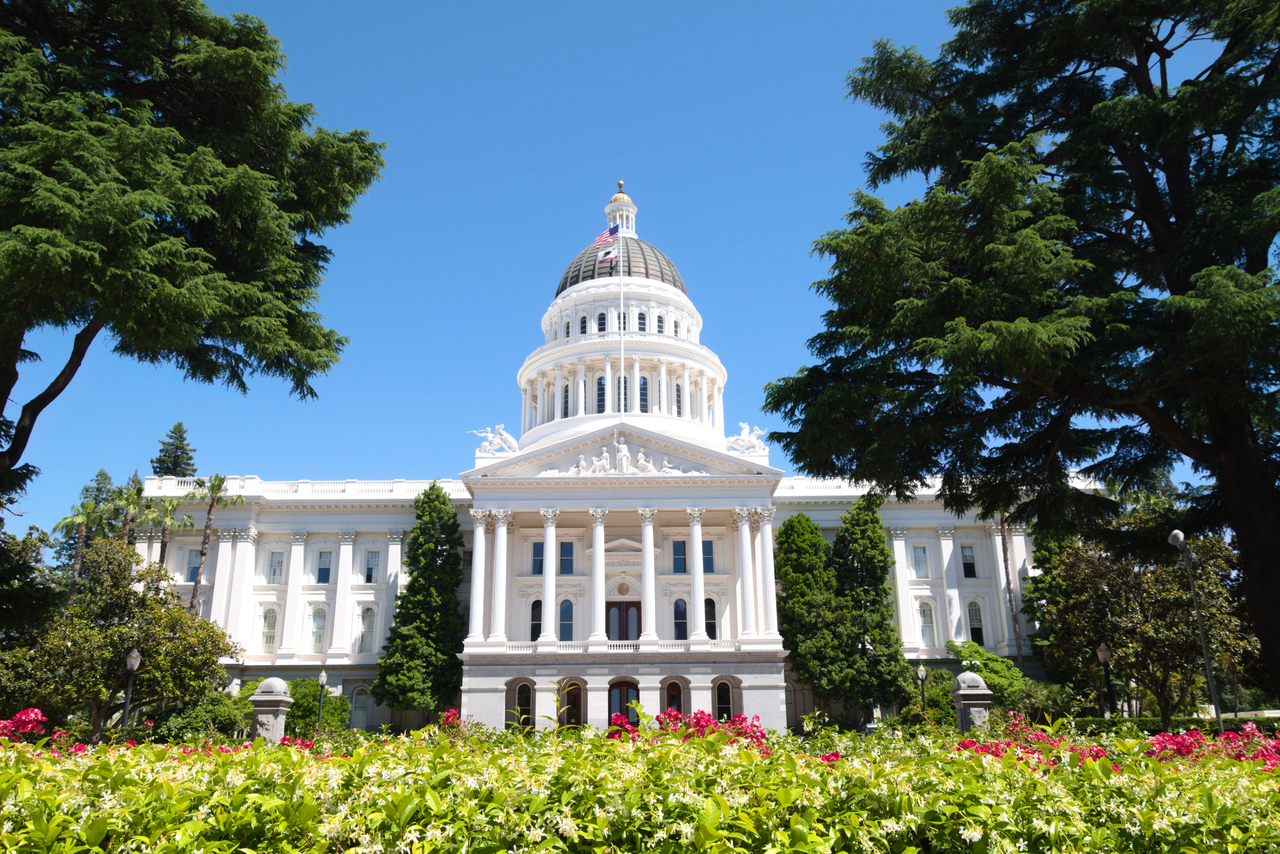
Photograph of the California State Capitol taken in May 2024 by Earthquakesurprise via Wikimedia Commons, released under CC0.