Blockway releases Volundr v1 and Agens Engine for local AI

Blockway has released Agens Volundr 32B v1, a model for coding and agent work, alongside its Agens Engine inference software. The v1 weight uploads completed on October 17, with Engine 1.0 following on October 18. The release pairs changes aimed at longer agent sessions with an experimental path to a smaller GPU memory footprint. Weight history and Engine 1.0 commit.
A revised model with clear ancestry
Volundr is derived from Qwen3.8-27B. Blockway expanded the network from 64 to 72 blocks, changed its attention and memory components, and further trained the language weights. Its provenance file says the inherited vision weights were left unchanged. This is an extensively modified descendant, with that relationship documented in the download. Modification record.
In Blockway’s evaluation of 50 SWE-bench tasks, repeated generation loops fell from 36 cases in the Preview to zero in v1. Completed tasks rose from 22 to 27. Those are vendor results on a small subset using its Codeway harness, rather than the complete benchmark or an independent replication. Model evaluation.
The accompanying SGLang build can preserve conversation state so later turns process new messages without starting again from the full history. Session continuation is disabled by default and needs the documented configuration. That detail matters when reproducing the advertised improvement in repeated agent turns. Serving documentation.
What the smaller memory profile demonstrates
The specialized Engine build assigns different layers two, three or four bits and moves embedding tables and longer context storage into system memory. The download is about 25 GB, and full context operation requires at least 32 GB of host RAM. This shifts part of the memory requirement rather than eliminating it. Checkpoint requirements.
Blockway tested the 16 GiB profile on a 48 GB GPU held to that software cap. It reports a 15.5 GiB device memory peak and a conversation reaching 239K tokens. The configured maximum is 262K. These measurements do not establish equivalent speed on a physical 16 GB card. Engine measurements.
The smaller checkpoint also sacrifices some measured accuracy. Its GPQA Diamond result is 73.7 against 80.3 for the BF16 model, with each figure the best of four runs. HumanEval falls from 78.7 to 73.2. Developers should evaluate the exact compressed build they intend to deploy. Quantized model evaluation.
Engine 1.0 accepts text only. Its reported accelerated results use greedy decoding with the companion DFlash2 model, while sampled requests generate one token per step. The supplied kernels target CUDA compute capabilities 8.9 and 12.0 and require a CUDA 12.9 capable driver. These constraints narrow the machines and workloads covered by the launch. Runtime requirements.
Availability and the remaining tests
The roadmap lists native measurements on additional 12 GB and 16 GB GPUs as future work. Support for 12 GB cards is still in development. That makes the current release useful for evaluation, while leaving the central consumer hardware claim awaiting direct measurements on the smaller devices. Published roadmap.
The weights use Apache 2.0. Agens Engine uses MIT, with third party components retaining their own terms. Teams redistributing a packaged runtime should preserve the relevant license and notice files alongside the model. Weight license and Engine license.
Our coverage of NVIDIA Dory describes another recent model release whose practical value depends on its runtime and compute choices. Volundr raises a related deployment question around memory, serving behavior and the exact checkpoint selected. Neither release establishes how the other will perform. Related Dory coverage.
A useful trial would replay representative conversations on the intended hardware and record peak GPU memory, host memory, first response latency and task completion. Keep the decoding settings and checkpoint fixed. That provides a stronger buying or deployment basis than comparing a single throughput number from a different machine.
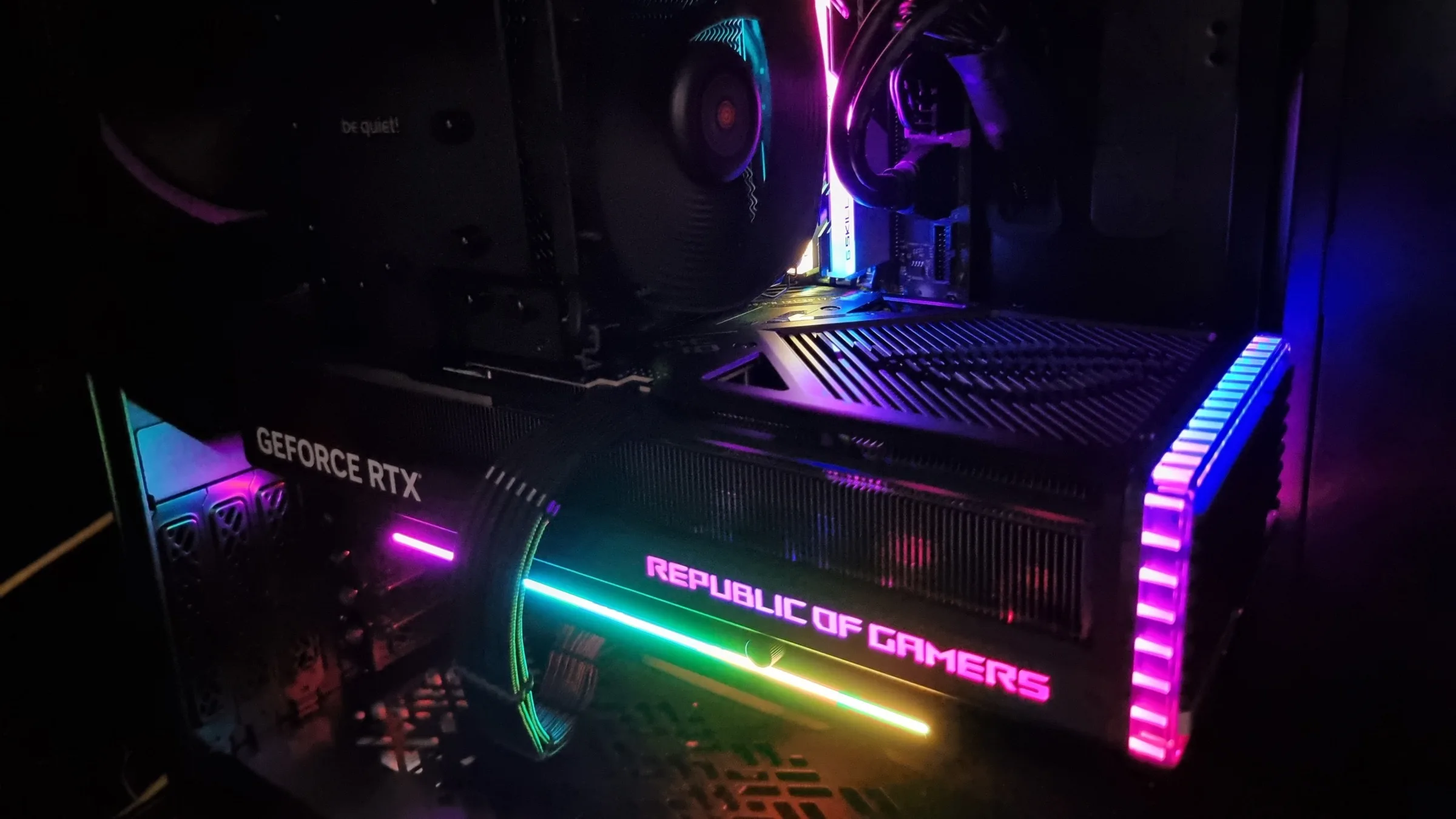
Illustrative RTX 4090 photograph from 2022. Photo by Benlisquare via Wikimedia Commons under Creative Commons Attribution ShareAlike 4.0. Cropped and resized. The adapted photograph uses the same license.