Antigravity adds Claude 5.5 access and dates older model removals
Antigravity lists paid Claude 5.5 access and November 2 removals

Google’s Antigravity model table now lists Claude Sonnet 5.5 and Opus 5.5 with thinking for Google AI Pro and Ultra. Pro access excludes trial subscriptions. Free, AI Plus and Enterprise accounts are excluded from these Claude 5.5 entries.
The same table marks Claude Sonnet 4.6, Opus 4.6 and GPT OSS 120b for removal on November 2, 2026. That notice applies to Antigravity.
The documentation changed in October
An October 2 archive lacks the additions and removal footnote. The October 3 capture contains them. These snapshots establish a documentation change between those dates, rather than an exact service rollout time. ByteForward has not tested account access.
The models arrived earlier
Anthropic introduced Opus 5.5 on September 22 and Sonnet 5.5 on September 28. The Antigravity change concerns where those models are available. Anthropic positions Opus for complex work requiring sustained judgment and Sonnet for more bounded tasks, including bug fixes and document creation.
Those descriptions come from the model developer. They do not establish how quickly a particular project will finish inside Google’s agent environment, where tool behavior, context and the task itself also matter.
Access still comes with usage limits
The Antigravity plans guide says all plans include Gemini models, unlimited Tab completions and product features such as scheduled tasks and the CLI. Pro quotas refresh every five hours until the weekly limit is reached. Users outside Pro and Ultra receive a weekly allowance.
Google says usage depends on the work an agent performs, with complex tasks consuming more quota. Limits can change with capacity. A prompt count therefore gives an incomplete picture of how much work a plan will support.
Pro and Ultra users can enable AI credit overages after the baseline quota is exhausted. The setting can also be left on Never to wait for a refresh. Developers should check that choice before starting sustained work, because an available model and a remaining included allowance are separate questions.
The guide also says bringing an API key or endpoint is not supported for additional rate limits. Teams relying on that route should verify their deployment options before treating it as a workaround.
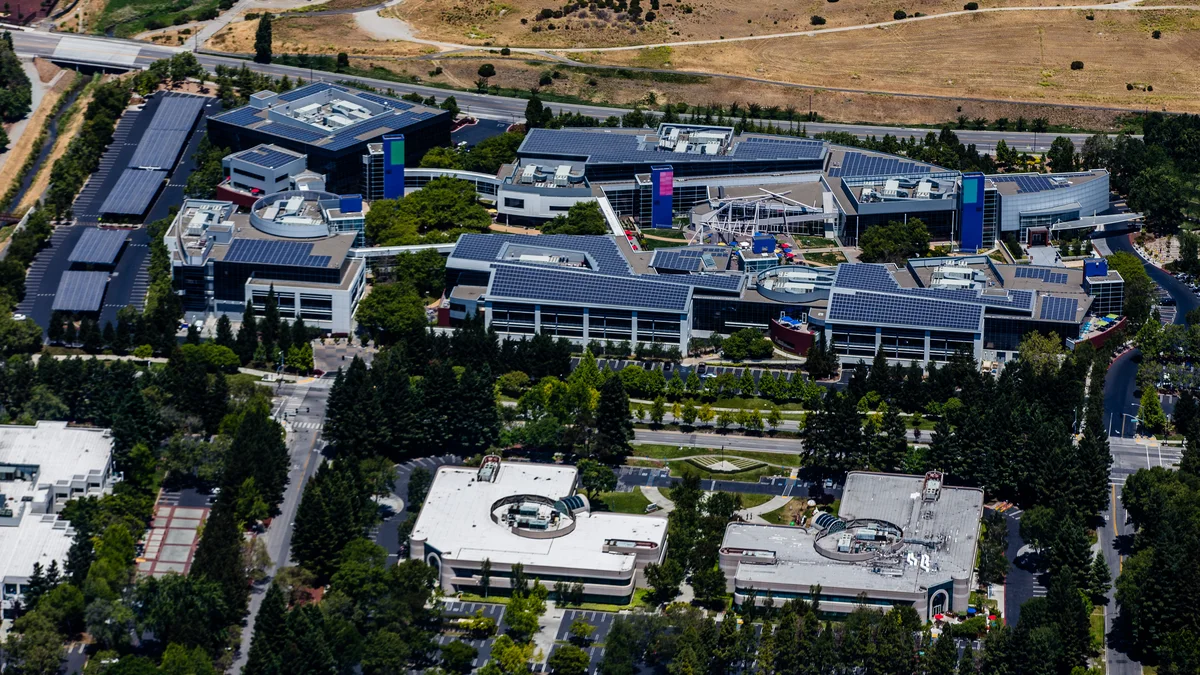
Illustrative 2013 photograph Google Campus, Mountain View, CA by Austin McKinley under CC BY 3.0. Resized and converted to WebP. It shows Google’s campus, not an Antigravity interface.