AdaDex pairs imitation with robot hand goal training

An October 20 AdaDex preprint combines imitation of a short human motion with practice toward randomized goals in simulation.
Progress and completion differ
Its tracking metric measures how far a clip proceeds before object error crosses a threshold. It is not a rate of completed tasks. On similar unseen motions, authors report 80.02 percent tracking progress across twelve objects.
In a separate simulation test, the authors report 51.80 percent average goal progress versus SimToolReal’s 44.60 percent. Yet success on all ten consecutive goals was 27.08 percent versus 31.71 percent. The comparison finetunes SimToolReal for each object.
What transferred to hardware
Hardware demonstrations include open loop replay of simulated joint targets and policies using live object pose feedback. The paper does not report aggregate physical success rates.
Each object and reference trajectory needs its own learned controller. The authors flag the pose and shape representation as a limit for articulated or deformable objects.
The baseline has a different scope
The SimToolReal paper provides context for the comparison. Its original system learns one policy across procedurally generated tool shapes, then follows object goal sequences extracted from human video. That design aims to reuse a controller across tools instead of training a fresh one for every demonstration.
Its authors caution that following a tool’s path does not guarantee finishing its job, particularly when strong forces matter. Their controller’s goals omit surrounding obstacles, and its planned sequence is fixed. These limits make completion, collision handling and replanning separate questions from tracking accuracy.
Our coverage of Natura 1 examines why hand design and additional task training matter when comparing robot demonstrations.
ByteForward has not independently reproduced these results.
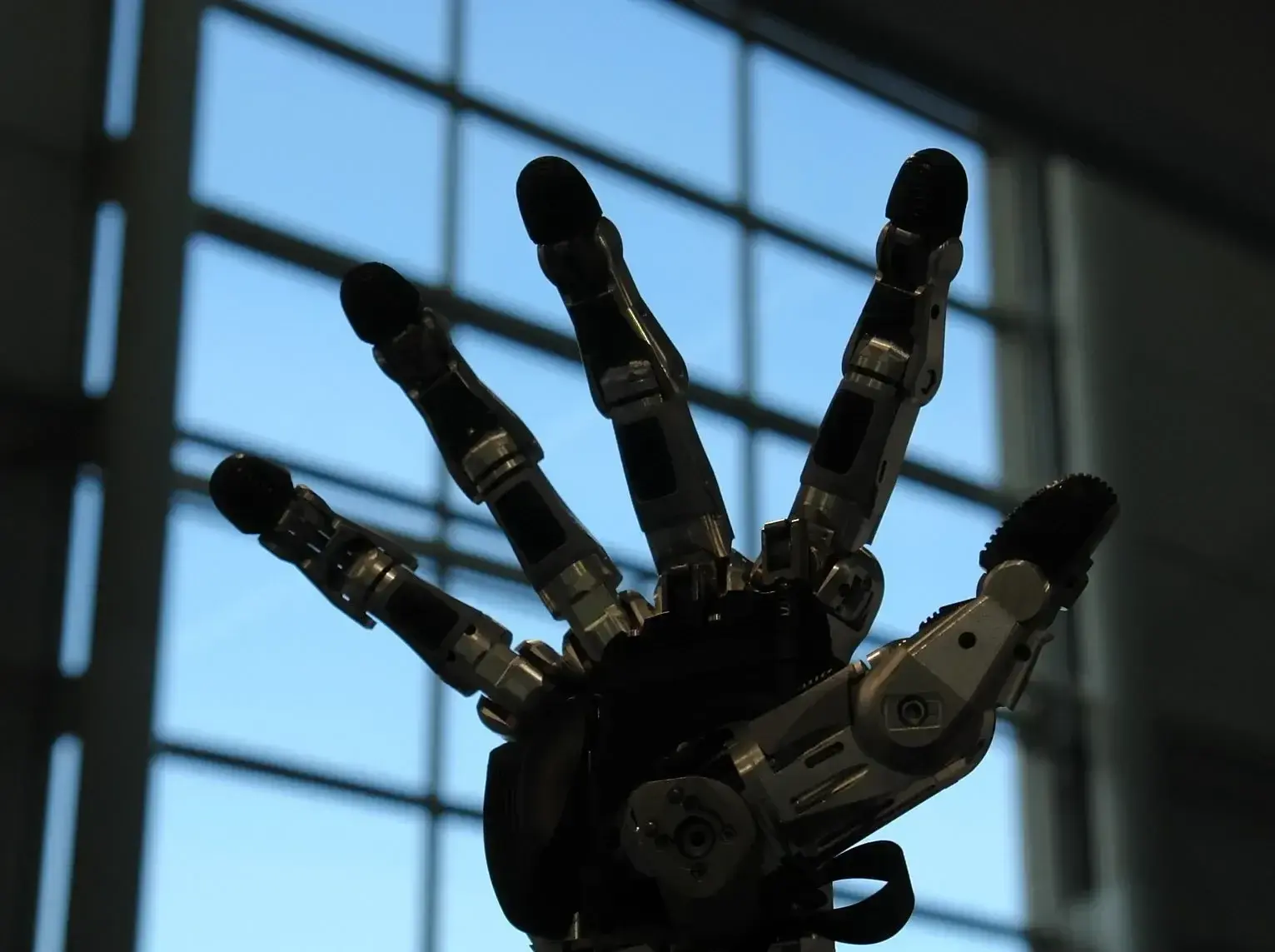
Schunk SVH robot hand at Hannover Messe 2016. Photograph by NearEMPTiness, under CC BY SA 4.0. Taken April 28, 2016. This archival image illustrates robotic hands and does not depict AdaDex testing. Cropped and converted to WebP for display.