Reflection releases Beam weights under Apache 2.0

Reflection has released Beam model weights under Apache 2.0. The October 16 announcement moves the company beyond a limited preview, giving developers downloadable artifacts for their own deployment and evaluation.
ByteForward’s earlier Beam coverage described the October 5 preview and a promise to publish weights later in the month. This release fulfills that central promise. It also makes the deployment choices more concrete than the preview alone could.
What the model actually accepts
The final model card describes a text model developed mainly for English, with a context window of one million tokens. Its mixture of experts architecture has 501.3 billion total parameters and 23.4 billion active parameters, with 256 experts. It does not take images or audio as direct model inputs.
That distinction matters when choosing a task. A workflow that needs to inspect screenshots must supply another way to turn the visual information into text. A large context window does not, by itself, add a missing input modality or establish that every long document will be handled accurately.
Choose a checkpoint before choosing a server
Reflection lists BF16, FP8 and NVFP4 versions and a speculative drafter. Named integrations include Transformers, vLLM, SGLang, Unsloth, Axolotl, TokenSpeed and NVIDIA Dynamo. Investigate the serving options for your workload.
The public BF16 repository reports about one terabyte of files and lists weight shards numbered across a set of 188. That is direct evidence of downloadable model artifacts, rather than a waitlist or an announcement of future availability.
The active parameter count should not be mistaken for the size of the complete checkpoint. In a sparse model, using a subset of parameters for a token does not make the rest of the weights disappear. The repository’s file size is also a storage observation, not a verified minimum for running a particular context length.
Before committing to infrastructure, identify the exact precision, serving engine and context limit you intend to use. Then check the engine’s supported configuration and test your own workload. This article does not establish a universal GPU minimum or a measured saving from moving between the released versions.
Keep the license with the deployment decision
The repository contains the Apache 2.0 license itself. It carries conditions, including retaining relevant notices and providing a copy of the license when redistributing. Calling the release unrestricted would hide those obligations. Keep the actual license alongside the checkpoint you evaluate or redistribute.
License terms deserve their own check even when two releases both offer downloadable weights. ByteForward’s coverage of Meta’s gated Muse Spark Open release gives a separate example of why access and deployment terms belong in the comparison.
Check API limits separately from local serving
Reflection’s API model documentation lists Beam-1.0-501B-A23B with a one million token context window and a maximum output of 128K tokens. Context includes both the prompt and the generated output. A prompt close to the context limit still needs room for the response.
The documentation warns that available models and default settings can differ between organizations and plans. Its example response shows reasoning enabled with a default effort of max, but that example should not be treated as every account’s settings. Inspect the model information returned for the organization that will run the application.
We have not verified a universal free API tier or a public token rate for this release. Downloadable weights do not settle the cost of a hosted endpoint. Confirm access, billing and the limits applied to the actual account before relying on it for a production workflow.
Mirror adds an agent workflow around Beam
The accompanying Mirror CLI documentation describes a terminal coding agent in early beta. It can read code, edit files and run commands, with resumable conversations and separate workspaces for parallel tasks. Each workspace keeps its own conversation, model and approval mode.
Manual approval is the default for commands and file changes. The important limit is that approval mode is not a sandbox. Commands and extensions run with the account’s permissions. Review the requested operation and the repository’s state before approving it, especially when several workspaces are active.
Mirror’s rewind feature changes the conversation, while file edits remain in place. Restoring a prior conversation is therefore different from reverting the working tree. Keep version control and a review of the final changes in the workflow.
Evaluate the artifact you plan to use
Start with representative tasks and a clear way to check the results. A team evaluating repository maintenance could compare correct fixes, unintended changes, time spent reviewing and the full serving cost. Keep prompts and acceptance criteria consistent across candidate setups, and record the exact checkpoint and engine version. This is a suggested evaluation approach, not a result from testing Beam.
Reflection says self distillation recipes will follow in the coming days. Treat those as planned material. The shipped weights and current documentation are already enough to begin an evaluation, without assuming every announced component has arrived.
This report is based on official documentation and public repository files checked on October 16, 2026. ByteForward did not download or run the model, reproduce benchmarks or measure hosting costs. The release date is confirmed, but its exact publication hour was not established.
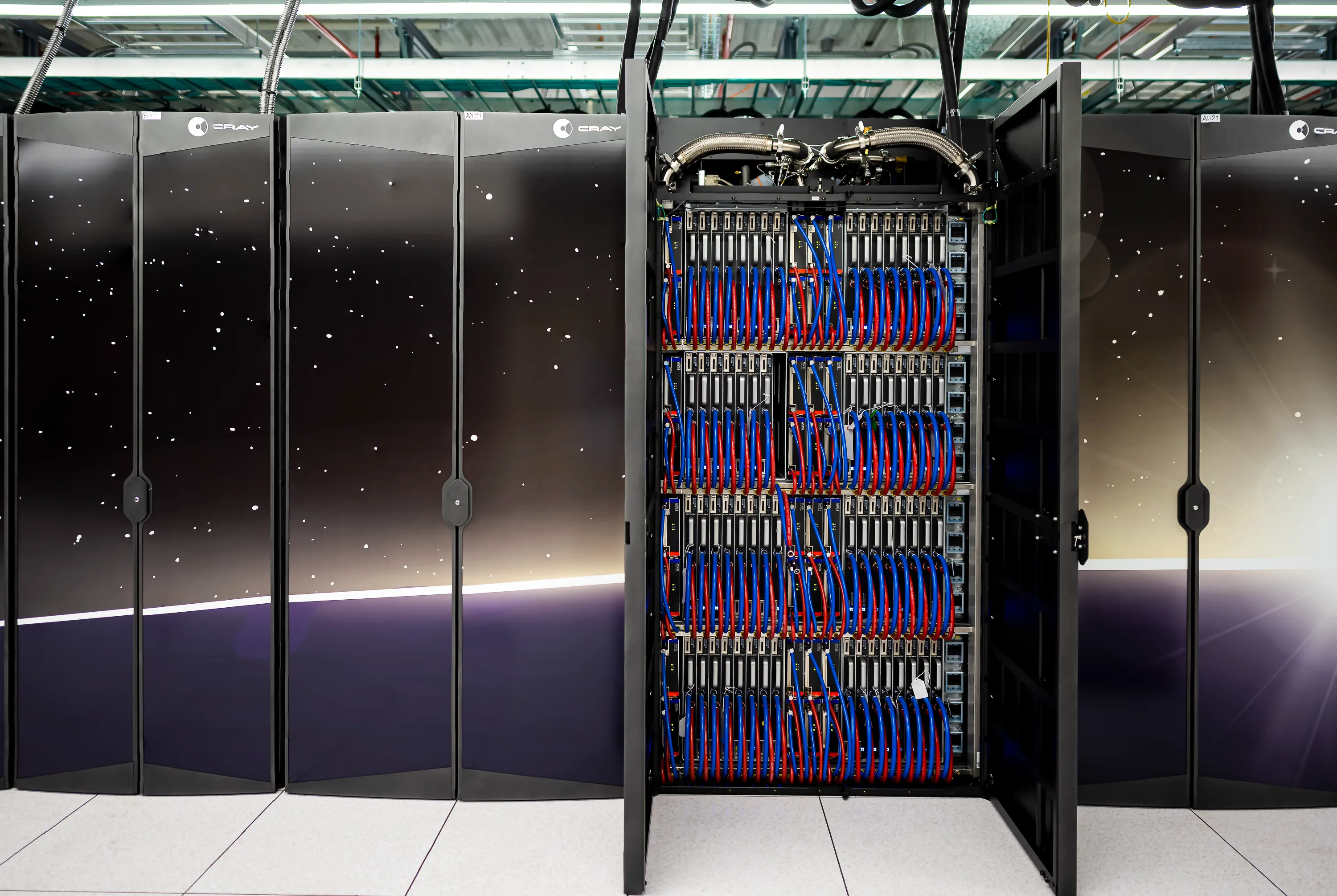
Illustrative archival photograph of an open Frontier supercomputer cabinet at Oak Ridge National Laboratory, 2022. Photograph by Oak Ridge National Laboratory, CC BY 2.0. The page layout may crop the image.