Google Playground’s game test shows why the second prompt matters

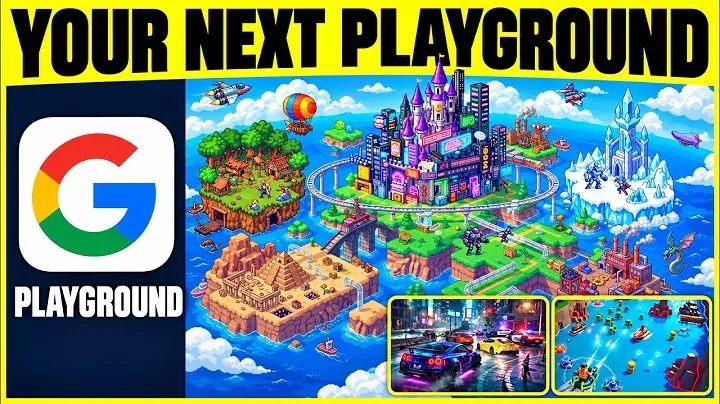
Google Playground makes the revision step worth paying attention to. In ByteForward’s October 12 video, three small builds show how a working game can still need changes to its rules, difficulty or visuals. The useful lesson is to budget time for playing and revising, even when the first result arrives quickly.
Google announced Playground on October 7 as an experimental platform for creating, playing and sharing games through a conversational interface. This article examines the later ByteForward test, with current access details checked on October 12. For the original announcement, see ByteForward’s Playground launch coverage.
A small game gives you something concrete to improve
The video’s first build, Pizza Prowler, sends a raccoon across New York rooftops collecting pizza. A later request adds a chef hat and helicopters with spotlights. The host reports that the new hazard works alongside the visual change.
That is a useful way to separate two jobs in your own prototype. A costume change tests whether the visual direction followed the request. A moving hazard tests whether a new rule actually affects play. Check both after a revision. A game can look different while still behaving exactly as it did before.
Start with one clear objective and a small set of controls. Once those work, add a single complication and replay the same stretch. Keeping the test small makes it easier to notice when a revision breaks movement, scoring or collision behavior that was previously working.
A playable survival game can still be badly balanced
In the 3D survival build, darkness and a fast defeat expose a problem. The host asks for better lighting and weaker monsters, then reports being able to see and defeat two enemies before dying.
The practical distinction is between getting a game to run and giving its player a fair chance. A build can include an inventory, enemies and a night cycle while leaving the player unable to understand what killed them. Those systems need to work together from the player’s point of view.
When you ask for a fix, describe the failure in observable terms. State what the player could see, how long they had to react, and what outcome you expected. After the change, repeat the situation that failed. Then check whether the easier setting removed the challenge entirely. A successful correction should make the game understandable while preserving a reason to keep playing.
A multiplayer build needs a second player
The kitchen game, Sizzle Panic, includes a lobby and burger making competition. The host explicitly says it was tested alone. The video therefore leaves real two player play untested.
A lobby is a starting point for a separate test. Invite another adult to try joining, starting a round, using the controls and reaching the win condition. Check what happens when someone leaves or tries to restart. These are suggested checks for a new prototype, not results established by the video.
Check access and your own usage meter
As of October 12, Google’s Help Center limits Playground to U.S. users aged 18 and older. Catalog games are free to play. Free creation uses a limited allowance renewed weekly, with access rolling out through a waitlist. Google One AI plans provide immediate creation access and higher weekly allowances. Multiplayer remains an early preview.
The host reports using nine percentage points of a weekly allowance for three builds and two revisions. That is one account’s experience, not a general price or capacity estimate.
For your own trial, record the meter before starting, after the first build and after each revision. Decide how much of your allowance you are willing to spend before adding more features. A small project that you finish and replay will teach you more about your needs than several abandoned first drafts.
Keep the files and the next step in view
Google’s export instructions describe downloading a ZIP containing a created game’s HTML, JavaScript, CSS and generated assets from Creation Studio. Keep that copy if you want to inspect what was produced. Export alone does not establish an open source license or prove the project is ready for deployment elsewhere.
Google’s announcement places the Unity Spark integration in the future. Unity’s Spark page still presents it as forthcoming and offers a waitlist. Plan around the features available now rather than treating the promised integration as part of today’s build.
The strongest starting point is a game small enough to understand and replay. Get the basic loop working, make one focused change, and test the result again. The second prompt becomes valuable when it responds to something you actually learned while playing.
Watch the ByteForward test
The accompanying October 12 video covers the three builds and their revisions. Its observations are attributed here to the host. This article does not claim an additional direct test.