Intel D270 takes shape as Crescent Island sampling advances

Intel says customer sampling is underway for its Crescent Island inference GPU, now branded GPU D series. The company disclosed the update at the Open Compute Project Global Summit on October 12, while its product page identifies the accelerator as D270.
The memory configuration needs a close look. Intel’s announcement says its own PCIe card carries 160GB of LPDDR5X. Partner manufacturers can build versions with as much as 480GB. That larger figure describes the design’s available options, so buyers will need to check the capacity of a specific board.
Intel also lists 1.5TB per second of memory bandwidth and 1.3 petaflops of FP8 compute. Those specifications describe hardware capacity, with actual performance dependent on the workload and configuration.
Built for existing servers
The D270 product page describes a standard PCIe 5.0 accelerator with passive air cooling. Intel has allocated chip area to computation instead of graphics and ray tracing functions. Its stated target is prompt processing and inference in ordinary server infrastructure, including deployments where a liquid cooling conversion would add complexity.
Intel links the large memory pool to longer prompts, retrieval tasks and the growing working memory that models keep during a conversation. It also describes support for PyTorch and vLLM. These are deployment claims from the manufacturer. The page provides a contact route for customers, without a listed purchase price or general availability date.
Several specifications were already public
Intel’s August 24 Hot Chips announcement had already disclosed the main hardware outline. Crescent Island would have 32 Xe cores and 256 XMX engines based on Xe3P, support up to 480GB of LPDDR5X, and use a 350 watt air cooled PCIe card. Those figures predate the October update.
That earlier presentation placed the GPU within a broader plan for AI infrastructure. It paired inference acceleration with general computing for orchestration, and described memory capacity as a way to support larger models and more simultaneous agents. The current branding gives that previously described design a commercial identity.
The sampling milestone follows a longer roadmap
The project itself dates back to October 14 2025, when Intel announced Crescent Island for enterprise inference. At that point, the company specified 160GB of LPDDR5X and expected customer sampling in the second half of 2026. The latest status puts the project in that planned evaluation period.
Intel’s original announcement also said its software foundation was being developed and tested on Arc Pro B series GPUs. That preparation matters to prospective customers evaluating application portability. Hardware samples still need to prove their value in the software and workloads a buyer actually uses.
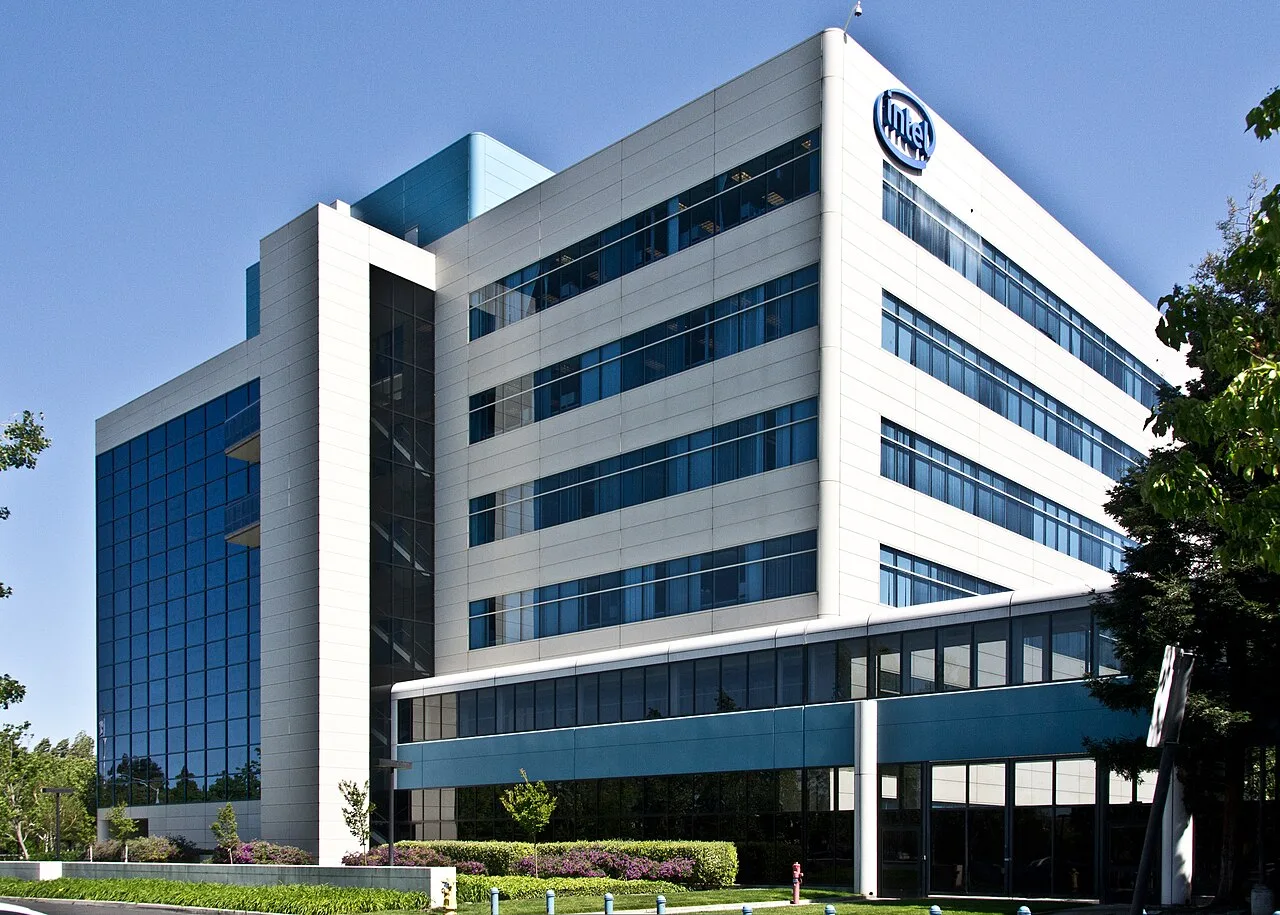
Intel headquarters in Santa Clara, photographed on April 29 2011 by Sixflashphoto. Wikimedia Commons. Creative Commons Attribution ShareAlike 4.0. Resized by Wikimedia Commons.