Ultra announces $50 million Series A for warehouse robots

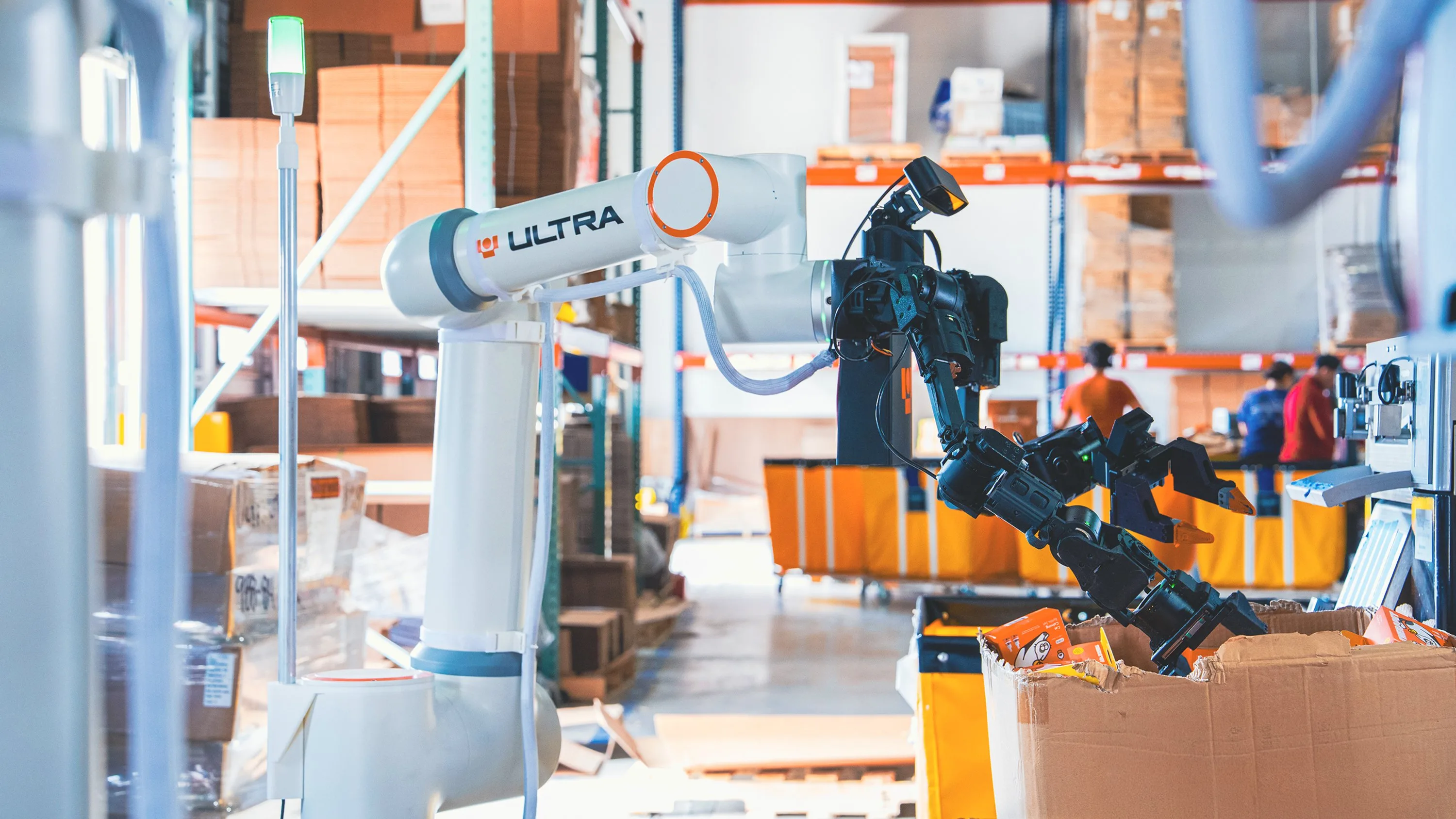
Ultra has announced $62 million in funding, including a $50 million Series A led by Framework Ventures, according to its official company statement. The warehouse robotics business says deployment is its central challenge. Its website describes the round as support for expanding its robotic fleet.
The original date of the company announcement could not be confirmed. An earlier securities filing already recorded substantial capital raised. The current statements establish the Series A headline, but do not explain how the announced funding relates to the earlier filing.
An August filing adds context to the funding
Ultra Robotics Corp, whose previous name is listed as Brooklabs, reported $57,089,457 sold against a $62,089,507 offering in its Form D notice. The document was signed on August 20 2026 and gives August 7 as the first sale date. It reports 53 investors and declines to disclose a revenue range.
The filing does not label those amounts as the $50 million Series A. The company statement reviewed for this article does not reconcile them with its $62 million announcement either. They should not be added together, treated as separate rounds or used to calculate how much cash arrived with the latest announcement.
OP1 works at existing warehouse stations
Ultra calls its machine Operator, or OP1. Its product page lists packing, sorting and kitting as target tasks. The stationary design uses locking caster wheels for repositioning and draws power from a standard 120 volt outlet. Ultra specifies a five foot square footprint, a dedicated internet connection and a payload of up to 10 pounds per arm.
The company describes one New York installation splitting work between bulk polybagging and padded mailers. These examples put the product in a specific operational setting. It handles goods at a workstation, with a defined work area and support requirements. The listed capabilities do not establish performance across every item, package or warehouse layout.
A customer deployment is useful evidence with limits
Ultra robots were already operating at a named customer in July. In a July release from Industry City, the Brooklyn campus operator described Highline Commerce using Ultra robots in live fulfillment. It said the robots were filling up to 30 percent of Highline clients’ orders.
That figure belongs to a particular customer account. The release supplies neither underlying order counts nor a measurement method. It also refers elsewhere to a share of the fulfillment process, so the precise measurement should be treated cautiously. It cannot establish a fleet average, a share of labor eliminated or how often people helped the machines complete their work.
Industry City is describing activity among its own tenants and has an interest in promoting the campus. The account supports the narrower conclusion that a named operator was using the robots in production. It does not independently validate operating economics or reliability.
Scaling will depend on the work around the robot
Ultra’s founders described their approach in their Y Combinator launch material as placing robots at existing workstations and using established hardware so the team could focus on deployment. The company went through the Summer 2024 batch. Its founder profiles also show earlier experience building manufacturing and software businesses, including Voodoo Manufacturing.
That approach makes installation and ongoing operation central to the business case. A warehouse evaluating an expanded deployment needs to measure completed orders over scheduled operating hours, the time staff spend helping the machines, packaging errors, maintenance and support response. Those measurements need to cover ordinary shifts and changing product mixes.
A useful pilot comparison would include all the work needed to keep the station supplied and clear its output. Otherwise a faster packing step could hide additional work elsewhere. The relevant result is a repeatable improvement in the customer’s operation after support costs are included.
The announcement puts Ultra’s capital raising alongside its existing deployment effort. The funding statement reviewed here does not provide a valuation, a complete deployed fleet count or a comparable cost per completed order. Those gaps limit what can be concluded about commercial scale from the funding headline alone.