

AI leaks and early reports
Follow early reports about AI models, assistants and features that may still be in development. ByteForward brings together short editorial summaries, available evidence and the questions each report leaves open. These reports are unconfirmed unless an entry says otherwise. An early interface, screenshot or code reference can show what is being tested without establishing a release date or public availability.
Latest reports
No reports match this search and these filters. Try fewer words, clear search or reset the filters.
Antigravity previews suggest voice and Auto modes
A development preview report shows a voice agent called Concierge and an Auto mode alongside Antigravity’s Argon upgrade labels. The prototypes have no confirmed launch date, and Auto mode’s approval rules are unclear. Argon itself was already announced.
Claude Quick Write reported in desktop code
A desktop-code report describes Quick Write controls for rewriting selected text or inserting a draft at the cursor in another app. The feature is gated; supported apps, access rules and a public release date remain unconfirmed.
Hark Pro launch confirmed after the news listing
Update October 7. Hark’s October 6 launch announcement says Hark Pro is available for iOS, Android and web. Our earlier check established only its news listing.
Hark home screen receives partial confirmation
Update October 7. The October 6 launch confirms a customizable Home screen, connected Panels, memory and scheduled tasks. The earlier daily brief design and internal model configuration remain unverified.
Fable 5.5 demo rumors
Demos shared since October 1 are being attributed to Fable 5.5, though screenshots reportedly show Fable 5.1. As of October 5, the model identity and launch timing remain unconfirmed.
Gemini desktop access test
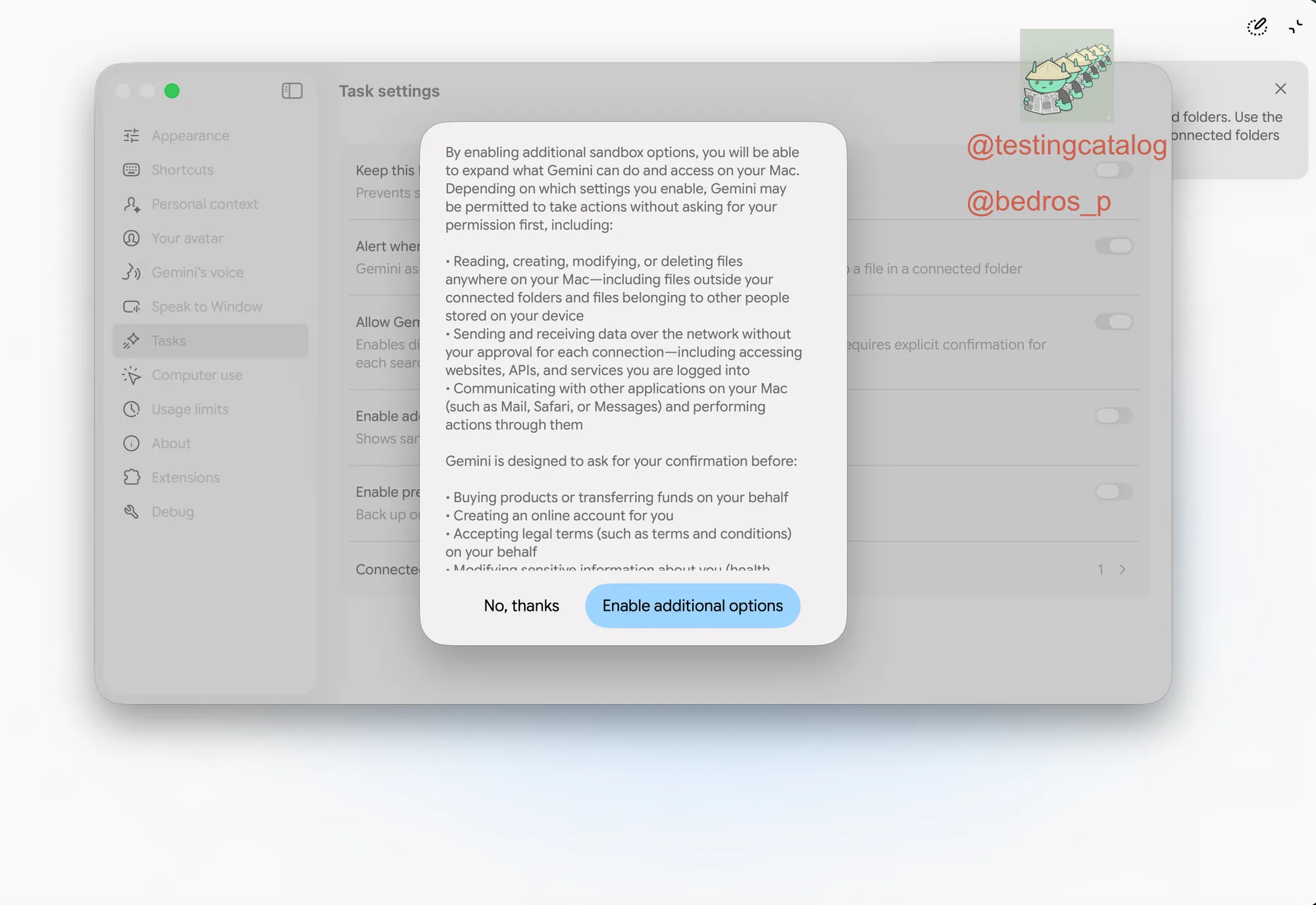
An October 2 report describes a Gemini test that could access more folders and apps. Purchases and legal approvals would still need human confirmation. No public rollout date was given.
Muse screen tab described in a web preview
A web build report describes a dedicated tab for watching Muse’s virtual computer screen and a revised browser calling interface. These reported interface observations do not establish public availability. Voice mode itself had already been announced.
Muse messaging controls point to Messenger and Telegram
A development report describes Muse controls for connecting and managing Messenger and Telegram channels. The reported interface does not establish working integrations, public availability, permissions or a release date.
Claude Money tab reported in a mobile preview
A development report describes a Money tab and bank linking invitation in Claude’s mobile interface. The reported screens do not establish supported banks, data access, financial actions, launch timing or public availability.
Questions about AI leaks
What counts as an AI leak
A leak is an early report or product clue that appears before an official announcement. It may involve an interface, screenshot or code reference. The evidence can be incomplete.
Are these reports confirmed
Reports are unconfirmed unless an entry says otherwise. Each summary explains the available evidence and what remains uncertain.
Where can I find the original source
Cards with a verified source link open the original report when selected. Image previews and source credits have their own links. Some historical entries may have no surviving source link.
Why do reports change
New evidence can clarify or contradict an earlier report. Features can also change during testing or never become publicly available.
Does this page cover every leak
Coverage is incomplete. ByteForward selects reports for editorial summaries and cannot capture every clue or independently verify every claim.
How do personal browser reactions work
Reactions need no account and are saved when you choose an icon. The numbers show submitted reactions, and the highlighted icon shows your choice. These totals are not verified unique people. Select the highlighted reaction again to remove it. A random key lets you change choices during the current page visit. Without a previously saved key, reloading or closing the page loses access to those choices, although they remain counted. If you previously chose to remember reactions, the existing cookie can still retrieve your choices until its original expiry or removal through your browser. The current feature does not create reaction cookies or extend their expiry.