
CMC research separates video motion from reference appearance
A new preprint studies motion transfer while limiting copied appearance.

A preprint posted October 6 presents CMC, a method for transferring motion from a reference video while letting a text prompt determine the new scene’s appearance.
The researchers address content leakage, where generation copies unwanted visual details from the reference. Their approach steers the video generation process toward the desired movement while preserving variation from the underlying model.
The practical limits
The paper reports competitive motion fidelity and less appearance leakage in its experiments. It concentrates motion guidance in early generation steps to reduce optimization work.
CMC still requires optimization for each reference video. The authors leave transfer to arbitrary references and prompts for future research, and results remain constrained by what the base model can generate.
This is an experimental video control method. Independent replication and broader testing would be needed to establish how reliably it works across production workflows.
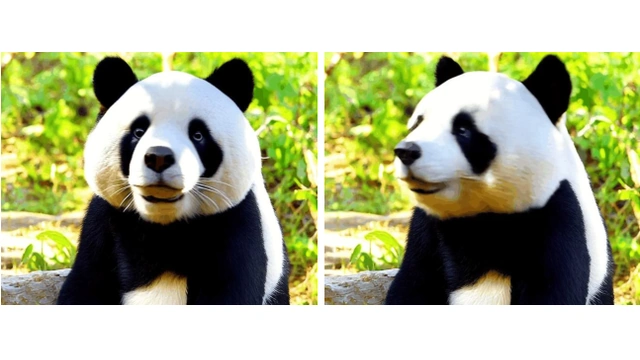
Featured frames by Youngyoon Choi and coauthors from CMC Figure 1, under Creative Commons Attribution 4.0. Cropped from generated study outputs, padded with white margins and converted to WebP.