DeepMind says agents run some Gemini experiments. That is not a self-improving loop
DeepMind’s Gemini lead says agents run some experiments on an undisclosed share of compute. He says full recursive self-improvement remains some way off.
 Jordan Reid
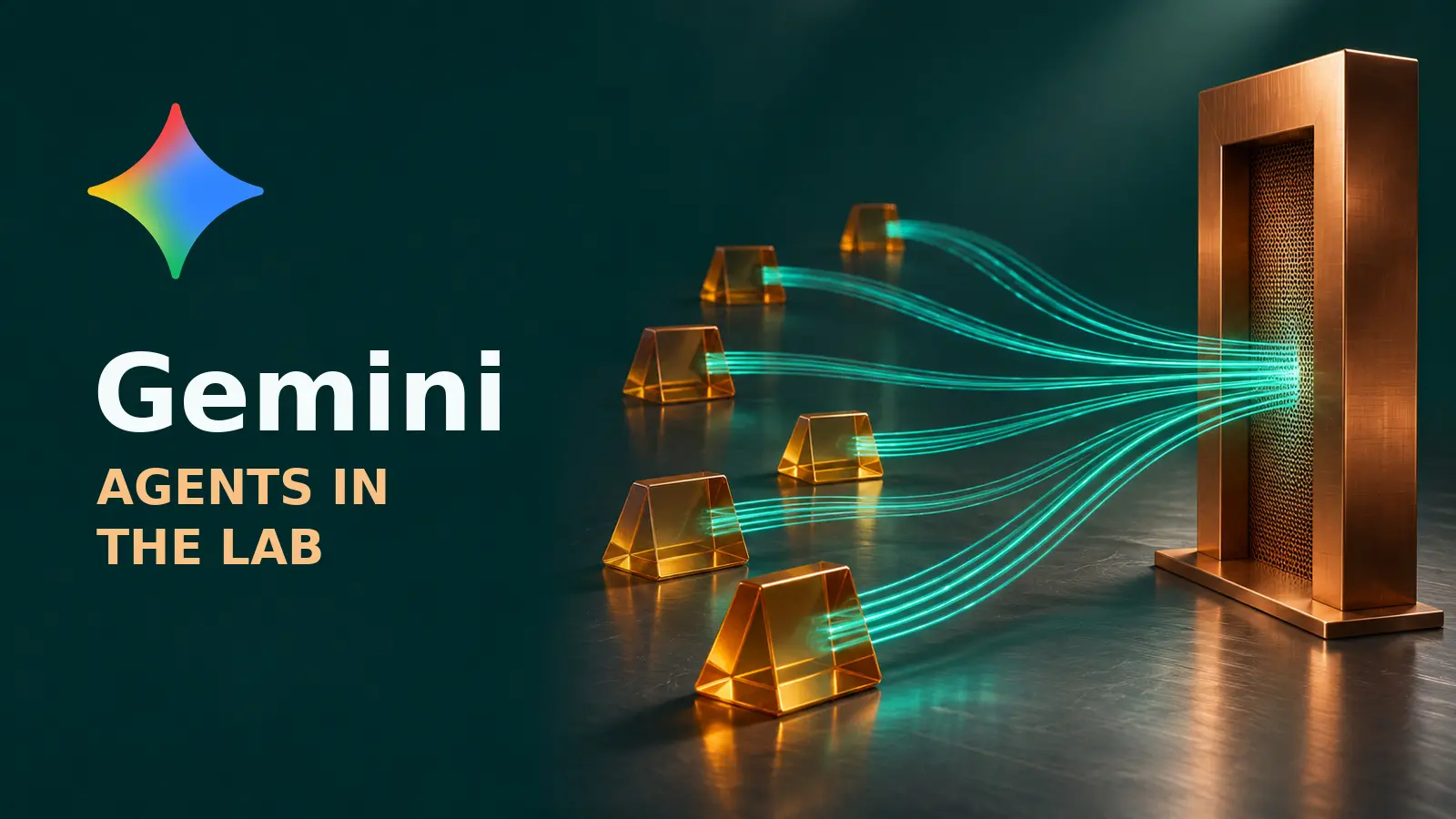
Some of the compute used to build Gemini is under the control of agents running experiments, Google Chief AI Architect and DeepMind SVP Koray Kavukcuoglu said on the lab’s November 19 podcast. He did not say how much compute agents control or which decisions they can make. He also said the lab was still some way from a full loop in which a model improves its own successor.
Running experiments is not the same as owning the research loop
A lab can let an agent run trials without giving it the authority to pick research priorities, decide which changes should be adopted or sign off on a release. The distinction matters because more automated experiments could make human researchers faster without replacing their judgment.
DeepMind documented a concrete example in its 2025 AlphaEvolve paper. The Gemini-powered agent was assigned a narrow task: speed up a piece of code used to train Gemini. DeepMind tested the proposed changes on TPUs and checked the result on input shapes the agent had not optimized for. The authors reported a 23% average speedup for the kernel and about 1% less overall Gemini training time, and said the team put the change into production. The paper does not identify the agents discussed in November 2026 or show them deciding what to build next.
What DeepMind did not disclose
Kavukcuoglu also said full recursive self-improvement remained some way off. The interview did not provide a percentage of compute controlled by agents or enough detail to establish which decisions they can make without people. That leaves basic questions unanswered: who sets the hypothesis, who rejects a misleading result, and who decides that a change is worth putting into the next training run?
The metric I would want to see
Count how often an agent proposes an experiment, runs it and produces a result that survives human review. Report those steps separately. That would be more informative than a single automation figure, and it would make clear whether the gain is research quality, experiment throughput or just less time spent running the same work.
Verification is its own step. The Claude-assisted Lean proof is an example of a different research workflow: formalizing the result gave reviewers something they could check separately from how it was produced. DeepMind has not published a comparable account of what its Gemini experiment agents proposed or what survived review.
Cover: ByteForward editorial illustration. Gemini Spark mark from the Google press image library. Source: Google.