WiCi One explained: wireless GPU hardware, pricing and practical limits

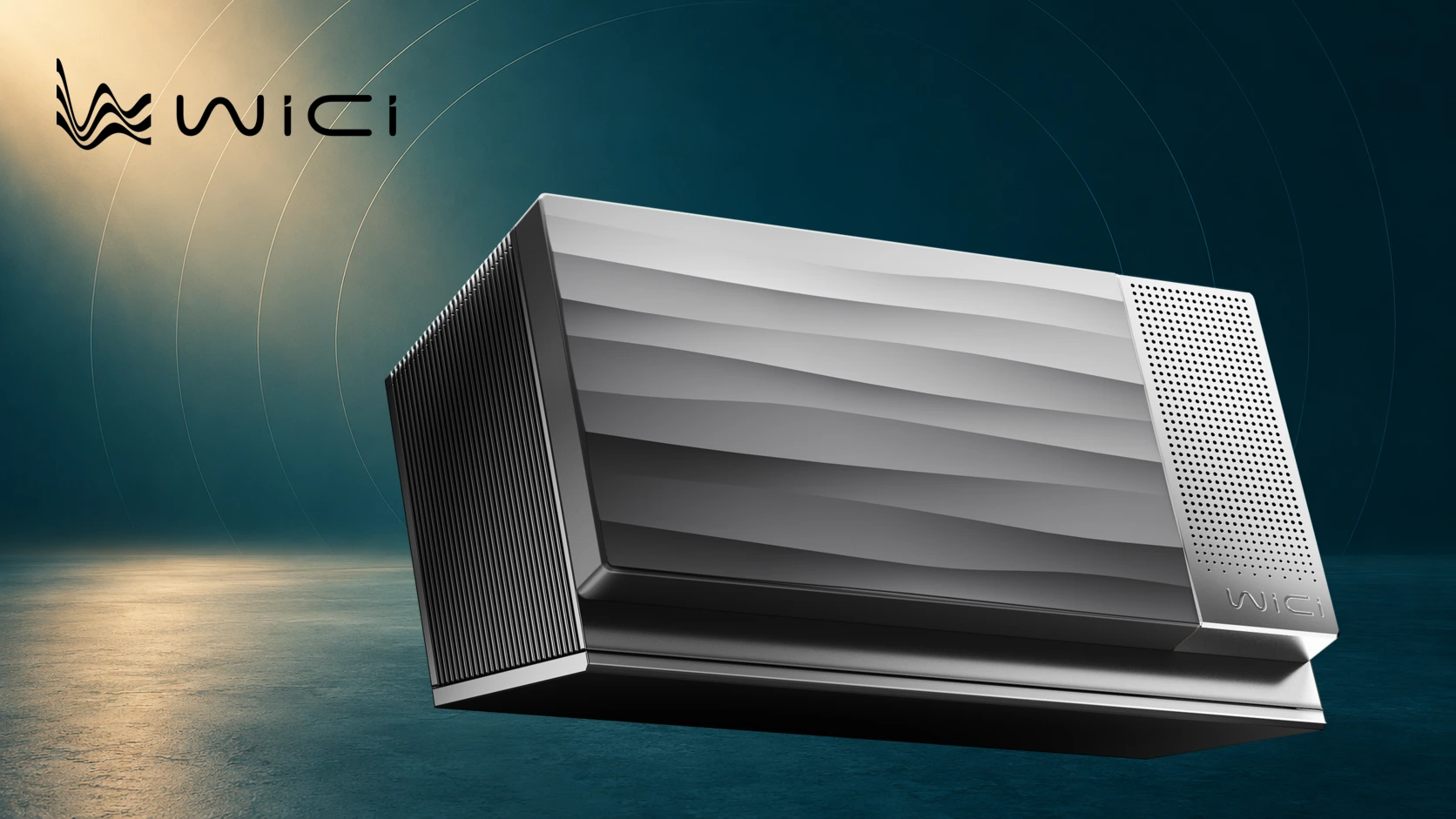
WiCi One puts an NVIDIA GPU in a separate box that nearby devices can use over Wi-Fi. The attraction is shared local computing: keep using a lightweight laptop or phone while a dedicated system handles GPU work. The important questions are which applications work, how the wireless connection affects them and what buyers receive at delivery.
This is an explainer based on public documentation checked November 2, 2026, not a hands-on review. WiCi’s newsroom dates the unveiling to September 24 and preorders to October 2. It is not a new November launch.
WiCi One price and hardware
The order page lists two configurations. Prices below exclude shipping and tax.
| Specification | RTX 5060 Ti edition | RTX 5090 edition |
|---|---|---|
| Listed price (USD) | $2,599 | $9,999 |
| GPU memory | 16GB GDDR7 | 32GB GDDR7 |
| Processor | Intel Core 3 100U | Intel Core Ultra 7 255H |
| Model storage | 1TB PCIe 4 NVMe | 4TB PCIe 5 NVMe |
WiCi describes the hardware as a purchase without a subscription. That does not remove electricity costs or separate software and model-license requirements.
Wireless GPU does not mean remote desktop
According to the product explanation, applications remain on the client device while commands and results travel to the GPU. That differs from controlling a second computer through a streamed desktop. The company advertises desktop driver support for macOS, Windows and Linux, with mobile access through its SDK or API.
The developer page describes three separate paths: attach a virtual GPU to supported software, integrate through a framework-facing SDK, or connect a compatible AI client to a local API endpoint. These are different integration commitments. An OpenAI-compatible endpoint does not mean every desktop application automatically works.
There is a readiness detail worth resolving before ordering. That developer page still schedules the Developer Preview for Q4 2026. The technology page calls its CLI, SDK and endpoint examples illustrative previews whose names and behavior can change. Buyers should verify the shipping driver version and their exact application, operating system and workload rather than rely on a universal compatibility slogan.
SSD capacity is not the same as VRAM
WiCi’s technology explanation describes storing model weights on NVMe and moving the required portions to the GPU. This can accommodate models larger than GPU memory, but it does not turn a 4TB SSD into 4TB of physical GDDR7. Capacity and transfer speed remain different constraints.
The public InferSSD repository makes part of this approach inspectable. It builds on llama.cpp to stream mixture-of-experts models from SSD, using GGUF files. It currently documents Apple Silicon/Metal and Linux/CUDA support, with Windows in progress. InferSSD is Apache-2.0 licensed, while model weights retain their own licenses. Its availability does not independently validate every WiCi One driver or product claim.
Read the benchmarks as workload-specific claims
WiCi publishes its own Wi-Fi 7 benchmark figures. Some edition comparisons use different models: FLUX.2 Klein is 4B on the 5060 Ti and 9B on the 5090, while the Wan configurations also differ. Those rows do not isolate the effect of changing the GPU. ByteForward has not reproduced the results.
The technology documentation explains why workload matters: caching and pipelining reduce blocking network calls, while frequent large transfers and readbacks can favor device-local computing. A useful evaluation would hold the model, quantization, prompt length and output settings constant, then measure the intended network and concurrent users.
Check the privacy path, not just the local label
WiCi’s privacy policy distinguishes its mobile-app versions. It says original version 0.4.2 and build 21 can retain hosted Album fallback paths when a Box request fails or no Box is available. Build 19 has different, Box-only behavior. It also says connections to a selected local Box may use HTTP and does not claim every connection is encrypted.
Those disclosures make app version, selected backend and feature important. Local inference is not a blanket guarantee that every account, reporting or media operation remains offline. We have not audited the product’s network traffic or security.
Shipping and returns matter for early buyers
The sales policy says orders ship within eight weeks to United States addresses. It permits cancellation for a full refund before shipment, but does not offer change-of-mind returns after shipping. Arrival defects must be reported within seven days. A one-year limited warranty covers materials and workmanship.
That is not a home trial with an unrestricted return window. Before committing, get confirmation of the supported software, delivery configuration and workload requirements. WiCi One proposes an interesting way to share local compute, but the purchasing decision should rest on a specific working setup rather than the largest model or memory figure on the page.