Mistral and NVIDIA plan engineering AI benchmarks

Mistral and NVIDIA plan to develop public datasets and benchmarks for engineering AI. Mistral’s October 21 announcement covers physics models and agents for aerospace, automotive and semiconductor work.
Physics benchmarks would compare model accuracy and performance, including automated workflows from computer aided design to simulation. Separate tests for engineering and chip design agents would assess tool use, multistep task completion, technical correctness, runtime and computing cost.
Mistral Large 4 and the company’s data generation and physics modeling pipelines would work with NVIDIA libraries and Warp. The companies also plan Omniverse integration for generating 3D scenes and assets ready for simulation.
What the existing tools contribute
NVIDIA Warp provides the programming side of the simulation work. NVIDIA describes it as an open source Python framework for physics, AI and optimization. It compiles Python functions into code for GPUs and CPUs, giving developers direct control over simulation calculations.
Warp can also carry gradients from simulated results back into machine learning frameworks such as PyTorch and JAX. That lets a workflow connect a simulation with training or design optimization. Its geometry tools handle meshes and spatial queries, while its finite element module supports numerical problems involving elasticity, diffusion and fluid flow.
Preparing scenes that simulations can use
NVIDIA’s Omniverse overview explains another part of the work. A convincing 3D image can still lack the physical properties and structure a simulator needs. Omniverse libraries can be integrated into existing software to prepare and validate those scenes.
OpenUSD handles structured scene data that can move between applications. SimReady checks assets against simulation requirements and identifies properties needing attention. Other libraries provide rendering, sensor outputs and physical behavior such as motion and collisions.
What still needs to be delivered
The announcement gives no release date, benchmark downloads or measured results for the proposed evaluations. Its promised improvements remain goals.
Related reading covers the earlier Mistral Large 4 public preview.
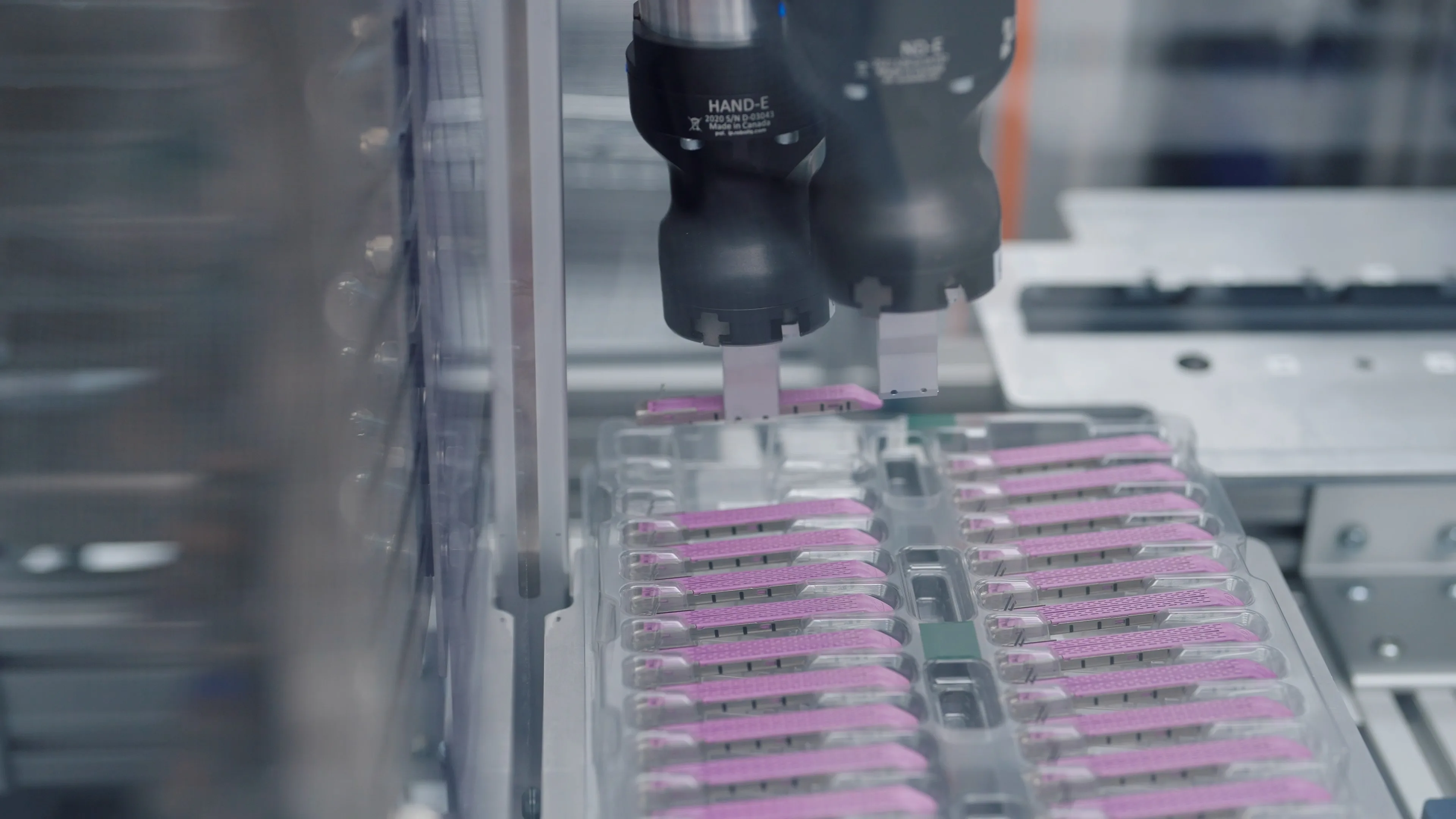
Illustrative photograph by Lexington Medical, Inc., via Wikimedia Commons, dedicated to the public domain under CC0 1.0.