OpenAI acquires Orchestra Bio for drug development workflows

OpenAI said on October 20, 2026 that it has acquired Orchestra Bio, which develops software for coordinating drug programs. It plans to combine Orchestra’s team and technology with Rosalind, its life sciences research effort.
The intended connection is between research and execution. OpenAI illustrates this with a manufacturing failure delaying a trial. Agents identify affected activities and compare responses, while people decide what to do.
From program maps to agents
Investor 8VC’s account, published the same day by Francisco Gimenez and Susan Liu, identifies Ashoka Rajendra as CEO and Andy Xu as CTO. The firm says it met Rajendra during Orchestra’s seed fundraising and led the company’s Series A in 2025. It gives no amount or exact date for that round.
The investor describes an initial focus on representing drug programs and their dependencies. Over the past three years, it says, that foundation developed into software where agents help coordinate work, combine information and carry out tasks alongside scientists and program leaders.
That account places the acquisition around the operational work connecting scientific teams. The proposed value is keeping information, decisions and execution aligned across a program. This is an investor’s description of its portfolio company, rather than independent evidence of shorter development times or better treatments.
A prior biotech partnership
A November 4, 2025 announcement from MBC BioLabs welcomed Orchestra as a community partner and said it had supported resident companies. That establishes a relationship predating the acquisition. The announcement does not name a resident deployment or report measured results.
The company description included in that partnership announcement presented Orchestra as a system for biotech startups connecting scientific plans with finance and operations. It described decisions about funding, schedules, alternative scenarios and program dependencies. This is Orchestra’s product description, carried on the partner’s page.
Orchestra’s current statement says it began four years ago. It describes planning, coordination and analysis as work that agents can handle, with scientists and program leaders concentrating on decisions requiring their expertise. The statement preserves a human decision role rather than describing autonomous drug development.
What remains to be established
Rosalind Workbench remains a research preview. Access to the specialized API requires eligibility review and organizational approval. Existing access does not establish availability of an Orchestra integration.
The acquisition announcement discloses neither a purchase price nor an integration timetable. It does not establish measured clinical benefits.
Earlier coverage of Rosalind pricing.
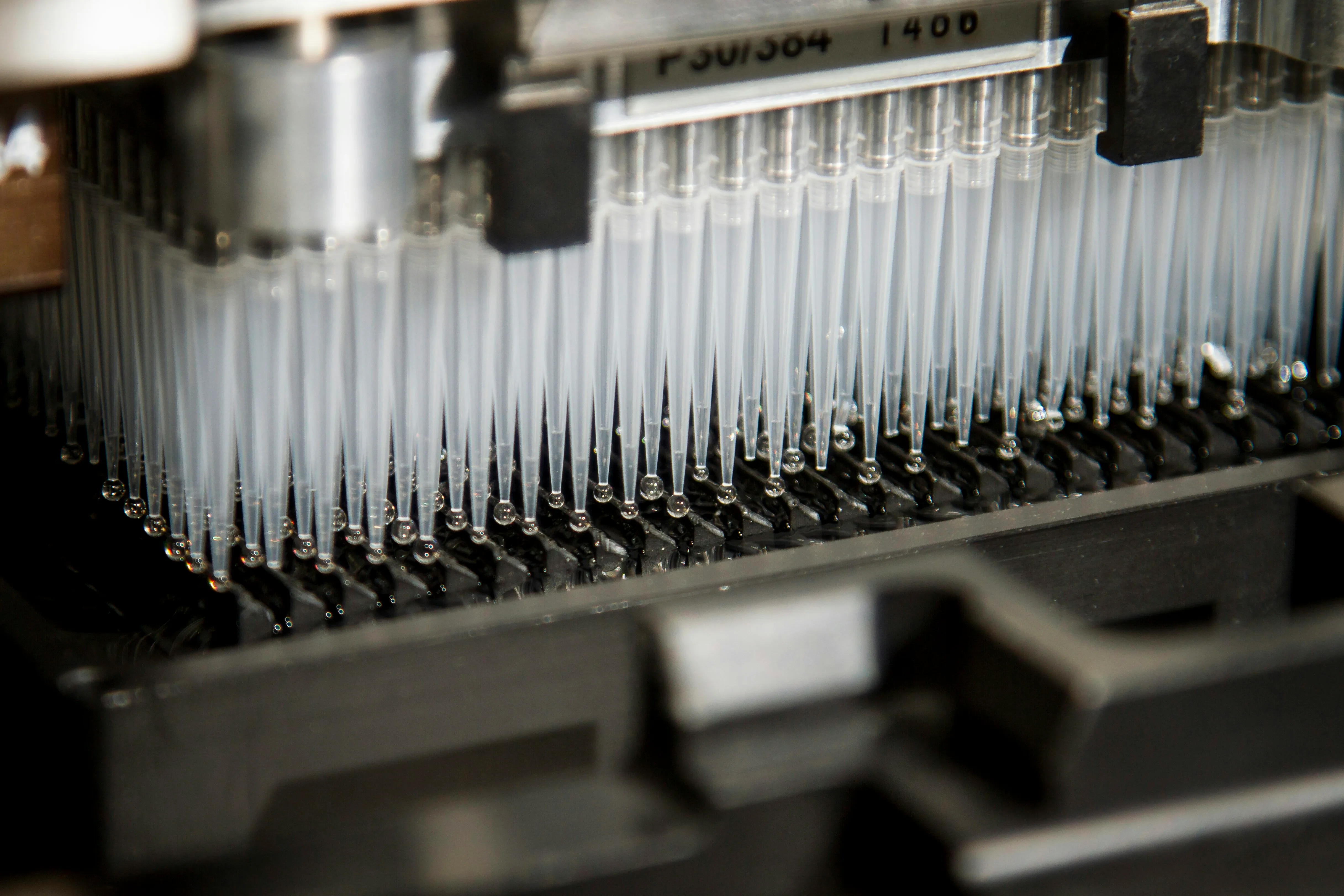
Archival laboratory illustration. This is not Orchestra or OpenAI equipment. Photo by National Cancer Institute on Unsplash.