Rosalind Discovery surfaces in OpenAI’s life sciences pricing

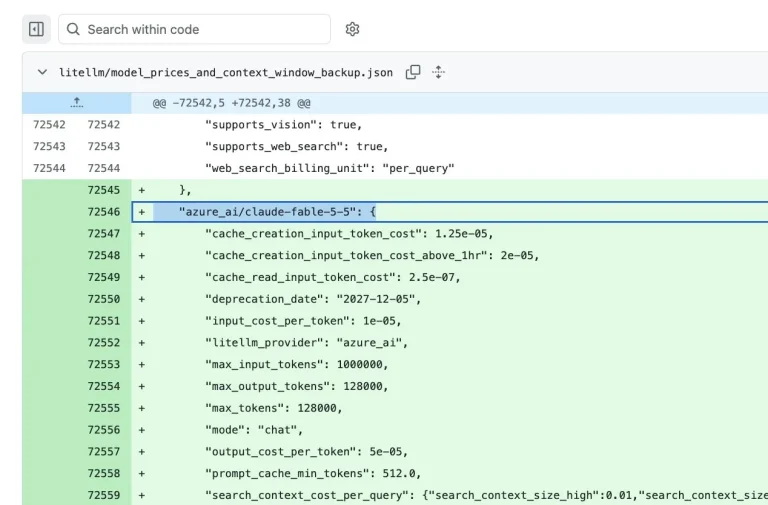
OpenAI’s API pricing page now includes gpt-rosalind-discovery beside its existing life sciences research model. ByteForward verified the entry on October 14. The listing supplies token rates but leaves capabilities unexplained. OpenAI API pricing.
TestingCatalog reported the listing on October 10, after crediting an AI Tracker Bot post for spotting it. This is a closer look at that earlier report. The public pricing page provides evidence that can be checked directly without relying on the social post. TestingCatalog report.
What the pricing entry actually says
Both Discovery and gpt-rosalind-research are listed at USD $5 per million input tokens, $0.50 per million cached input tokens and $25 per million output tokens. OpenAI API pricing.
The sentence beneath those rows specifically says billing for gpt-rosalind-research begins on October 5, 2026. That date should not be reassigned to Discovery as a launch date. The adjacent cache write note refers back to the Research model. OpenAI API pricing.
Equal rates leave the distinction unresolved. The entry could describe a different model or a new configuration. OpenAI API pricing.
Rosalind already covers discovery work
OpenAI introduced the Rosalind family on April 16 for work across biology, drug discovery and translational medicine. Its announcement describes scientific workflows that combine biological reasoning with tools and databases. A September 11 update says the family is leaving research preview for eligible organizations through a trusted access program. OpenAI Rosalind announcement.
The API changelog separately has a September 8 entry naming gpt-rosalind-research as generally available through that program for approved internal research. These are existing release records. Neither entry identifies Discovery as the product being launched on those dates. OpenAI API changelog.
OpenAI’s current help guide already describes early discovery and hypothesis generation as strengths of Rosalind, including interpreting biological evidence and supporting target research. That makes the new suffix interesting, but it provides little basis for assigning Discovery an exclusive role in drug design. The established family already operates in that territory. OpenAI Rosalind help guide.
The published GPT Rosalind 5.5 system card identifies that particular model as incrementally trained from GPT 5.5. It does not establish that the new Discovery identifier uses the same checkpoint. Carrying a known model’s architecture or benchmark results over to an unexplained catalog entry would create a comparison the available evidence cannot support. GPT Rosalind 5.5 system card.
The missing detail is the division of work
A useful announcement would explain why a research team should choose Discovery over Research. For example, does the distinction concern the kind of question being answered, the tools the model can use or the amount of work it can complete in one run? Those are questions for a release, rather than features demonstrated by this listing.
For a lab evaluating scientific software, a meaningful comparison would keep the research question and permitted data fixed. Reviewers could then examine whether the proposed hypotheses follow from the cited evidence, which assumptions changed and how much expert checking the output required. A model name and equal token prices cannot supply those results.
Access remains a separate question
The help guide describes Rosalind access for eligible organizations with Enterprise or Business agreements and approval through the trusted access program. It limits API use to approved internal research tools and workflows, rather than products offered to outside customers. These are the documented family access rules, not a separately verified Discovery rollout. OpenAI Rosalind help guide.
The same guide also distinguishes Rosalind Workbench from the model. It says the scientific workspace can be used without access to GPT Rosalind. Seeing a Workbench interface therefore would not establish access to the Discovery identifier. OpenAI Rosalind help guide.
ByteForward has not submitted an API request to Discovery or tested its outputs. The reviewed official pages do not explain its capabilities or establish when an approved account can use it. A pricing row is a useful early signal, while a working access path and a clear account of the differences would turn it into an actionable product choice.
Archival laboratory photograph by the National Cancer Institute on Unsplash, used under the Unsplash License. Shown as life sciences research context. It does not depict Rosalind Discovery.