Fitbit Edge brings Google’s AI coaching to another screen

Google announced Fitbit Edge on October 12, giving its Gemini based Health Coach another wearable screen. The US Google Store is taking preorders, while Google names October 27 as the shelf date. That date does not establish when individual orders will ship.
The tracker includes three months of Google Health Premium. Setup requires a Google account, the Google Health app, internet access and a compatible phone running Android 11 or later or iOS 16.4 or later.
The US product page still marks Health Guardian and wrist based Google Maps directions as coming soon.
What the AI subscription adds
The underlying coach predates Edge. In its May introduction, Google described a conversational service that uses shared fitness, sleep, nutrition and other context to suggest workouts and explain patterns. Users can describe their goals and equipment, then revise that context through conversation. Those are company descriptions of personalization, rather than evidence that following the suggestions improves health.
Google’s Premium page separates that coaching from the base app’s activity logging, sleep summaries and health metrics. It currently lists subscriptions from $9.99. Google’s May announcement specified $9.99 monthly or $99 annually, and said Premium was also included with Google AI Pro and Ultra. Local pricing, eligibility and renewal terms need checking before purchase.
The coach requires the app and an internet connection. Google says its Gemini features operate separately from the Gemini apps, warns that responses need checking and describes the service as unsuitable for medical purposes. The relevant purchase question is whether the ongoing coaching service is useful beyond the data a tracker already records.
The software rollout has its own timetable
A separate October 12 software update says Health Guardian is due on Fitbit Air and Edge later this month for Premium subscribers. Google describes monthly reports on blood pressure and insulin resistance trends, available after users meet wear requirements. The announcement promises coaching that interprets patterns and adjusts fitness plans. It does not make every advertised feature available on announcement day.
The same update schedules broader automatic activity detection for later this month. Google says it uses routines, historical activity, corrections and optional location data to recognize workouts. This is another layer of inferred context feeding the app. A mistaken activity label matters because the interpretation starts with what the system thinks happened.
Connected services have separate geographic limits. Google says US users will soon be able to connect Abbott’s Lingo glucose monitor, and import Function Health lab results later this fall. The glucose integration uses a separate sensor. Availability of those connections should not be inferred from Edge’s compatibility with a phone.
Health trends have important limits
Google’s Health Guardian explanation describes the blood pressure and insulin resistance features as wellness information. It says they do not provide clinical readings in real time or screen for hypertension or diabetes, and should not guide medication changes. Availability varies by device and country. Those qualifications matter when an AI coach turns a trend into fluent advice. A confident explanation is not a clinical finding.
Flo adds another consent decision
Google’s new Flo Health partnership is scheduled to begin app syncing early in 2027. With permission, cycle data from Flo would be combined with Google Health metrics, and Google Health data would flow back to Flo. Premium coaching is intended to use that added context. This is a future integration, separate from the tracker’s October retail date.
Google says permission will be requested separately for each data type and purpose, and can be withdrawn. It promises that Flo data shared with Google Health will not be sold, used for advertising or passed to other apps or developers through Google’s health platforms. These are specific commitments about Flo data, rather than a blanket description of every connected service.
Edge’s value will depend on delivered features, useful guidance and the ongoing subscription cost. The new screen makes those software dependencies worth watching.
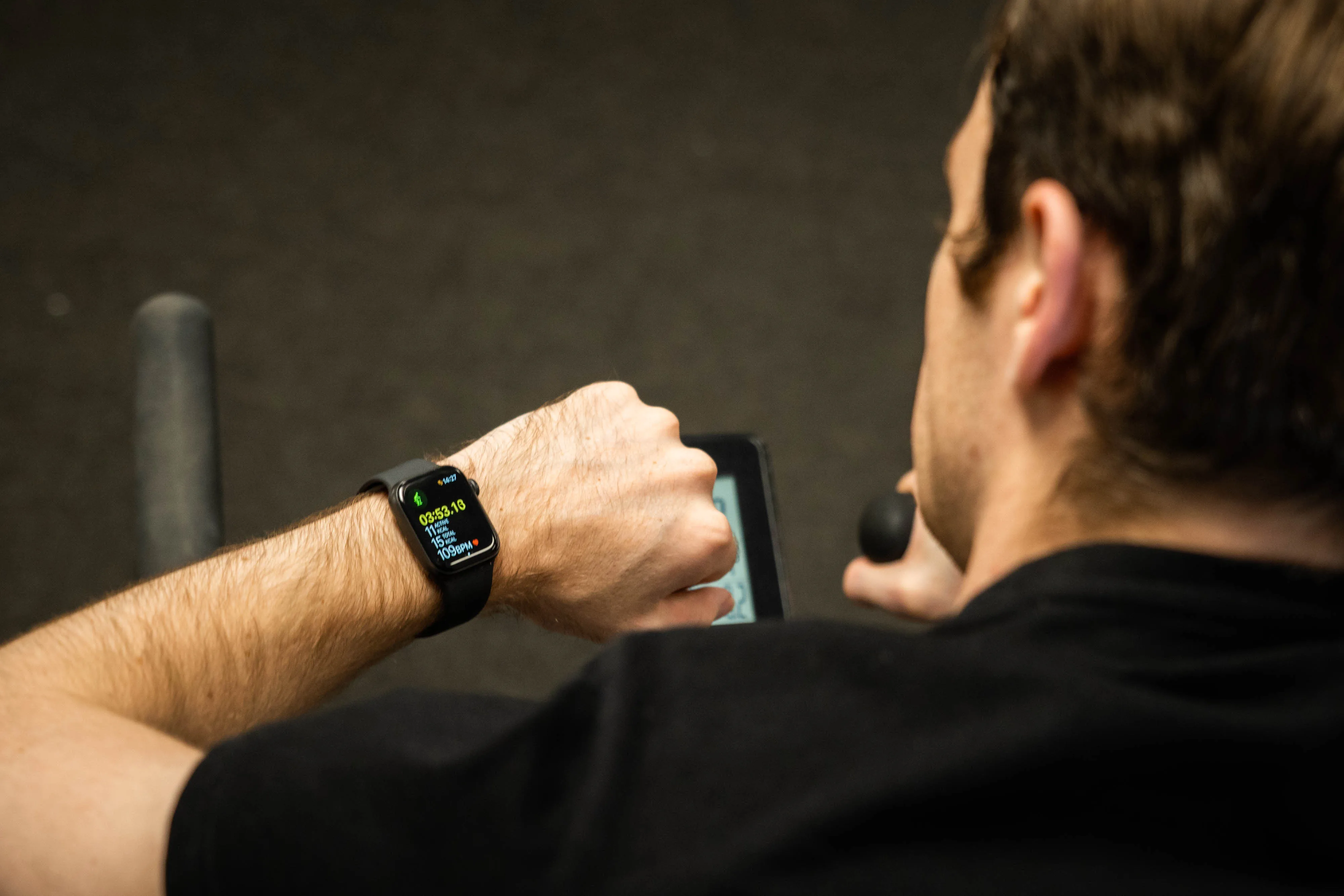
Contextual photo from July 2021 of a cyclist checking a smartwatch. It does not show Fitbit Edge. Photo by Alextredz. Credit Tredz via Wikimedia Commons. CC BY SA 4.0. Converted to WebP and cropped for display under the same license.