Ecosia clarifies its open model AI strategy

In an October 9 interview with EU Startups, Ecosia founder Christian Kroll framed the search engine’s AI strategy around affordable, energy efficient open models and described Melious as a likely future provider. His comments clarify the direction of travel without establishing a completed migration away from Mistral.
Ecosia’s current help page describes several models running alongside one another, with queries directed to different models. It also describes evaluation of models for renewable powered self hosting as an ongoing process. The page carries an October 9 update date.
What the product documentation still says
The same documentation still identifies Mistral Small 3.2 for AI Overviews and Mistral as an external chat provider. Those references make a clean replacement narrative premature. A general statement about future infrastructure should not override the product’s specific provider disclosures.
Self hosting was already part of Ecosia’s stated direction in May 2026. The company then described a possible route to running its own AI, while favoring smaller models. October’s clarification develops that existing strategy.
Model origin and hosting are separate decisions
Mistral itself publishes open weights. Its Small 3.2 model card lists an Apache 2.0 license and explains how to serve the model through vLLM or Transformers. Choosing a model developer, selecting a hosting company and operating the software are separate decisions. A company can use a developer’s published weights without buying inference from that developer’s hosted service. The relevant comparison is the actual deployment arrangement, rather than a simple split between Mistral and open models.
For broader context on Mistral’s model lineup, read our coverage of Mistral Large 4’s public preview.
Melious advertises access to more than 60 open weight models through one API compatible with OpenAI and Anthropic, with European infrastructure and automatic failover. That describes a managed inference service where an application sends requests to an intermediary that provides model access. It is a different operating arrangement from Ecosia running everything on its own servers. Melious’s current catalog also does not identify which model versions Ecosia has deployed.
The vendor also offers web search, page fetching and code execution. Those surrounding services matter when assessing where a request travels. A hosting assessment should identify each service that receives data, its retention terms and the route used during failover. A European hosting claim alone does not answer every operational question.
Kroll told EU Startups that Ecosia could use alternative models for sensitive questions and was working on political bias. That is a description of mitigation work. The interview does not provide an independent assessment showing that routing eliminates biased or misleading answers.
For a search service, this makes answer quality a question about the whole route a query follows. An evaluation should preserve the question, returned sources and answer together. Testing a model in isolation would leave out the routing decision that determined which model answered in the first place.
The energy claim needs a defined boundary
Ecosia says it uses EcoLogits estimates to assess its AI’s environmental impact. Its stated scope excludes model training, networks and users’ devices.
The EcoLogits methodology evaluates the impacts of hosting and running inference, including electricity use and embodied hardware impacts within its scope. It covers greenhouse gases, mineral and metal depletion, primary energy and water consumption. It reports approximation intervals and acknowledges gaps in the information available from AI providers and hardware makers. End of life impacts are excluded because of limited recycling data.
These boundaries change what an environmental number can tell a reader. An inference estimate can help compare ways of serving requests under specified assumptions. It is not a complete accounting of a model’s development and use. Nor does a statement about renewable electricity reveal the quantity of energy needed for an answer. Energy demand, electricity sourcing and other environmental impacts deserve separate scrutiny.
A meaningful comparison would hold the workload and quality target steady, then publish the model versions, output lengths, hosting assumptions and measurement period. It should also count retries and fallback responses. Otherwise, a cheaper or shorter first answer could hide additional requests needed to finish the same task. These are questions for a future comparison, not results established by this announcement.
What users can do today
Ecosia’s documentation offers desktop users an AI free setting that disables Overviews, removes Chat from navigation and autocomplete, and stops automatic routing to Chat. That gives users a practical choice while the model strategy evolves.
The next useful disclosure would connect each product feature to its model, host and evaluation results. Until then, readers can distinguish the company’s intended direction from the providers named in its documentation, and assess the cost and environmental case when comparable evidence becomes available.
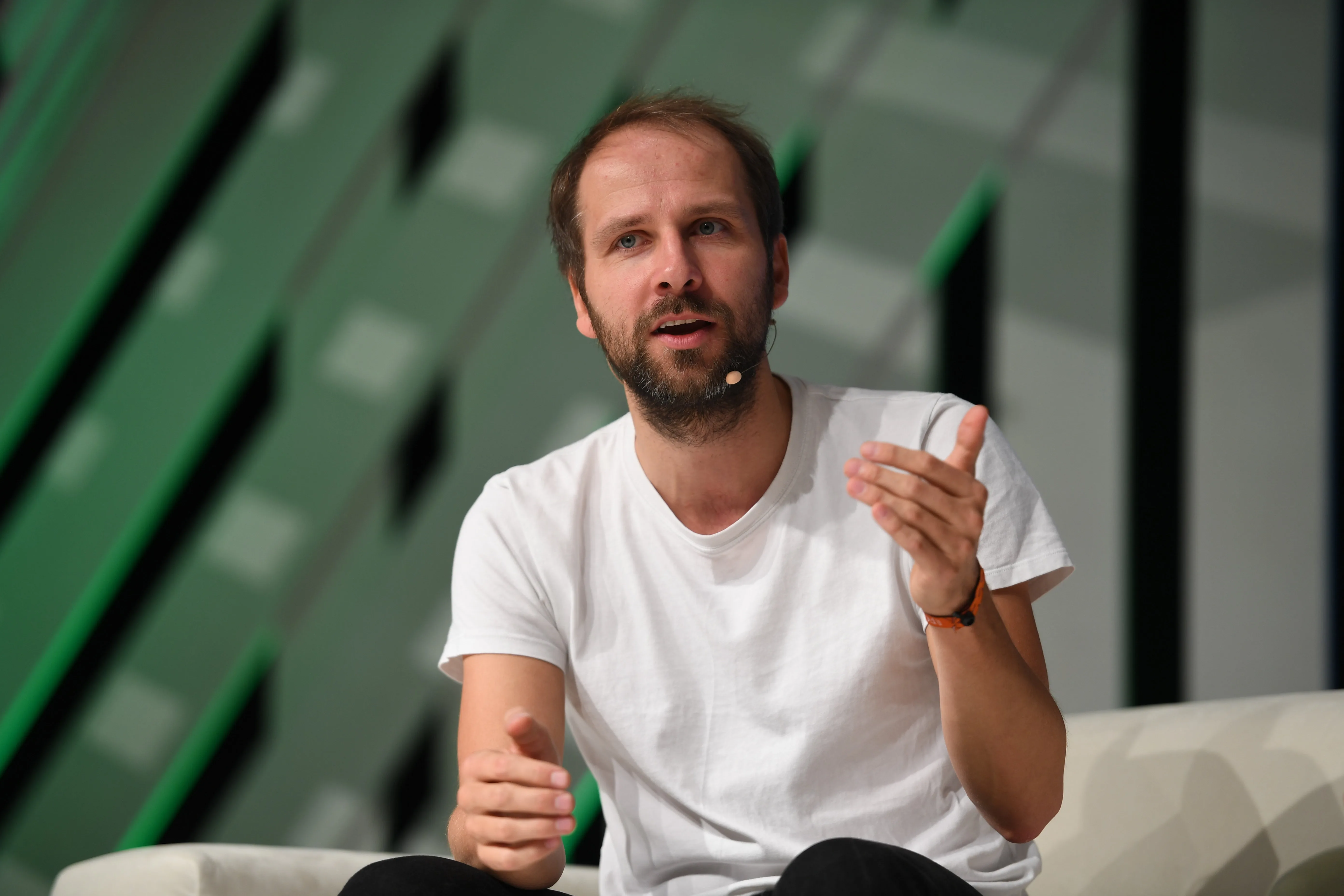
Archive photo of Ecosia founder Christian Kroll at Web Summit in Lisbon on November 5, 2019. Photo by Harry Murphy / Web Summit via Sportsfile, “HM2_7122,” © SPORTSFILE, via Wikimedia Commons. CC BY 2.0. Converted to WebP for display. Cropped for display.