SALT research reuses action plans when robot vision degrades
SALT studies adaptation to visual disruption using an earlier robot plan.

A robotics preprint posted October 6 introduces SALT, a way to adapt an AI robot policy when camera input deteriorates during a task.
SALT uses the unexecuted part of an earlier action plan as a training target. It updates the policy during operation rather than requiring new expert demonstrations for each disruption.
Progress with boundaries
The study tests two model backbones in simulation and three tabletop tasks on a physical robot. Reported average task progress on hardware rises from 0.49 to 0.61. That measures partial progress, not the share of tasks completed.
The method depends on a useful earlier plan. Disruption present from the start leaves little reliable guidance, while moved objects or changed goals can invalidate the plan. Updating the policy also adds computation.
These are controlled research results. They do not establish safe deployment across unfamiliar environments.
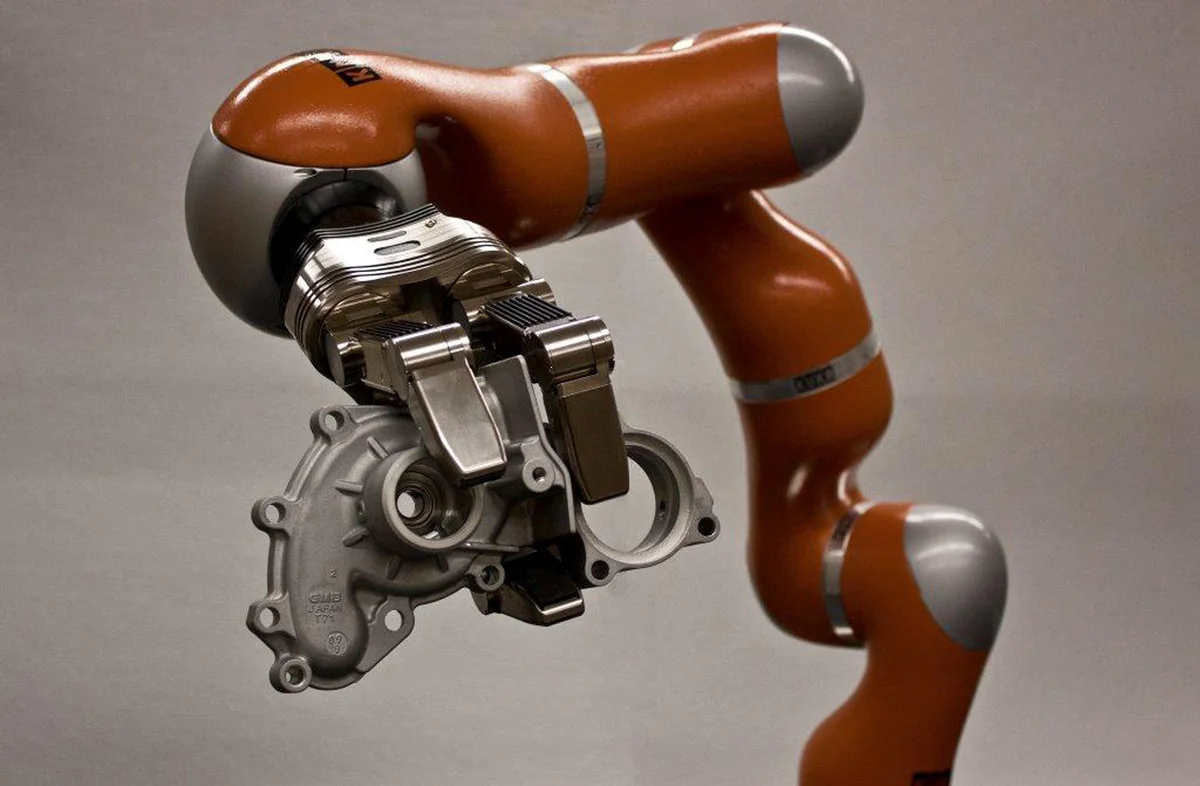
Illustrative archival photograph of the NIST Dexterous Manipulation Testbed by Falco/NIST. Public domain in the United States. Resized and converted to WebP. The photograph shows different equipment from the study.